Shoebox, Spreadsheet, Bank Feed or Bookkeeper. Which One Holds Up in July
title:Shoebox, Spreadsheet, Bank Feed or Bookkeeper. Which One Holds Up in Julyauthor:Lionel Karstenspublished:2026-11-18section:Personal Financewords:1,403read:6 min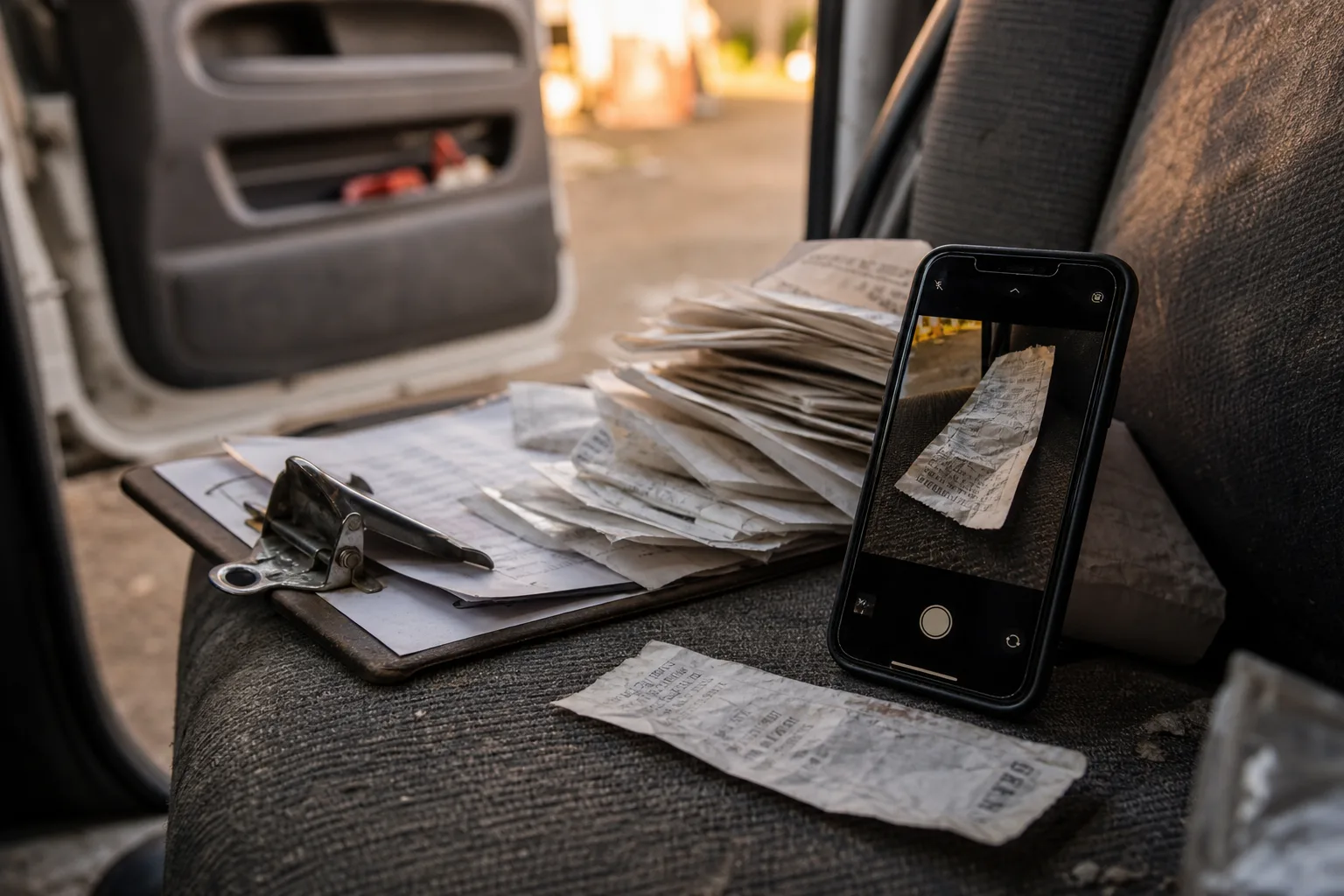
Four ways to keep business records, compared on the weekly time they cost, what they prove, and which one still answers a question raised months after the return was filed.
The return is not where records fail. The return is where you find out they failed. The failure happened in March, on a Tuesday, when you paid cash for a pallet of shims, put the slip in your shirt pocket, and washed the shirt. Nobody was watching. Nothing happened. That is the problem with recordkeeping: the consequence arrives eleven months after the lapse, by which point you have forgotten the shims, the vendor, and the job they went on.
So the honest way to compare record systems is not by what they can do at their best. It is by what they produce on an ordinary week when you are tired and behind. Four approaches cover most of what people actually use. They differ less in cost than in how much they demand from you on that Tuesday.
What the rules actually ask for, stripped of the jargon
The Internal Revenue Service is responsible for the recordkeeping standards that apply to business income and deductions, and the general shape of what it expects is not complicated. You keep records that are permanent, accurate, and complete, sufficient to establish the income, deductions, and credits you claimed. You keep them long enough that the period in which the return can still be examined has run out. For certain categories, vehicle use and travel and meals among them, the standard is higher: you need details recorded at or near the time the expense happened, not reconstructed later from memory.
That last point does most of the work in any comparison. A system that lets you capture something on the day it happens satisfies a standard that a system built around a year-end cleanup cannot reach, no matter how neat the cleanup is. A mileage log typed up in March from your calendar is a reconstruction. A note made in the truck is a record. They look identical on paper. They are not treated identically.
The second thing worth knowing is what a bank statement is and is not. It proves money moved and where it went. It does not prove what was bought or why the purchase belongs to the business. For a $43 charge at a hardware store, the statement line and the receipt together make an ordinary deduction. The statement line alone makes an argument you have to win.
The four systems, side by side
These are compared on the things that matter on a Tuesday: what it costs you in time each week, what it costs in money, and what it actually proves if someone asks.
| Approach | Weekly effort | Annual cost | What it proves | Where it breaks |
|---|---|---|---|---|
| Envelope or shoebox, sorted at year end | Near zero in-year, one long weekend in spring | Nothing out of pocket | Whatever survived. Thermal receipts fade, and cash purchases often vanish entirely | Contemporaneous categories. Mileage and travel cannot be rebuilt in April to the standard that applies |
| Spreadsheet plus photographed receipts | Ten to fifteen minutes, done in two or three sittings | Cloud storage only | Strong, if the photo and the line are entered the same week | Discipline. The gap is always the last six weeks before filing |
| Accounting software with a bank feed | Five to ten minutes of categorizing | A monthly subscription, modest at the entry tier | Every electronic transaction, automatically and in date order. Receipts attach to the line | Cash. The feed sees nothing it did not pass through, and miscategorized lines stay wrong until someone looks |
| Monthly bookkeeper | Five minutes to forward documents | A monthly fee, the largest of the four | The most, because someone independent reviewed it and asked about gaps | Nothing structural. The cost is the cost, and it only works if you answer their questions |
Notice that the time column does not vary much between the middle two. The spreadsheet takes maybe five minutes more per week than the software. The difference is not effort. It is that the software notices when you stop, and the spreadsheet does not.
The week-to-week reality nobody puts in the brochure
Here is how it goes wrong on a working week, in roughly the order it happens.
Monday you buy fuel on the business card. That lands in the feed by itself. Tuesday you pay a day laborer in cash and write it on the back of a cut list. Wednesday a supplier gives you a handwritten slip on a carbon pad and the top copy goes under the seat. Thursday you use your personal card because the business card was in the other jacket. Friday a customer pays you partly by check and partly in cash, and the cash goes into your pocket and then into gas for the truck without ever touching a bank.
Four of those five create a hole. Only one, the fuel, handles itself. So the real test of a system is how well it catches cash, mixed-card purchases, and paper slips, because those are the ordinary week, not the exception.
The habit that closes all four holes takes about ninety seconds and is the same regardless of which system you chose. When the slip hits your hand, photograph it before it goes anywhere, and write on the photo or in the app what the job was. Not the amount, the system has the amount. The job. "Shims, Delgado bathroom." That one phrase is what turns a hardware charge into a documented business expense twelve months later when you cannot remember the week, let alone the bathroom.
For mileage, the equivalent is a note at the end of the day, not the end of the month. Date, where you went, why, and the miles. An app that reads your phone's location does this without your involvement, which is why it beats any amount of good intention. But a spiral notebook in the door pocket, filled in before you get out of the truck, meets the same standard and costs two dollars.
Choosing by volume, not by ambition
The right system follows from how many transactions you generate and how much of your money moves as cash.
- Under roughly twenty-five transactions a month, almost all electronic. A spreadsheet and a receipts folder in cloud storage is genuinely sufficient. Add a dated subfolder per month and name files by vendor and amount. The whole system is free and it will not let you down if you touch it weekly.
- Fifty to two hundred transactions, a mix of cards and some cash. This is where the bank feed earns its subscription. The automatic capture of the electronic side frees your attention for the cash side, which is the only part that needs you.
- Payroll, subcontractors, inventory, or sales tax in more than one jurisdiction. A bookkeeper is cheaper than it looks once you count the filings you would otherwise be doing yourself at night, and the errors you would be correcting later at a professional's hourly rate.
- Heavy cash, any volume. Whatever else you use, the non-negotiable piece is a daily cash log. One line per movement, in and out, written the day it happened.
Where protection actually comes from
People assume the protection in a tax record is the receipt. It is partly the receipt. The larger part is the trail: an entry made close to the event, a payment record that corroborates it, and a consistent method applied all year rather than in bursts. Three ordinary documents that agree with each other settle a question faster than one impressive document standing alone.
A separate business checking account does more for that trail than any software. It is free or close to it at most banks, and it converts the hardest question, which of these purchases was business, into a question already answered by where the money sat. Open it before you optimize anything else.
Retention is the quiet part. Keep the records until the window in which the return can be examined has closed, and keep the records behind assets, equipment, vehicles, property improvements, for as long as you own the asset and then some, because the basis calculation reaches back to the original purchase. Cloud storage makes this effectively free. The receipts you will want in six years weigh nothing.
The system you can run on a bad week is better than the system you admire. Pick the one that matches your transaction volume, add the ninety-second photo habit, and the return stops being an archaeology project and becomes a printing job.