Comparing Two Boxes on a Shelf? The Number That Makes It Possible Is Printed Smallest
title:Comparing Two Boxes on a Shelf? The Number That Makes It Possible Is Printed Smallestauthor:Marguerite Vasquezpublished:2026-03-05section:Cuisinewords:1,044read:4 min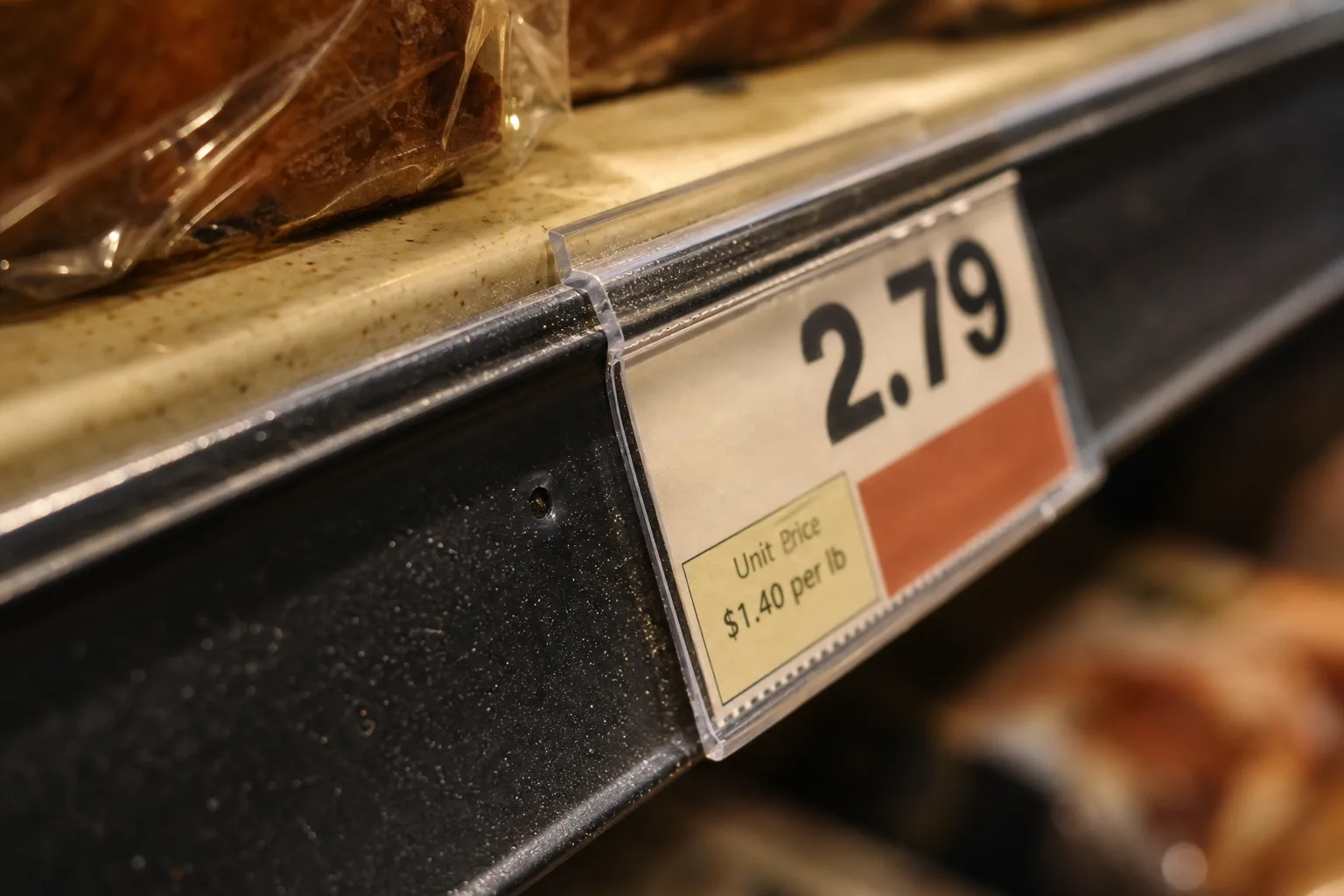
Unit pricing is the only figure on a shelf tag that lets two different packages be compared honestly, and it is the one set in the smallest type.
Stand in front of two boxes of the same cereal, one taller and one wider, priced eleven cents apart, and the comparison the shelf appears to be inviting is between the two large numbers. Those numbers cannot be compared, because they describe different quantities of a product sold in packages that were never designed to be equivalent. The figure that makes the comparison possible is printed in the corner of the same tag in type roughly a third the size, and it is the only part of the label doing arithmetic on the shopper's behalf.
Where the Comparison Quietly Breaks
Unit pricing works by restating the price against a common measure, so much per ounce, per pound, per hundred sheets, per fluid ounce. It works beautifully within a category and falls apart between categories that use different measures, which happens more often than it should. Two brands of the same product can be tagged one per ounce and one per pound, or one per item and one per hundred count, and the shopper is left doing a conversion in an aisle rather than reading a comparison. Several states require a consistent unit within a category for exactly this reason, and several do not.
The second break is concentration. Detergent, cleaning products and juice concentrate are all sold at varying strengths, and a per-ounce price on a concentrated product is not comparable to a per-ounce price on a ready-to-use one even when both tags look identical. The same problem appears with dry goods that absorb water, with anything sold by drained weight against total weight, and with produce priced by count where the count sizes differ. The tag is honest in each case and the comparison is still wrong.
The Bigger Package Is Not Automatically Cheaper
The assumption that buying larger saves money is right often enough to have become a habit and wrong often enough to be worth checking every time. Promotional pricing on a smaller size, a manufacturer's coupon, a temporary case discount, or simply a category where the large size is priced for convenience rather than value all reverse it. The unit price is what reveals this in under a second, and the reason it feels surprising is that the retail logic driving it has nothing to do with cost per ounce and everything to do with which size a shopper is expected to compare.
The larger package also carries costs that no tag reports. If a household does not finish it before it goes bad, the effective unit price is whatever was actually consumed rather than what was purchased, which is why bulk buying works well for shelf-stable staples and badly for produce, dairy and anything with a short window. Storage space, the cash tied up in inventory, and the tendency to use more of something simply because there is plenty of it all belong on the same side of the ledger.
Who Makes Sure the Scale Is Right
Behind every price per pound sits a piece of equipment that has to be accurate, and behind that sits a system of legal metrology most shoppers never think about. State and county weights and measures officials inspect and seal commercial scales, checkout scanners and fuel dispensers on a schedule, using calibrated test weights and standards traceable back to the national ones maintained by the National Institute of Standards and Technology, which is also where the model regulations most states adopt are drafted. The sticker on the side of the deli scale is the visible end of that chain.
The inspections cover more than the scale itself. Net weight statements on packaged goods are checked against the actual contents, because a package labeled sixteen ounces has to contain sixteen ounces of product rather than sixteen ounces including the tray and the absorbent pad. Price verification at the register is checked as well, comparing the shelf price against what the scanner charges across a sample of items. Failures are found routinely, not because retailers are dishonest but because a store carries tens of thousands of prices and every one of them has to be changed by hand or by system at some point.
When the Register Price Is Not the Shelf Price
Scanner errors run in both directions and the ones that overcharge are the ones nobody catches, because a shopper watching a total scroll past has no way to notice a single item that rang up forty cents high. The fix is unglamorous: photograph the shelf tag on anything where the price matters, check the receipt before leaving the parking lot, and take the discrepancy to the service desk rather than letting it go. Many states have a specific remedy for scanner overcharges, and many chains have a policy that is more generous than the law requires.
Sale pricing is where most of these errors originate, since a promotion involves changing a price in a system, changing a tag on a shelf and sometimes changing a sign at the end of an aisle, and the three do not always happen on the same morning. That also means the discrepancy is most likely on exactly the items a shopper chose because they were advertised, which is a reason to check the receipt after a week of heavy promotions rather than after an ordinary one.
Where the Effort Is Actually Repaid
None of this rewards being thorough about everything. The effort concentrates in a small number of places: the staples bought every week, where a small unit price difference compounds across a year, and the high-value items where a single mistake is worth more than a month of small ones. On everything else, reading the small number in the corner of the tag takes a second and is enough.
The two cereal boxes are still eleven cents apart and still not comparable on their face, and the shopper who glances at the corner of the tag has settled the question before the ones beside them have finished picking up both boxes. That is the entire point of the smallest number on the shelf, and it exists because somebody decided that a price which cannot be compared is not really a price at all. It is worth the second it takes to look at it.