Why Is Three Days Not an Answer? What Drying Crews Know and Homeowners Rarely Hear
title:Why Is Three Days Not an Answer? What Drying Crews Know and Homeowners Rarely Hearauthor:Lionel Karstenspublished:2026-03-05section:Propertywords:1,037read:4 min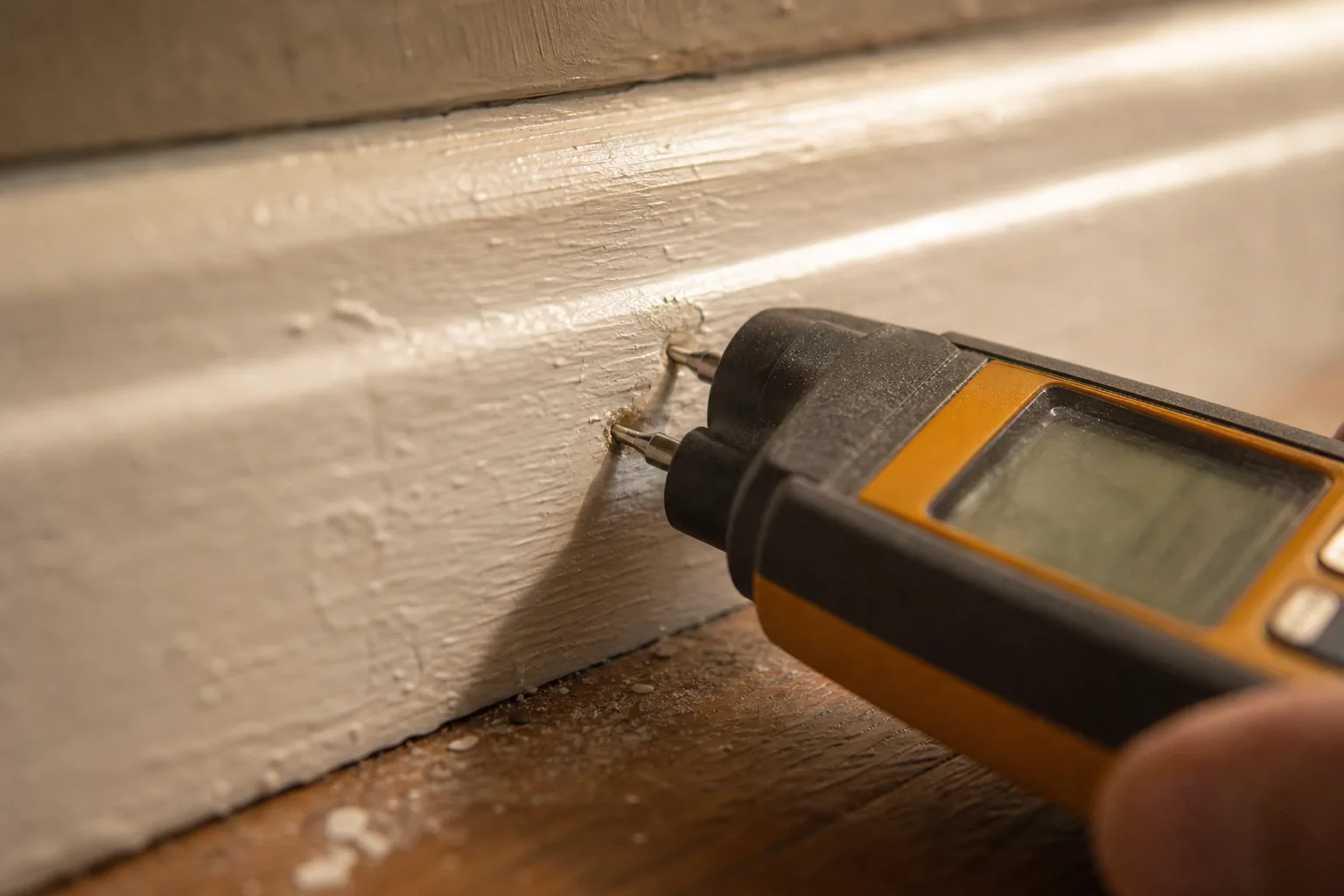
Nobody is quoted here by name. What follows is the settled view of experienced drying supervisors, written in this publication's own voice rather than anyone's words.
This piece is written as a set of questions answered in our own voice. No single technician is being quoted, nothing here is presented as somebody's speech, and the reason for saying so up front is that the subject invites invented testimony and does not need it. What follows is the settled, unglamorous view held in common by people who supervise residential drying for a living, put into ordinary sentences by us. The questions are the ones homeowners actually ask on day two of a water loss, when the equipment is loud and the schedule has become the whole conversation.
What Are the Meters Actually Telling Anyone?
Two different instruments get used and they answer different questions. A pin meter measures electrical resistance between two probes driven into a material, which correlates with how much water is in that material at that depth and at that spot. A non-invasive meter reads a shallow field just under the surface without marking anything, which makes it fast for scanning a wall but useless for confirming what is happening inside a stud cavity. Neither instrument reports a percentage that means the same thing across materials, which is the first source of confusion.
What the readings are for is comparison rather than an absolute verdict. A crew establishes a dry standard by reading the same material somewhere the water never reached, then works toward that number in the affected area. Alongside that sits the psychrometric picture, the temperature and humidity of the air going into the dehumidifier and coming out of it, which is what tells a supervisor whether the equipment is still removing water or has stopped doing useful work. A single moisture number quoted without a dry standard beside it is not an answer to anything.
Why Does Equipment Come Out Too Early?
Almost always for a reason that has nothing to do with the building. Equipment on a job is priced per unit per day, which means every extra day is visible on an invoice that somebody is arguing about, and the pressure to demobilize starts arriving from several directions at once around day three. The household is tired of the noise and the electricity bill. The adjuster is looking at a line item that grows daily. The crew has another job waiting. None of those pressures is illegitimate and all of them point the same way.
What resists them is documentation, which is why a properly run job produces daily readings at the same monitoring points rather than a note that things look better. A drying log that shows the same locations trending toward the dry standard makes the case for two more days concrete, and it makes the case for stopping equally concrete when the numbers have flattened. Crews that keep those logs have easier conversations with adjusters, and households with a copy of the log have a far easier time asking why the fans left on a Thursday.
What Actually Goes Wrong When It Comes Out Early?
The failure is rarely dramatic and almost never immediate. Water left in a wall cavity or under a floor assembly does not reappear as a puddle. It equilibrates slowly into the surrounding materials, and the visible consequences show up weeks later as a baseboard that has cupped, a floor board that has crowned, a faint odor that comes and goes with the weather, or paint that will not hold at a seam. By then the connection back to the original loss is hard to prove and the file has been closed.
The other failure is biological and it has a clock attached. Wet cellulose in a warm enclosed space begins supporting growth in a matter of days, which is why the industry treats the first seventy-two hours as the window in which a drying job stays a drying job. Past that the work acquires containment, negative air, different disposal handling and often a third-party assessment, and the cost profile changes entirely. Nothing about the original water changed. The category of the job did.
How Does the Insurance Side Shape the Work?
More than most homeowners realize, and not always badly. Carriers use standardized estimating platforms with defined line items and regional unit prices, which means a crew is working within a framework that was set before anybody looked at this particular house. That framework is generally reasonable for a typical loss and generally awkward for an atypical one, and the way an experienced supervisor handles the difference is by documenting the deviation rather than by arguing about the rate. Photographs, meter readings and a moisture map do that work.
Environmental guidance sits alongside the insurance framework and occasionally overrides it. Federal guidance on moisture and mold in buildings, is the reference most training programs build their thresholds from, and it comes from the Environmental Protection Agency rather than from the insurance industry, and it is the reason the seventy-two hour figure is treated as a boundary rather than a suggestion. A crew that pulls equipment early on a job that was already past that boundary has created a problem that the estimating platform has no line item for.
What Would Experienced Supervisors Change?
Two things come up repeatedly. The first is that households should be given the drying log as a matter of routine rather than on request, because the document that explains why the equipment is still running is the same document that explains why it can stop. The second is that the initial authorization form, signed on day one by somebody standing in water, deserves five minutes of attention it almost never gets, since it determines who is being billed, at what rate, and what happens if the carrier declines part of the work.
The question that started this, whether three days is the right answer, has a short version worth carrying away. Three days is a description of a typical job rather than a specification for this one, and a building is dry when the affected materials read at the dry standard for the material, in the same places, on consecutive days. Everything else, including the calendar, the invoice and the noise, is a constraint on getting there rather than a definition of having arrived.