Booking a Naturopathic Clinic This Fall? What the License Covers and Who Does the Work
title:Booking a Naturopathic Clinic This Fall? What the License Covers and Who Does the Workauthor:Lionel Karstenspublished:2026-08-24section:Healthwords:1,352read:6 min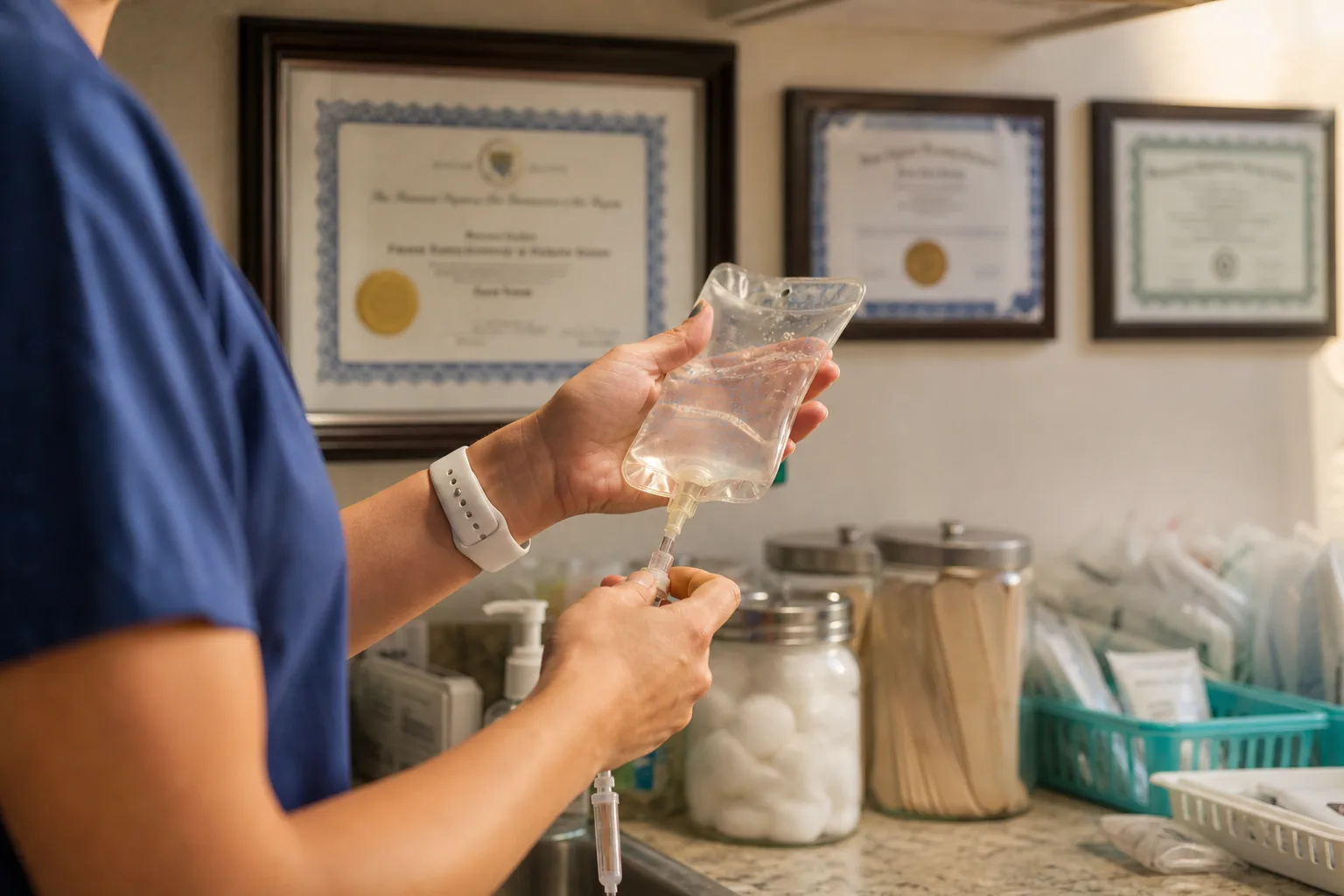
In Arizona, the naturopathic physician's license is only part of the picture. The person who actually performs your visit is usually someone else, and fall is when that gap widens.
Clinic volume in Arizona does not run flat across the year. From late October through January, the phones change character: respiratory complaints, fatigue, people using up a deductible before it resets, and a steady run of walk-ins asking for an IV drip because they have a wedding, a flight, or a family gathering coming. Staffing changes to match. So does who is standing in the room with you when the appointment actually happens. That second part is the one almost nobody asks about, and it is the part that decides most of what you experience.
What the license actually says, and where it stops
Arizona licenses naturopathic physicians at the state level, which puts it in a smaller group of states. The credential rests on three things stacked in order: a doctoral program at a school recognized for that purpose, passing scores on the national board examination sequence, and then registration with the state board that administers the practice act. Someone who has cleared all three can use the physician title and practice within a defined scope. Someone who has not cleared all three may still hold a certificate, a diploma, or a membership, and none of those are the same thing.
The scope is where the useful detail sits. A state license defines what a practitioner may order, prescribe, inject, and perform. It is a boundary, not a rating. It tells you the person met an entry standard and is answerable to a board that can suspend or restrict them. It does not tell you how many times they have treated your specific problem, whether they will return a call on a Saturday, or whether their prices are in line with the clinic three miles away. People routinely read a license as a quality score. It is a floor, and floors are worth having, but a floor is all it is.
It is also worth separating the license from the certificates hanging next to it. A weekend course in a specific injection technique, a manufacturer's training in a device, a membership plaque from a professional association: all of these are real, all of these took time and money, and none of them are issued by a body that can pull anyone's ability to practice. When you look at a wall of framed paper, find the one with a number, an expiration date, and a state agency name on it. That is the one that has teeth.
The party in the room that nobody vetted
Here is what a busy fall day actually looks like from the inside. The physician sees you for the intake, sets the plan, and moves to the next room. What follows is performed by someone else: the assistant who draws the blood, mixes and hangs the bag, gives the intramuscular injection, calls in the supplement order, and takes the follow-up call three days later when you feel off. In most clinics, that person is in the room with you longer than the licensed physician is.
Arizona is unusual in that the naturopathic board's remit extends past the physician alone to the people working under that physician's supervision. That matters, because delegation is where the practical risk lives. A properly run clinic has written protocols for what may be delegated, a supervising physician physically or immediately available, and documentation of who did what. A poorly run clinic has a competent assistant improvising because the schedule ran forty minutes long and the doctor is behind a closed door.
The things that get skipped when nobody is watching are always the same things. Verbal confirmation of the patient's name and the contents of the bag before it is hung. A fresh check of allergies, not the one recorded eight months ago. Site rotation on repeat injections. Waiting the full observation period after a first-time infusion rather than pulling the line at the point the patient says they feel fine. None of these take long. All of them get compressed when the waiting room is full and someone has been on shift since seven.
You can ask about this directly and it is not rude. "Who will be doing the infusion, and are they registered with the board?" is a normal question. So is "Is the supervising physician on site while it runs?" A clinic with its house in order answers both in one sentence.
What the season changes
Three things shift between October and February, and each one moves risk to a different party in the transaction.
| Seasonal change | What it changes in the clinic | What to check before you book |
|---|---|---|
| Respiratory and immune complaints rise | Shorter visits, more same-day slots, more work delegated to assistants | Who performs the treatment, and whether a supervising physician is on site |
| Deductibles reset January 1 | December rush to use benefits, January rush to start fresh | Whether the clinic bills insurance at all, or is cash-pay with a superbill |
| Holiday coverage and locum fill-ins | A different physician may sign off on your plan | The covering physician's name and license status, in writing |
| New graduates enter practice mid-year and after board cycles | Newly licensed physicians take on fuller panels | How long the practitioner has held an Arizona license, not just a degree |
The billing point deserves a line of its own. A large share of naturopathic care in Arizona is cash-pay, and the clinic will often hand you a superbill to submit yourself. That is a legitimate arrangement, but it means the estimate you were quoted at the front desk is the number you are paying. Get it itemized before December, not after, because the same visit can land on either side of a deductible reset depending on the week you schedule it.
The suppliers standing behind the visit
Two more parties sit inside the transaction without ever meeting you. The first is the compounding pharmacy that produces the injectable your clinic uses. The Food and Drug Administration oversees the manufacture of drug products, including the compounded preparations that clinics source rather than make themselves, and the distinction between a licensed compounding facility and an unlabeled vial of something is not a detail. Ask where injectables come from. A clinic that buys from a named facility will tell you the name without hesitating.
The second is the laboratory running your panels. Some clinics use a standard reference lab you would recognize. Others use specialty labs for tests that are not covered by insurance and carry a separate charge. Knowing which one is running your sample tells you what the result will cost you and how a second opinion will read it later.
If you are comparing clinics, start by pulling up the license number for each practitioner on the state board's public search, then look at how the clinic presents its own staff; the practices worth your time list credentials for the whole team rather than one name, and among the arizona naturopathic doctors operating in the Phoenix and Tucson corridors, that transparency tracks closely with how tightly the clinic runs its delegation protocols.
Five questions that settle it in one phone call
- Is the physician currently licensed in Arizona, and what is the license number?
- Who performs injections and infusions, and are they registered with the board?
- Is a supervising physician on site for the full duration of a treatment?
- Where do injectable preparations come from, and which lab runs the panels?
- What is the itemized cost, and is anything submitted to insurance?
None of these questions require any medical knowledge to ask or to evaluate. What you are listening for is speed and specificity. A front desk that answers all five in three minutes is telling you the clinic has answered them internally already.
The license is the entry ticket and it is worth confirming. But the appointment you actually receive is built by the assistant who mixes the bag, the pharmacy that filled the vial, and the schedule that decides whether anyone has time to do the checks properly. Ask about those three and you learn more in one call than a wall of framed paper will tell you in a year.