One Irrigation System, Three Ways to Keep It, and the Tester Who Decides
title:One Irrigation System, Three Ways to Keep It, and the Tester Who Decidesauthor:Beatrix Stapletonpublished:2026-10-08section:Propertywords:971read:4 min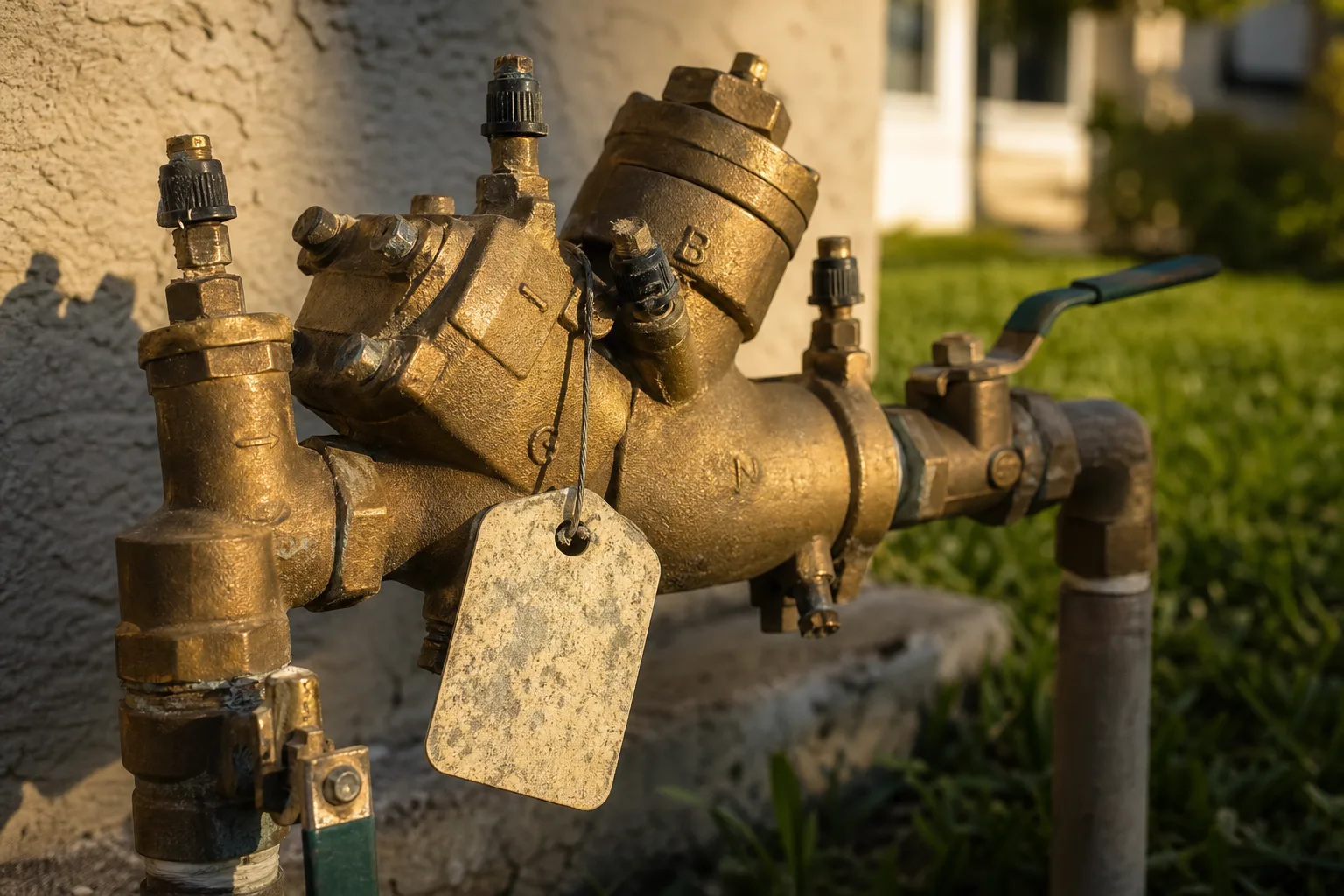
An in-ground sprinkler system carries an annual compliance cycle most homeowners never priced. Three ways to handle it, and the people whose signatures settle it.
The quote to install an in-ground irrigation system is a single number, delivered once, and most homeowners study it closely. The cost of keeping that system is a different animal: it arrives in pieces, on a schedule set by someone at the water utility, and it involves a person the homeowner has usually never met. In most jurisdictions with a cross-connection control program, that person is a state-certified backflow assembly tester, and the system does not stay legal without an annual visit from one.
This is a narrow case. It does not apply to a garden watered with a hose and a timer. It applies specifically to a permanently plumbed irrigation system fed from a municipal potable supply, which is a category of garden that millions of houses fall into without the owner ever having read the ordinance that governs it.
The cycle that runs whether or not you watered
A sprinkler system connected to the house supply creates a path by which water sitting in a lawn line could move backward into drinking water if pressure drops. The assembly that prevents this is mechanical. It has springs, seats, and a relief valve, and mechanical things drift out of tolerance. That is why the testing requirement is annual rather than one-time, and why passing last year is not evidence about this year.
The Environmental Protection Agency is responsible for the federal drinking water framework that state and municipal cross-connection control programs operate under. The program you actually deal with, though, is local. Your water purveyor sets the test window, maintains the list of testers it accepts, and keeps the file your report lands in. The notice usually comes by mail, sometimes as a line on a bill, and it is easy to set aside. The clock runs anyway.
So the real annual carrying cost of an irrigation system is not just water. It is water, plus a tester's visit, plus whatever the tester finds, plus winterization in freezing climates, plus the head or two that gets clipped by a mower every season.
Three ways to handle it
Treat this as a choice among three postures rather than a yes or no. Dollar figures vary too much by region and by assembly type to generalize honestly, so the table below compares the shape of each option: what recurs, who has to sign, and how hard it is to undo.
| Keep the full system | Reduce to a smaller system | Disconnect and go hose-fed | |
|---|---|---|---|
| Recurs every year | Test visit, water use across all zones, winterization, head repairs | Test visit (unchanged), lower water use, fewer heads to repair | No test visit, no winterization of a mainline, hose bib vacuum breakers only |
| Who signs | Certified tester, filed with the utility | Certified tester, plus a plumbing permit if the connection is altered | Licensed plumber for the physical disconnection, utility updates its file |
| Up-front spend | None beyond repairs | Cap and abandon zones; possible controller reprogramming | One disconnection job, plus drip tubing and timers if you want coverage |
| Failure mode | Assembly fails test, repair or replace before the deadline | Same as keeping it, on fewer zones | Hand watering during a hot stretch while you are away |
| Reversible? | Yes | Mostly, zones can be reopened | Costly to reverse, the tap and permit are gone |
| Effect at resale | Working system, current test on file | Working system, smaller | Disclose the abandonment; a buyer may want the system back |
The middle column is the one people overlook. Shrinking the system does not shrink the compliance cycle at all, because the test attaches to the assembly, not to the acreage behind it. If the goal is to stop the annual test, half measures do not get you there. If the goal is to cut water use and repair frequency while keeping a functioning system, the middle column does that cleanly and stays reversible.
Who is actually in the room
Four people shape this outcome, and only one of them works for you.
- The certified tester. Certification is issued by the state or an approved training body, not by the utility, and it expires. You can almost always choose your own tester from the accepted list rather than taking whoever the utility suggests. Ask for the certification number and expiration date before scheduling. A report from a lapsed certification is a report the clerk will reject.
- The cross-connection control clerk. This is the person who logs your report and the person who notices when it is missing. They are the right call if the test date is tight, because extensions are often administrative and granted by phone.
- The plumbing inspector. Involved only if the assembly is replaced or the connection is altered. Replacement frequently requires a permit, and an unpermitted swap can resurface during a sale.
- The HOA architectural reviewer, where one exists, who may have an opinion about visible drip lines or a lawn converted to beds, and whose approval process runs on its own calendar.
What the rules give back
The requirement reads as a burden and is written as a protection, and the protective half is worth claiming. You generally get written notice before any enforcement step, a defined window rather than a same-week demand, the right to pick your own certified tester at your own negotiated price, and the right to have a failed assembly repaired and retested rather than condemned. Keep every test report. A clean five-year file answers a buyer's inspector in one email and settles the question of whether the system was maintained or merely present.
The decision worth making deliberately is whether you want a permanently plumbed system at all, because that single answer sets the recurring cost for as long as you own the house. Make it once, in writing, with the utility's test window in front of you rather than in the week it expires.