Household Food Waste Is a Storage and Labeling Problem Before It Is a Shopping One
title:Household Food Waste Is a Storage and Labeling Problem Before It Is a Shopping Oneauthor:Lionel Karstenspublished:2026-08-10section:Cuisinewords:1,040read:4 min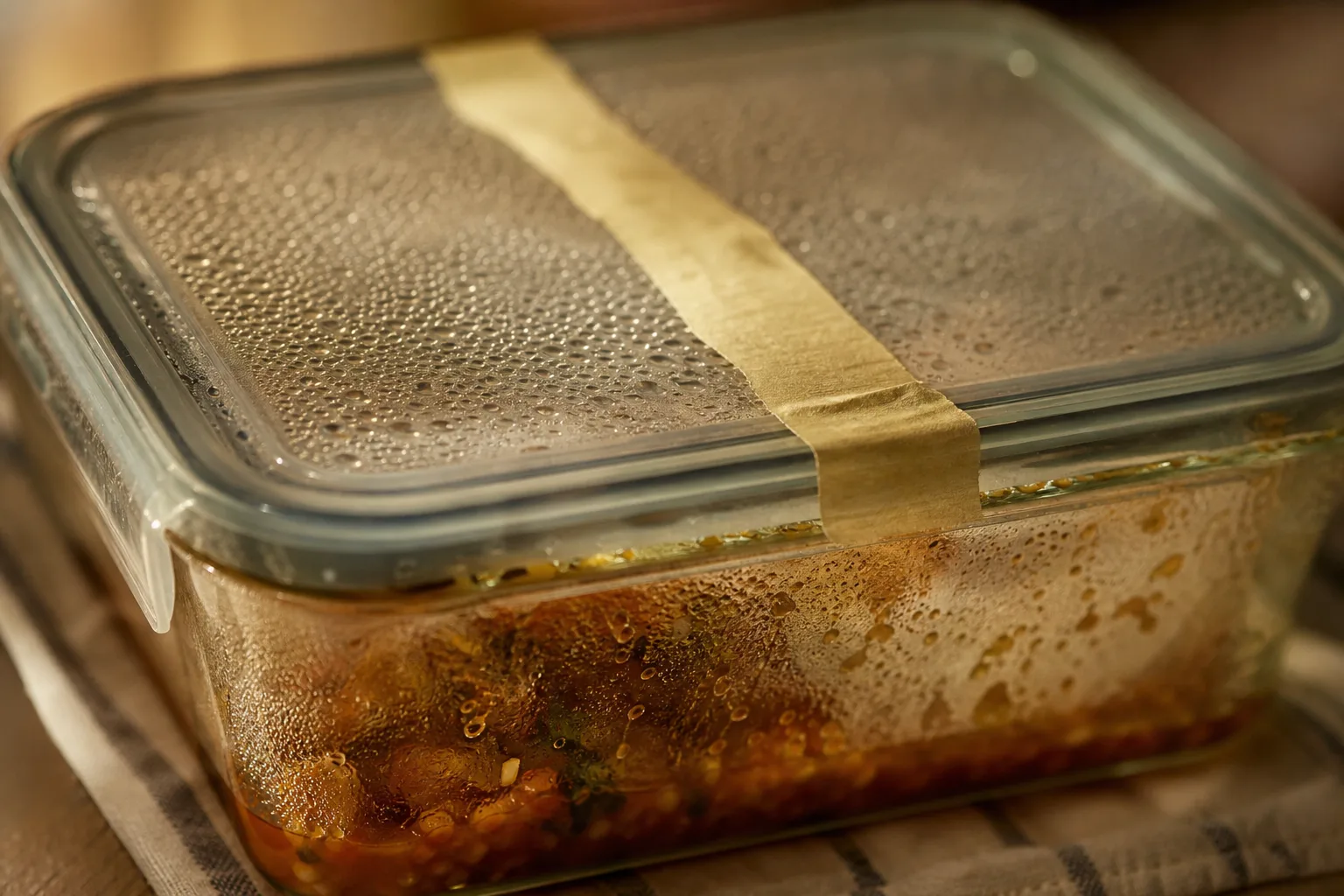
People assume they buy too much food. Usually they buy roughly the right amount and lose track of it, which is a fixable problem of systems rather than restraint.
The standard explanation for food waste in a household is overbuying, and the standard remedy is a resolution to buy less, which lasts about a fortnight and produces meals nobody wanted alongside the same wilted produce in the same drawer. The explanation is usually wrong. Most households buy roughly what they intend to eat and then lose sight of a portion of it, in a drawer, behind something taller, in an unlabeled container, or under an expiration date that was misread. Every one of those is a visibility problem, and visibility problems have mechanical solutions.
Make the Refrigerator Legible
Almost all waste happens to food that could not be seen. The fix is arrangement rather than discipline: a single clear container at eye level holding whatever needs eating first, produce stored where it is visible rather than in a sealed drawer, and nothing stacked in front of anything. Leftovers go in clear containers rather than opaque ones, since an opaque container is a decision to be made later and later never arrives, and it goes at the front rather than being pushed back by whatever came home today.
The same logic runs through the freezer and the pantry, which are where the largest quantities are lost because the time horizon is longer. A freezer that has been filled without a system contains food nobody can identify and therefore nobody will use, and a pantry with three open bags of the same thing is telling you that its contents cannot be seen from the doorway. Both are solved by a shallow inventory rather than a deep one, meaning one layer visible at a time.
Label Everything the Day It Is Made
A strip of tape and a marker, with the contents and the date, applied when the container goes into the refrigerator rather than when somebody wonders what it is. This takes about eight seconds and it is the single highest-return habit available, because unlabeled leftovers are thrown away on the strength of a guess rather than eaten on the strength of a date. A household that labels consistently stops having the conversation about whether something is still good, which is a conversation that always resolves in the trash.
Freezer labeling matters more still, since freezing suspends quality decline rather than stopping it and everything looks identical under frost. Contents and date, and where a container holds a portion of something larger, the quantity as well. The additional benefit is planning: a freezer with legible labels is a list of possible dinners, and a freezer without them is a storage unit that nobody opens hopefully.
Understand What the Dates Actually Mean
The dates printed on food packages are, with a single exception, quality indicators set by manufacturers rather than safety deadlines set by any authority. Best if used by refers to flavor and texture. Sell by is an instruction to the retailer about stock rotation and is not addressed to the shopper at all. Use by is the closest to a safety statement and is the one worth respecting on perishable items. The exception is infant formula, where the date is regulated and is a genuine limit.
The practical consequence is that an enormous quantity of edible food is discarded on the strength of a date that was never about safety, and that the more reliable tests are the ordinary ones: appearance, smell, and how the item has been stored. Where those tests are not reliable, and the categories where they are not include prepared foods, cooked rice, soft cheeses and anything that has been left out, the guidance from the Centers for Disease Control and Prevention on foodborne illness and safe handling is the reference worth using rather than a guess.
Store Things Where They Actually Last
A good deal of waste is caused by storing food correctly according to habit and incorrectly according to the food. Herbs keep for a week or more standing in water like flowers and for two days lying in a bag. Bread stales fastest at refrigerator temperature and keeps well frozen. Onions and potatoes stored together shorten each other's lives. Tomatoes and stone fruit lose flavor permanently once chilled. Most greens last far longer washed, dried and stored with something absorbent than they do damp in the bag they arrived in.
None of this is difficult and all of it is learned once. The reason it matters more than buying less is that it extends the window in which food is usable, which means the same shopping trip produces more meals without anybody changing what they cook. Extending a bag of greens from four days to nine converts a recurring loss into a recurring saving, and it happens without a single decision being made in the moment.
Ten Minutes Before the Shopping List, and One Flexible Meal
The habit that ties the rest together is a short survey before writing a list: open the refrigerator, the freezer and the cupboard, and note what is there and what needs using. The list then becomes a list of gaps rather than a list of ingredients for a set of recipes, which is the difference between buying to fill a plan and buying to fill a kitchen that is already partly stocked. Ten minutes, once a week, and it eliminates duplicate purchases entirely.
Alongside it sits one meal in permanent rotation whose defining property is that it accepts whatever needs using. A soup, a fried rice, a frittata, a pasta bake, a sheet of roasted vegetables. Households that keep one of these on the weekly schedule convert most of what would have been waste into a dinner nobody thought of as leftovers, and they do it without the sense of virtuous frugality that makes the other approaches collapse.
Taken together these are six mechanical changes, none of which requires eating differently, buying differently or thinking about food more often than anybody already does. That is precisely why they last where resolutions do not. The wilted produce in the drawer was never evidence of overbuying or of poor character. It was food that could not be seen from the doorway, in a container nobody could identify, under a date that was never about safety in the first place.