Ladder Work, Lint, and a Crawl Space: Which Routine Upkeep Is Worth Paying Out For
title:Ladder Work, Lint, and a Crawl Space: Which Routine Upkeep Is Worth Paying Out Forauthor:Marguerite Vasquezpublished:2025-12-25section:Propertywords:1,247read:5 min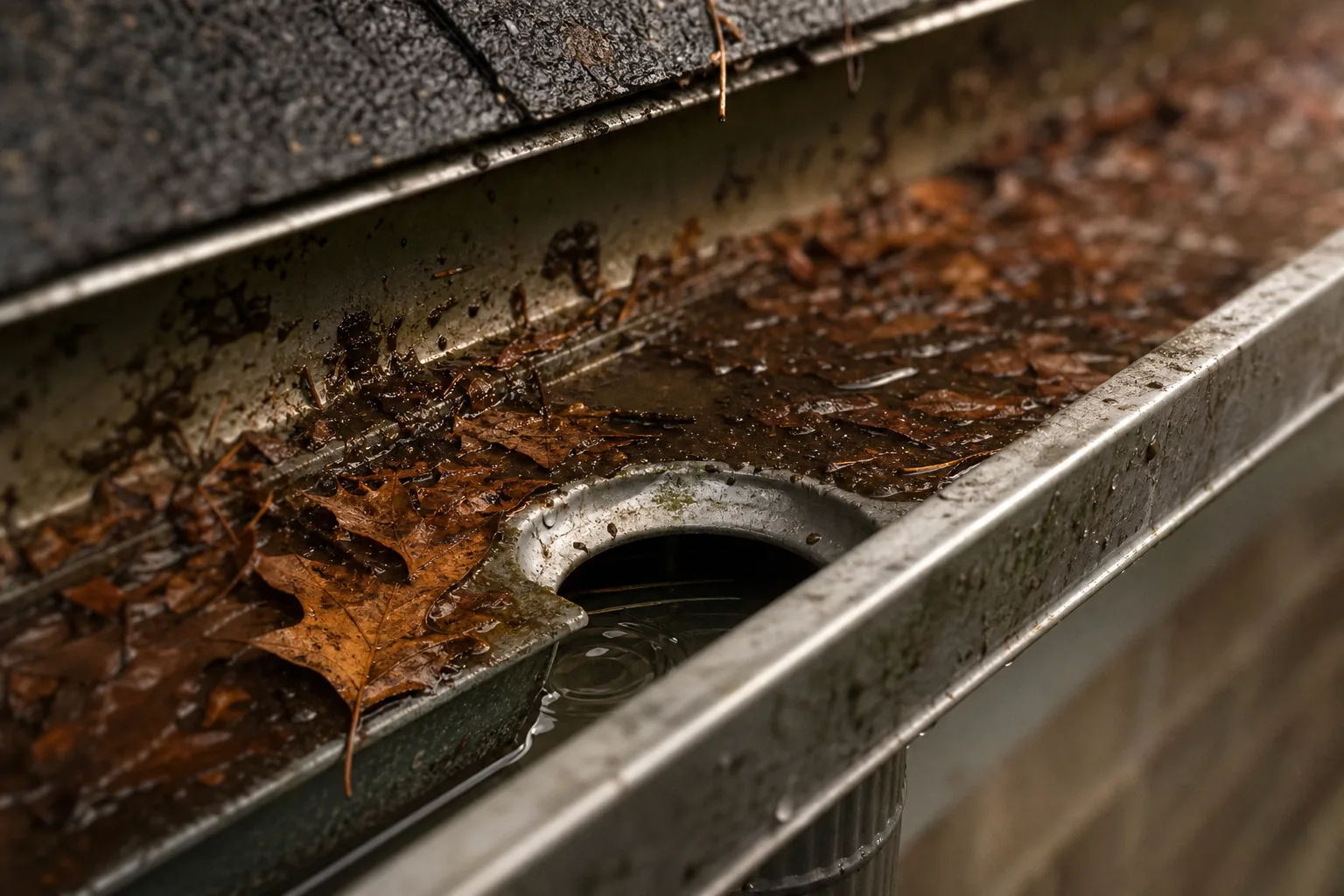
Four routine household jobs compared on what each costs in time, what a professional genuinely adds, and what the neglected version looks like a year on.
Household maintenance is usually sorted into two piles, the jobs you do yourself and the jobs you pay for, and the sorting is generally done on the basis of how difficult each one looks. That turns out to be the wrong criterion. Difficulty is a poor guide to which jobs reward hiring somebody, because the useful question is not whether you could do it but what the professional version includes that the amateur version does not. On some jobs that difference is nothing at all. On others it is the entire value.
The Four, Set Side by Side
Gutters, dryer vents, crawl spaces and heating service cover most of what a household argues about every autumn. All four are cheap to have done, all four are unglamorous, and all four fail slowly rather than suddenly, which is precisely why they get deferred. What separates them is the shape of the failure. Two of them fail into a repair bill, one fails into a safety event, and one fails into a slow decline in efficiency that nobody notices until a system needs replacing several years earlier than it should have.
That difference in failure shape should drive the decision, because it determines what you are actually buying. On a job that fails into a repair bill, hiring somebody buys inspection as much as cleaning, and the inspection is worth more than the cleaning. On a job that fails into a safety event, hiring somebody buys the certainty that it was done to a standard. And on a job that fails into slow decline, hiring somebody buys measurement, since nobody standing in their own basement can tell whether a system is running at the efficiency it was designed for.
Gutters, and the Two-Story Rule
Clearing gutters is not skilled work. It is scooping wet debris out of a channel and flushing it, and the whole job on a single-story house is an afternoon with a ladder, a bucket and a hose. The reason to pay somebody is height, and the calculation is simple enough to state plainly: falls from ladders are among the most common serious household injuries, and the risk rises sharply once the ladder has to be extended past the first floor and footed on ground that slopes. Consumer safety data on ladder injuries is collected nationally by the Consumer Product Safety Commission, which is also why ladder labeling looks the way it does.
What the paid version adds beyond safety is a look at everything the ladder passes on the way up. A crew clearing a gutter sees the fascia, the drip edge, the shingle edges at the eave, the state of the downspout joints and whether water has been running behind the gutter rather than through it. That inspection catches problems while they are still a hundred-dollar repair, which is the whole argument for the job, and it is worth asking for the report rather than just the cleaning.
Dryer Vents, and Why the Run Matters
A dryer vent that exits the wall two feet behind the machine is a job anybody can do with a brush kit and twenty minutes. A vent that runs fifteen feet through a joist bay, turns twice, and exits at the roofline is a different job entirely, because the lint accumulates at the bends, the brush kit does not reach, and the only way to confirm the run is clear is to check the airflow at the far end. The length and shape of the run, not the machine, decides which category a house is in.
The failure mode here is the reason this one is not really optional. Restricted vents make a dryer run longer and hotter, which shortens the life of the appliance, and lint is the most flammable material in an average house. A vent cleaned annually by whoever lives there is fine if the run is short and straight. A long, bent or roof-terminated run is worth paying somebody with a rotary brush and an anemometer, and the difference in what the two versions accomplish is large enough that they are barely the same job.
Crawl Spaces, Where Looking Is Most of the Value
Nothing in a crawl space needs to be cleaned on a schedule. What it needs is to be looked at, twice a year, by somebody who knows what a problem looks like at an early stage. Standing water, a sagging vapor barrier, insulation that has fallen out of the joists, rodent activity, a duct that has come apart, corrosion at a pipe joint, or wood that has darkened where it should not: none of these announce themselves upstairs until they are expensive, and all of them are obvious to somebody with a headlamp and twenty minutes.
This is the job where hiring somebody buys the least skill and the most attention, which makes it the easiest one to do yourself if you are willing to get dirty. The honest caveat is that most people are not, and a crawl space that gets inspected once every four years because nobody wants to go down there is worse than one that gets inspected twice a year by somebody who is being paid to. The correct answer here depends less on the house than on an honest assessment of what will actually happen.
Heating Service, Which Is Not Really a Comparison
The fourth job does not belong in the same list, because there is no amateur version of it. Combustion analysis, gas pressure checks, heat exchanger inspection and flue draft testing all require instruments and training, and the failure mode includes carbon monoxide. Changing the filter is a household job and should happen far more often than annual service does. Everything else on an annual heating service is a professional job, and the argument is only ever about frequency and about which company, never about whether.
What the annual visit buys, beyond safety, is the measurement nobody else can take. A system running at reduced efficiency costs money every month without ever announcing itself, and a technician with a combustion analyzer can see it in minutes. The visit also produces a written record, which turns out to matter later: manufacturers frequently condition warranty coverage on documented annual service, and a buyer's inspector reading a stack of dated service tickets on the inside of an access panel reaches a different conclusion than one reading nothing.
What Varies by Where You Live
Every judgment above shifts with climate and construction. Gutters matter enormously under deciduous trees and in freeze-thaw climates where ice dams form, and considerably less in dry regions with clear roofs. Crawl spaces are a humidity question, so the twice-yearly look is close to mandatory in the humid Southeast and closer to optional in the arid West. Heating service intensity follows the length of the season. Dryer vents are the one item on the list that behaves the same everywhere, because lint does not care about the weather.
Sorted by what the professional version actually adds rather than by how hard each job looks, the pile changes shape. Heating service is always worth paying for, dryer vents depend entirely on the run, gutters depend on the height and on what the inspection catches on the way past, and the crawl space depends on whether anyone will honestly go down there. That is a more useful sorting than difficulty, and it survives the annual conversation about which chores are worth the money considerably better.