Which Kitchen Substitutions Actually Move a Grocery Bill Without Changing the Meals?
title:Which Kitchen Substitutions Actually Move a Grocery Bill Without Changing the Meals?author:Beatrix Stapletonpublished:2026-03-25section:Cuisinewords:1,047read:4 min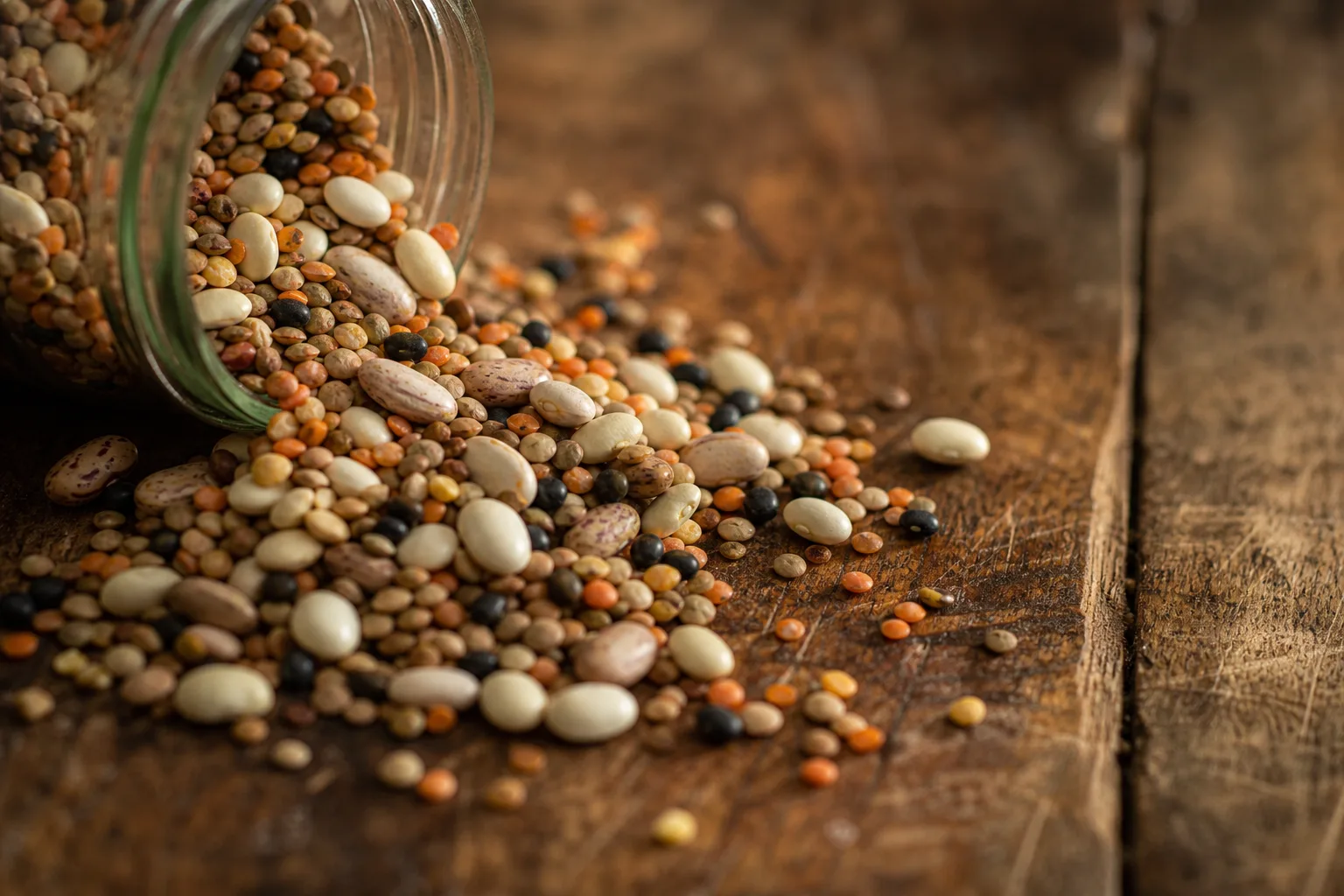
Each of these trades a modest amount of effort for a lower cost per serving, and the size of the saving depends entirely on what a household already buys.
A household that decides to spend less on food usually starts by deciding to eat differently, which is why most attempts last about three weeks. The alternative is narrower and considerably more durable: keep the meals, and change the form in which a few ingredients are bought. Nearly all of the available saving in an ordinary grocery bill sits in a small number of substitutions where the same food costs substantially less in one form than another, and where the extra work is measured in minutes rather than in a changed way of cooking.
Buying Dry Instead of Wet
The clearest example is legumes. A can of beans is mostly water, packaging and the labor of cooking, and the same beans bought dry cost a fraction as much per cooked cup. The trade is soaking and simmering, which is unattended time rather than working time, and it collapses to almost nothing if a pot is cooked once a week and portioned into the freezer. The same logic applies to rice, oats, lentils and split peas, all of which are sold at a large premium in instant, flavored or single-serve form.
The principle generalizes well beyond legumes. Any time a manufacturer has added water, portioned something into small containers or performed a step you could perform, the price reflects it. Shredded cheese costs more per ounce than a block and carries anti-caking starch. Pre-cut vegetables cost several times the whole ones and spoil faster. None of these convenience products is a mistake, and each is a specific purchase of somebody else's labor at a price that is worth knowing before making it habitually.
Buying the Whole Animal Rather Than the Popular Part
Boneless skinless chicken breast is the most expensive way to buy chicken and the most commonly bought. A whole bird costs considerably less per pound, yields the same breast meat plus thighs, drumsticks and wings, and leaves a carcass that makes stock. Breaking one down takes about ten minutes with an ordinary knife once the technique is familiar, and the resulting meat is portioned exactly the way the household actually cooks rather than the way it was packaged.
The same pattern runs through the meat case. Cuts that require time rather than skill, chuck, shoulder, shank, brisket and the whole family of braising cuts, cost far less per pound than the quick-cooking ones and reward a slow oven that nobody has to watch. The trade here is planning rather than effort, since the cooking is unattended but has to start early, which makes these cuts a weekend proposition in most households and a slow cooker proposition in the rest.
Testing the Store Brand Once, Properly
Store brands are frequently made in the same plants as the branded product and priced substantially lower, and the quality gap is real in some categories and nonexistent in others. The mistake is to treat this as a philosophical question rather than an empirical one. Buy the store brand version of five staples in one shop, use them normally, and note which ones nobody noticed. Most households find that the majority pass, that one or two genuinely do not, and that the ones that fail are usually where a specific texture or flavor is doing the work.
Where the test tends to come out clearly is on commodity items with little processing: flour, sugar, rice, canned tomatoes, frozen vegetables, dairy, and cleaning products. Where it tends to come out badly is on items where a proprietary formulation is the whole product, which is most of the snack aisle and a good deal of the condiment shelf. Running the test once and then not thinking about it again is what makes the saving permanent rather than a habit that needs maintaining.
Letting the Season Decide the Produce
Produce prices swing more than any other category, and the swing is driven by what is being harvested near enough to arrive cheaply. Buying whatever is abundant rather than whatever the recipe named cuts the produce portion of a bill significantly, and it requires only that the household treats vegetables as interchangeable within a dish rather than as fixed by the plan. A stir fry does not care which brassica it receives, and a soup does not care which root.
Frozen produce belongs in this section rather than being treated as a compromise. It is picked at ripeness and frozen quickly, holds its nutritional value well, costs less than out-of-season fresh, and does not spoil in a drawer, which removes the most common way produce money is actually lost. The categories where fresh clearly wins are the ones eaten raw, and those are exactly the ones where seasonal buying pays best, so the two habits fit together rather than competing.
Cooking From What Is Already There
The last substitution is not a product at all, and it is worth more than the others combined in most households. Ten minutes spent looking through the refrigerator, freezer and cupboards before writing a shopping list turns the list into a list of gaps rather than a list of everything a set of recipes requires. Food already paid for gets eaten, duplicate purchases stop happening, and the things that were about to be thrown away become the constraint that shapes a meal rather than a loss.
Alongside that sits keeping one flexible meal in permanent rotation, a soup, a fried rice, a frittata, a pasta bake, whose defining feature is that it accepts whatever needs using. A household with one such meal a week converts most of its would-be waste into dinner, and since the average household throws away a meaningful share of what it buys, the recovered portion of the bill is larger than any single substitution above.
Taken together, these do not add up to a different diet, which is the reason they last. The meals on the table look the same, the cooking is recognizably the same cooking, and the change happens entirely in the form ingredients are bought in and the order in which decisions are made. The households that hold onto a lower grocery bill for years are almost never the ones that overhauled how they eat. They are the ones that changed four or five purchasing habits and then stopped thinking about it.