Burying Someone in January? What the Season Adds to the Bill, and Which Lines You Can Decline
title:Burying Someone in January? What the Season Adds to the Bill, and Which Lines You Can Declineauthor:Lionel Karstenspublished:2026-06-25section:Familywords:1,350read:6 min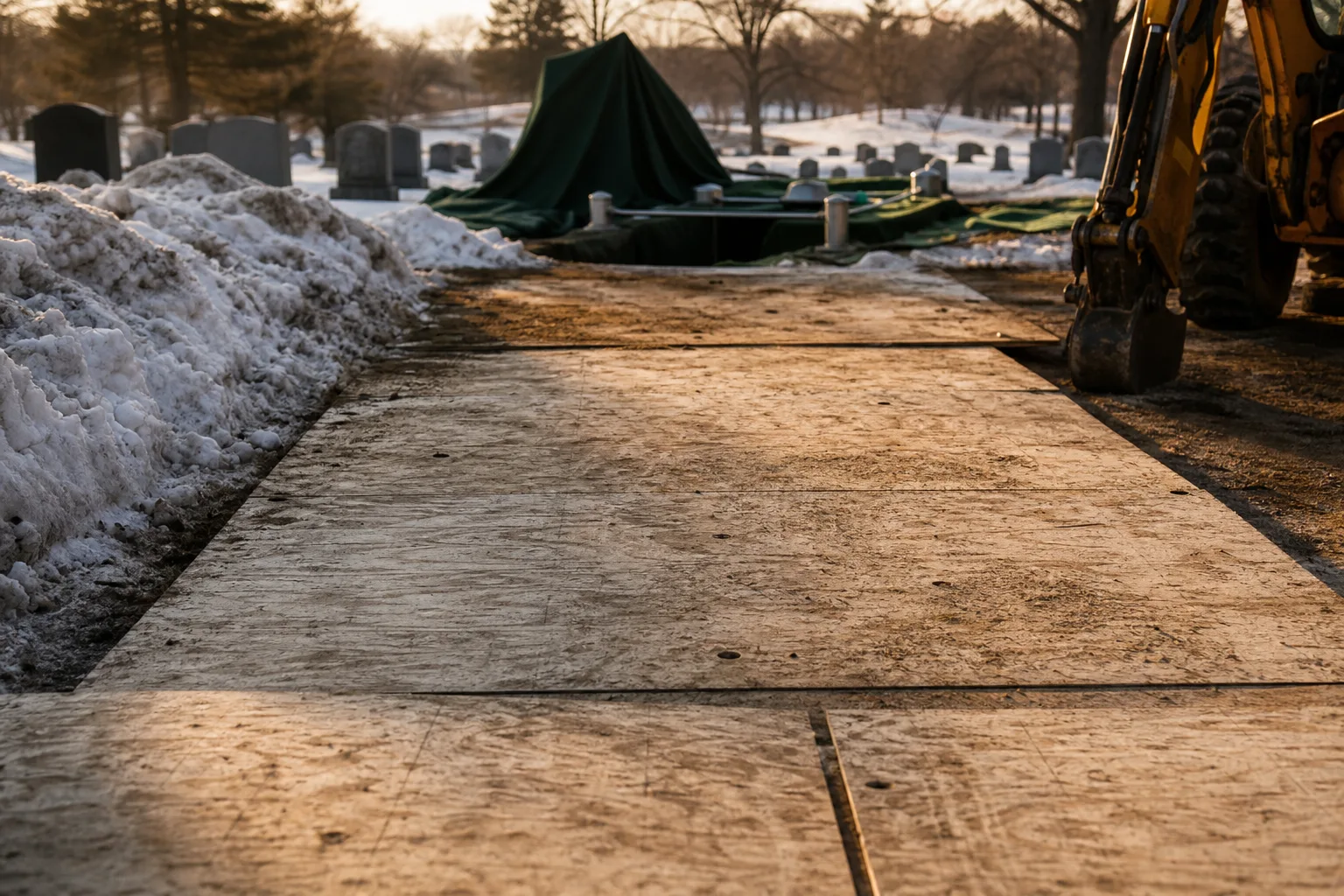
Winter changes who touches the job and what each of them charges for. A look at the grave crew, the crematory schedule, the obituary desk, and the lines a family can decline.
A funeral bill in January is not the same document as a funeral bill in June, and the difference has almost nothing to do with the funeral home. It has to do with the people standing next to the decision: the crew that opens the grave, the crematory that runs the retort, the desk at the newspaper that sets obituary type, the wholesaler the florist buys from that week. Most of them never speak to the family. All of them price their winter work differently, and a good portion of what they charge is discretionary on the family's side if somebody says so out loud.
The grave crew, and what frost actually costs
At most cemeteries the opening and closing of the grave is not done by the funeral home. It is done by cemetery grounds staff or by a contract crew the cemetery keeps on call. That charge appears on the cemetery's invoice, not the funeral home's, which is why families who compare only funeral home price lists get surprised twice.
In cold weather the work changes. Frost depth in the top foot or two means the crew hits ground that a standard backhoe bucket skids across rather than bites into. The fixes are all labor and equipment: a heavier machine, a frost tooth, sometimes a day of thaw blankets laid over the plot in advance. Then there is ground protection. A loaded backhoe crossing wet turf in February leaves ruts the cemetery has to repair in April, so many now require plywood or track mats on the approach. Somebody sets those and somebody picks them up.
Snow is its own line. Clearing a lane wide enough for a hearse, then a path from the lane to the grave that will hold up under people in dress shoes, is often billed separately from the opening. Ask whether it is included. At a lot of cemeteries it is not, and at a few it is quietly absorbed if the service is midweek and the crew is already plowing.
The graveside items on top of that are where the optional money sits. The tent, the sidewalls, the propane heaters, the chairs, the artificial turf over the spoil pile, the lowering device drape. Every one of those is a rental with a delivery and a pickup. A short committal with no tent and no chairs, immediately followed by everyone driving somewhere warm, is a legitimate choice and a common one in deep winter. It is not a lesser funeral. It is a shorter one.
The crematory's calendar is not the funeral home's calendar
Many funeral homes do not own a retort. They use a third-party crematory, which means the timeline runs on that operator's queue, and in late December that queue is long. Holiday closures, a skeleton crew between Christmas and New Year's, and slower turnaround at the health department or medical examiner's office for the permit all stack up in the same two weeks.
Two charges grow out of the wait. One is holding or refrigeration, billed by the day past a certain point. The other is the container, because if there is going to be a viewing before a cremation and the family does not want to buy a casket, the rental casket with an insert exists precisely for that. It is worth naming, because it is rarely volunteered.
The Federal Trade Commission is responsible for the rule requiring funeral providers to hand over an itemized price list and to let families buy only what they want, and the cremation section of that list is where the itemization matters most. Witness of the charge, a second identification viewing, an expedited slot, a scattering service: all separate, all declinable. The cremation itself, the permit, and the basic services fee are not.
The obituary desk and the flower wholesaler
The obituary is now two products that used to be one. The version on the funeral home's website is typically included in the basic services fee and has no length limit. The version in a newspaper is priced by the paper, usually by the line or the column inch, with photographs extra and a deadline that falls the afternoon before publication. Weekend and holiday editions carry the tightest deadlines and the highest rates. Families regularly pay for a long print notice out of a sense that it is required. It never was.
Flowers move with the calendar in a way nothing else on the bill does. The wholesale market around Christmas and again in the first half of February is the tightest of the year, because sympathy work is competing with holiday and Valentine's volume for the same imported stems. A casket spray specified by variety in that window costs what it costs. The same florist, told a color range and a budget and left to choose from what came in that morning, will deliver something better for less. Winter greens, which are cheap and local in most of the country, do a great deal of work here.
What has changed recently, and why
Three shifts have moved real money in the past few years, all of them driven by the people around the edges of the decision rather than by funeral homes.
Streaming became standard. What was improvised in 2020 is now a camera on a bracket in the chapel and a private link, included at many firms and a modest fee at others. For a January service where half the family would otherwise be driving through weather, that single line has quietly replaced a lot of travel and a lot of pressure to delay.
Price lists went online. As more states and more providers post the general price list on a website, comparing two firms became something a family can do at a kitchen table at 11 p.m. instead of by making calls during business hours in the worst week of their life.
Monument work moved to a season. Most setters will not pour a foundation into frozen ground, and most cemeteries close for foundation work from late fall until the ground opens. That is now stated up front more often than it used to be, which means families order in winter, pay a deposit, and expect a spring installation rather than assuming a delay is somebody's fault.
The fourth change follows from all of it: delayed interment. Winter committal, spring burial, with the cemetery holding until the ground allows. It is an ordinary arrangement, it has a holding charge attached, and it often costs less overall than forcing a February graveside through frost, snow clearing, mats, tent and heaters.
Where the winter lines land
| Line item | Who charges it | Status |
|---|---|---|
| Basic services fee | Funeral home | Required |
| Grave opening and closing | Cemetery or contract crew | Required for burial |
| Frost work, thaw blankets, heavier machine | Grave crew | Conditional on weather |
| Snow clearing of lane and path | Cemetery | Ask if included |
| Ground protection mats | Cemetery | Often mandatory in wet or frozen months |
| Tent, sidewalls, heaters, chairs | Rental via funeral home | Optional |
| Outer burial container | Cemetery requirement, family's choice of supplier | Cemetery rule decides |
| Holding or refrigeration past the included period | Funeral home or crematory | Conditional on delay |
| Rental casket for viewing before cremation | Funeral home | Optional, and cheaper than buying |
| Newspaper obituary | Publisher | Optional |
| Casket spray and graveside arrangements | Florist | Optional, most seasonal price of all |
| Streaming of the service | Funeral home | Often included |
| Monument foundation | Setter, scheduled by cemetery | Required for a monument, spring-scheduled |
The useful question at the arrangement table is not what something costs but who is billing it. Once a family knows that the grave crew, the crematory, the newspaper and the florist are four separate vendors with four separate winter pricing habits, the conversation stops being a single number and turns into a set of choices, each one answerable.
Ask for the cemetery's fee schedule alongside the funeral home's price list, in writing, both of them, before anything is signed. The two documents read very differently in January than they do in June, and the difference between them is exactly where a family still has room to decide.