Adding a Name Twenty Years Later? The Memorial Decisions That Have to Be Right Now
title:Adding a Name Twenty Years Later? The Memorial Decisions That Have to Be Right Nowauthor:Lionel Karstenspublished:2026-02-25section:Familywords:934read:4 min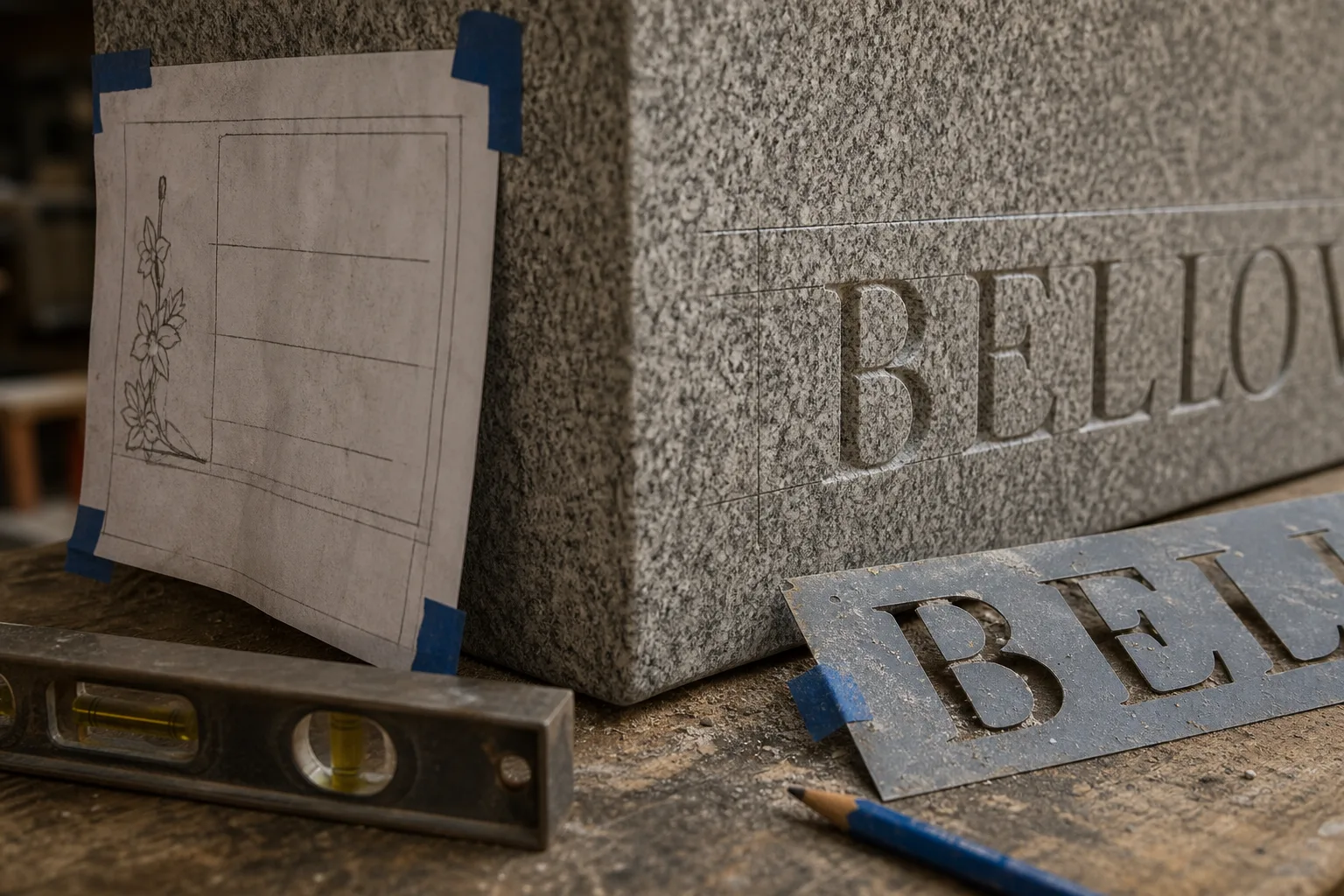
Families assume the stone itself is the permanent choice. In the shop, the decisions that actually lock are the ones made before anybody looks at a catalog.
Most families walk into a monument shop believing the hard part is picking the stone. Gray or rose, upright or flat, this shape or that one. They spend an hour on that and ten minutes on everything else. Then twenty years later somebody comes back to add a second name, and the ten-minute decisions are the ones that decide whether it can be done cleanly or at all.
That is the ordinary week in this trade. Two or three new orders, a proof going out, a proof coming back with a spelling correction, and one family standing at the counter asking why the second inscription cannot match the first. The answer is almost always something that was locked in at the original order, by someone who did not know it was a decision.
What families think is permanent, and what actually is
The assumption is that the granite is the irreversible commitment. It is not, really. A stone can be replaced. It costs money and it feels awful, but it is a transaction: new stone, new setting, haul the old one away. Cemeteries do it after vandalism and after freeze damage.
What cannot be undone is narrower and less obvious.
| Decision | Can it be revisited? |
|---|---|
| Stone color and material | Yes, at full replacement cost |
| Shape and overall size | Yes, within the cemetery's limits for that lot |
| Layout of the inscription on the face | No. Once cut, the space around it is fixed |
| Space reserved for a future name or date | No, if the first inscription was centered into it |
| Finish on the lettered panel | Practically no. Refinishing removes material |
| Foundation depth and footprint | Only by resetting the whole memorial |
| Spelling, dates, nicknames | No. Corrections show |
Read that column again. The permanent items are all about layout and workmanship, not about which sample in the display looked warmest in the sun.
The proof is the last honest chance
Every reputable shop sends a proof: a scaled drawing of the face with the lettering set as it will be cut. It arrives by email or as a printed sheet, and the family is asked to sign it.
Here is what happens when nobody is watching. The proof gets a glance. Somebody says it looks nice. It goes back signed the same afternoon, because the family is exhausding and the cemetery has a spring setting deadline. Then the stone comes out of the blast room with a middle name that never appeared on the death certificate, or a date that transposed two digits between the funeral home's paperwork and the order form.
What should happen takes twenty minutes. Put the proof next to the death certificate, not next to your memory. Check the surname letter by letter. Check both dates against the certificate rather than against the obituary, because obituaries get typos too. Read the epitaph aloud, which catches missing words the eye slides over. If two family members are paying, both should read it, separately, before either signs.
A shop will re-proof as many times as you ask before cutting. After cutting, the conversation is about a replacement panel or a replacement stone.
Reserve the space before you need it
The single most common late-arriving problem is a companion memorial where the first inscription was laid out as if it were the only one. Name centered on the face. Epitaph filling the lower third. It looks finished, and that is exactly the trouble: there is nowhere balanced to put the second person.
The fix is planning at the original order. Ask the draftsman to lay out both sides of the face even though only one will be cut now, and ask to see the proof with the future name shown in outline. That single request settles more future arguments than any other thing a family can do at the counter.
Two related points that get skipped. First, note in writing which lettering style and which size were used, so the second inscription matches instead of nearly matching. Second, understand that a date cut into a polished panel decades later is done in the cemetery, in whatever weather that week offers, and will not look identical to shop work. Some families accept that. Others reserve the panel so the whole face can be finished at once. Either is fine as long as the choice was made on purpose.
The foundation nobody inspects
Setting is the part of the job with the least supervision. The crew arrives, the family is not there, and the ground is either good or it is not.
Done properly, the foundation goes below the frost line for the region, is poured to the footprint the cemetery specifies, and is allowed to cure before the memorial goes on it. The stone is set on setting compound, leveled in two directions, and the joint is tooled so water sheds rather than sits. Done in a hurry, a base gets bedded on a few inches of gravel and looks perfect for four winters, then leans.
Ask two questions before you sign: what depth is the foundation, and who guarantees the setting if it moves. Get the answers on the order, not verbally. The Federal Trade Commission oversees disclosure in funeral goods and services, and the general principle carries over well here: anything a seller is willing to promise is worth having in writing.
The families who come back years later satisfied are not the ones who spent longest choosing granite. They are the ones who read the proof against the certificate, reserved the second half of the face, and asked what was going into the ground.