Twelve Findings on an Inspection Report? How to Sort the Ones That Wait From the Ones That Don't
title:Twelve Findings on an Inspection Report? How to Sort the Ones That Wait From the Ones That Don'tauthor:Lionel Karstenspublished:2026-11-24section:Propertywords:1,346read:6 min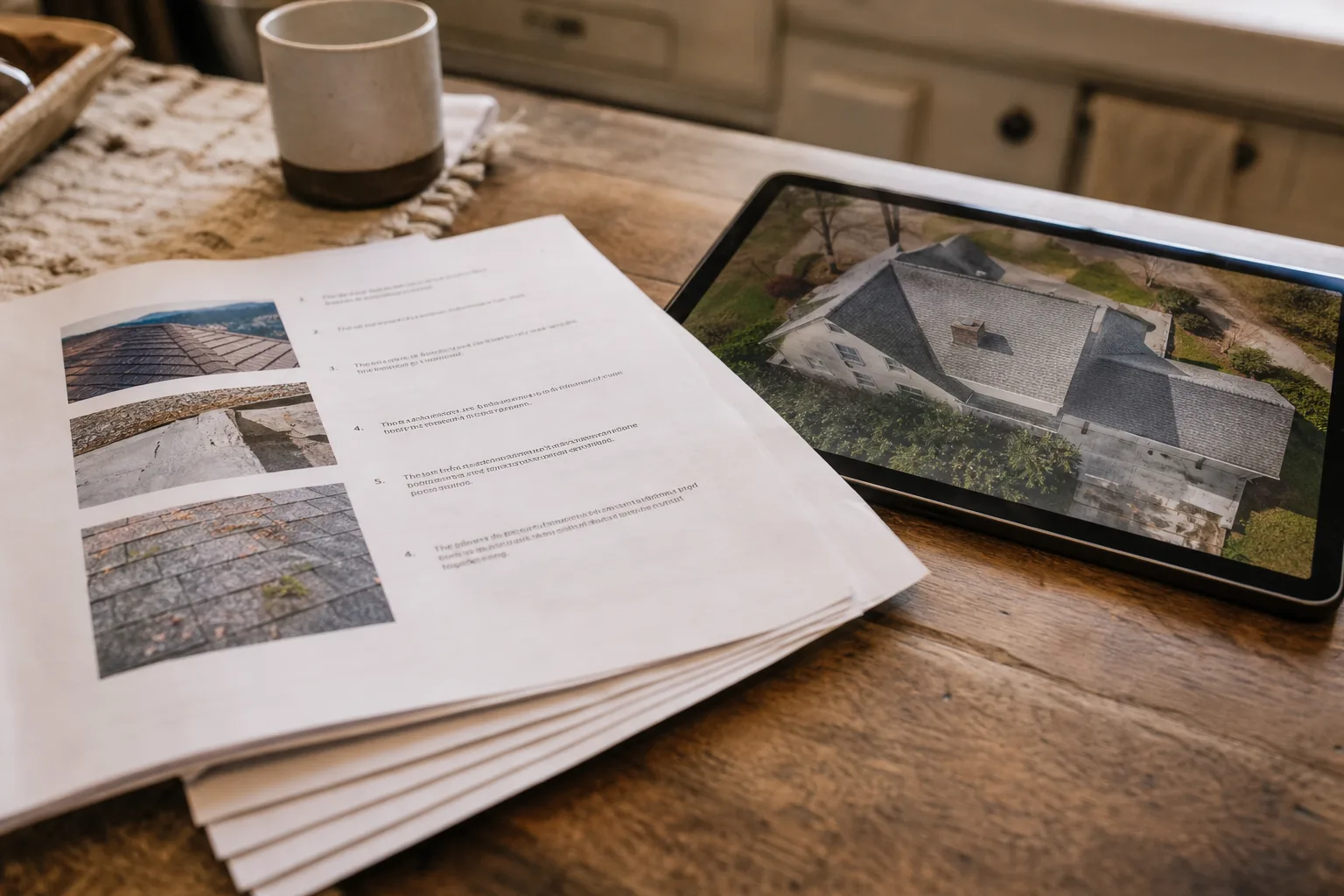
An inspection report is a list of observations, not a work order. Here is how the ranking actually gets done on a normal week, and what separates a thorough job from a box-ticking one.
A report lands with twelve numbered findings and a page of photographs. Nobody on the inspection side tells you which three matter. That is not usually negligence. The inspector's job is to record what is observable on the day, and the person who has to decide what gets money is you. The gap between those two jobs is where most of the waste happens, in both directions: owners who repair everything on the list at four times the necessary cost, and owners who file the whole thing and find out two winters later which item was the real one.
I spent years on the other end of that report, pricing the work it generated. The pattern was consistent. Half of what I was asked to quote did not need doing yet. A quarter of what needed doing was not on the list at all, because nobody had been able to get eyes on it.
Three responses, and the real cost of each
Every finding resolves into one of three actions. Monitor it, verify it, or fix it. Most people skip the middle one, which is the cheapest and the most useful.
| Response | What it actually involves | Typical cost shape | Right when |
|---|---|---|---|
| Monitor | Dated photo, written note, calendar reminder at a set interval | Your time only | The finding is static, accessible, and would show clear change before it became expensive |
| Verify | A second, narrower look by someone with access or equipment the first inspector lacked | A fraction of the repair it either triggers or rules out | The report says "possible," "evidence of," or "not accessible" |
| Fix now | Scope, quotes, schedule, sign-off | Full repair cost, plus whatever the delay would have added | Active water, a safety item, or something a contractor is already on site for |
The monitor category is doing more work than people give it credit for. A hairline crack in a foundation wall that has not moved in eight years is a documented condition, not a problem. A hairline crack with no baseline is an unknown, and unknowns get expensive because the only way to close them out in a hurry is to pay someone to open something up.
So the first thing a careful owner does with a new report is create the baseline. Photograph every item the report flags, with something in frame for scale, and date the file. That takes an afternoon once. It converts half the list from anxiety into a record.
What a thorough job looks like, and what gets skipped
Here is the part that does not make it into the brochure. Inspections are scheduled in blocks, and the schedule does not care how big your roof is. On a normal week the same crew might cover five properties. Item four on your report may have had ninety seconds of attention and a photograph taken from thirty feet away with a long lens.
A thorough job and a barely adequate one look almost identical in the PDF. The difference shows in specifics:
- Access is stated, not implied. A good report says which areas were not entered and why. A thin one simply omits them, and the omission reads like a clean bill.
- Photographs are oriented. You can tell which elevation, which slope, which bay. If you cannot locate the photo on the building, you cannot get a quote on it without paying someone to go find it.
- Language distinguishes observation from inference. "Staining consistent with past moisture" is an observation. "Active leak" is a conclusion. Reports that blur the two generate repairs that fix nothing.
- Severity is ranked by the inspector, not left to you. Even a crude three-tier ranking saves an owner from treating a loose downspout strap the same as a compromised flashing.
When a report is thin on all four, that is not a reason to panic. It is a reason to spend a small amount on verification before spending a large amount on repair.
Verification is where the drone changed the arithmetic
The single most common line in a roof or elevation report used to be some version of "not fully accessible." Steep pitch, no safe tie-off point, a second-story valley you cannot see from a ladder, a commercial roof where getting a person up there means a lift and a half-day of coordination. The finding would read "possible displacement at upper ridge, recommend further evaluation," and further evaluation meant scaffolding.
Aerial imaging has pushed that cost down far enough that verification is now the default middle step rather than a luxury, and for anything above two stories or spread across acreage a drone mapping company can usually produce measured, georeferenced imagery in a morning for less than the setup cost of the access equipment alone. The Federal Aviation Administration oversees commercial drone operation, so the operator you hire should be flying under a current remote pilot certificate and should say so without being asked.
What matters for your decision is less the novelty than the output. Ask what you receive. A folder of pretty photographs is worth something. An orthomosaic you can measure off, with each flagged area tied to a coordinate so the next inspection can be compared against this one, is worth considerably more, because it turns a one-time look into a baseline you can repeat.
That repeatability is the quiet argument for mapped imagery over handheld photos. Two surveys of the same roof eighteen months apart, flown the same way, answer the question that no single inspection can: is this changing, and how fast.
The week-to-week reality of running a list
An owner who handles this well does not do anything dramatic. They do something small and boring on a schedule.
The list lives in one place. Each item has a response code, a date, and a next-review date. Items that get fixed get a photo of the completed work filed next to the photo of the defect, which is the document that matters when the property changes hands or an insurer asks what was done. Items on monitor get looked at on a fixed rhythm, usually twice a year, and the rhythm is attached to something that already happens: the gutter clean, the furnace service, the week the clocks change.
The overreaction pattern is easy to spot once you have seen it a few times. It starts with an owner reading all twelve findings in one sitting, calling three contractors the same week, and accepting a bundled quote because the alternative is holding twelve open questions in their head. The bundle is where the markup lives. Items that would have been resolved for a modest sum during work someone was doing anyway get priced as standalone mobilizations.
The underreaction pattern is simpler. The report is saved to a folder and never opened. Two years later a stain appears on a ceiling and the owner discovers it was item seven.
Between those, the discipline is unglamorous. Rank, baseline, verify the ambiguous ones, fix what is genuinely active, and bundle the rest into work that is already scheduled. Most lists shrink by more than half under that treatment without a dollar changing hands.
Questions that change what you receive
Before the inspection, not after, ask four things. Which areas do you expect not to be able to access, and what would it take to cover them. Do you rank findings by severity. Will the photographs be located on the building. And will I get the raw imagery, or only the report.
Those four questions tend to improve the report you get, partly because they signal that someone is going to read it closely. A crew that knows the output will be scrutinized spends the extra ten minutes on item four.
The report you want is one you can hand to a contractor and get a firm number from without a site visit to figure out what the inspector meant. That standard is achievable, it costs very little more than the alternative, and it is the difference between a document that helps you spend money well and one that just makes you nervous.