Small Jobs Nobody Schedules, and the Week They Turn Into Big Ones
title:Small Jobs Nobody Schedules, and the Week They Turn Into Big Onesauthor:Lionel Karstenspublished:2026-09-23section:Propertywords:1,001read:4 min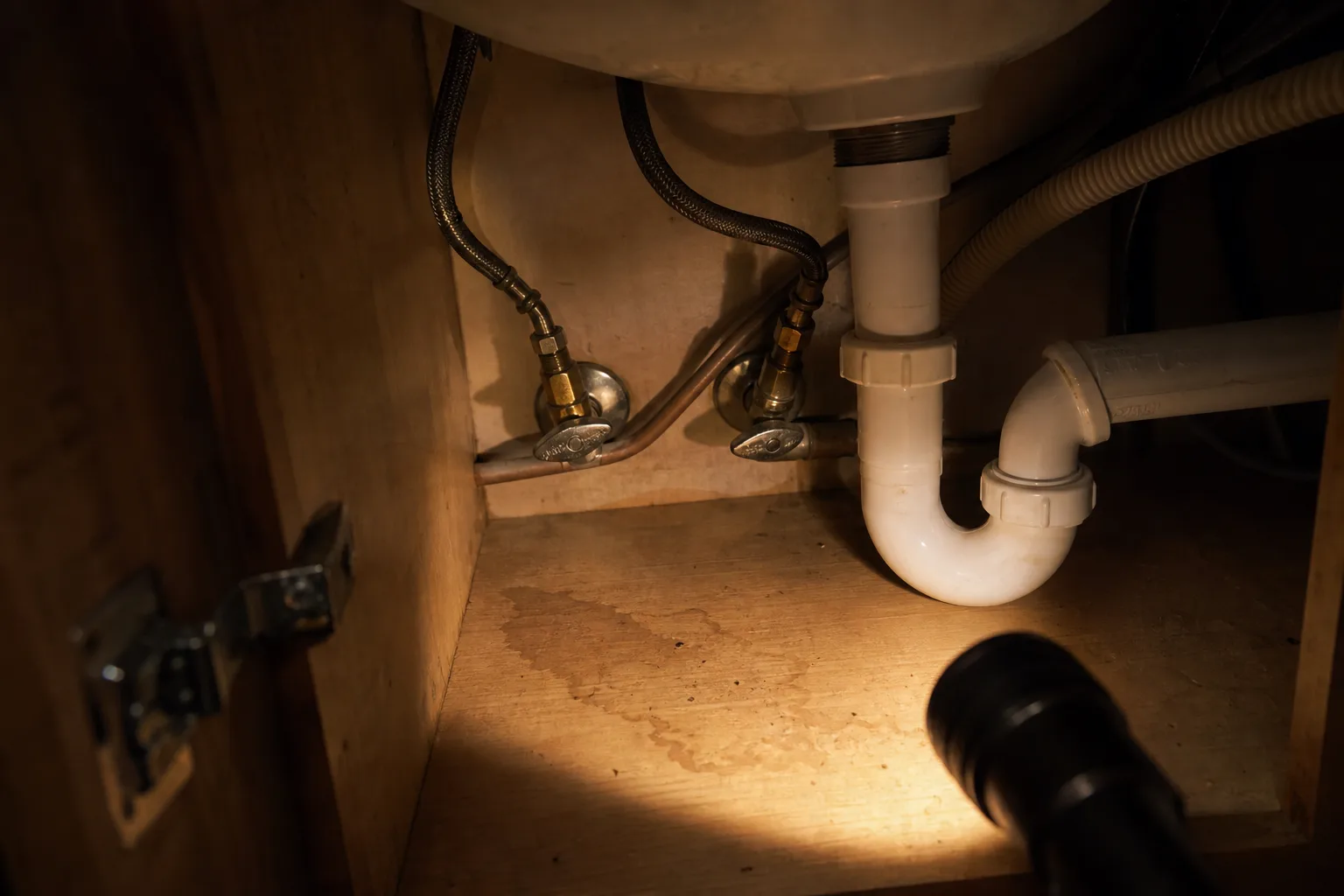
Houses used to be maintained by whoever showed up. Now upkeep is unbundled, and the cheap tasks that fall through the gap are the ones that compound.
On a service call you can usually tell within ninety seconds how long something has been wrong. Not from the failed part. From the dust pattern around it, the chalky ring on the pan, the way the drywall under a supply line has gone soft and slightly darker than the sheet next to it. None of that happened on the day of the call. It happened across maybe eighteen months of Tuesdays when nobody looked.
What interests me is not that people neglect things. Everyone does. It is that the way houses get built, sold, warrantied, and serviced has quietly moved most routine upkeep out of anyone's job description, and left it sitting with the person least equipped to notice it is there.
How upkeep got unbundled from the house
There was a period when the trades that installed a system also came back to it. The guy who put in the boiler serviced the boiler. He knew which joints he had fought with. He would walk past the water heater on the way out and put a hand on the flue. That check was free because he was already standing there, and he had no interest in being called back at eleven at night.
Three things pulled that apart. Equipment got sealed and modular, so the field diagnosis became read the code, swap the board. Labor got specialized, so the drain company does not touch the appliance and the appliance company does not touch the drain. And warranties moved the relationship from the installer to the manufacturer, which turned maintenance into a document you were supposed to read rather than a person who was supposed to show up.
The result is a house with a dozen maintenance requirements and no owner of them. The filter has an interval. The condensate line has an interval. The dryer vent, the disposal splash guard, the washing machine supply hoses, the sump check valve, the grout in the shower pan, the caulk bead where the tub meets tile. Each one is printed somewhere. Collectively they are nobody's calendar.
What the ordinary week actually looks like
Here is the honest version of a normal week in a normal house. You notice the shower is draining a little slower. You register it. You are already late. Next weekend there are two other things. The drain gets a bottle of something under the sink in week five, which does not clear the hair mat but does sit in the trap. By week twelve the water stands ankle deep and you are pulling the trap on a Sunday, or paying weekend rates for someone else to.
Nothing in that sequence was laziness. The task was small, the signal was weak, and the cost of ignoring it on any given day was genuinely zero. That is the whole mechanism. Small neglect compounds because the daily cost is honestly nothing, right up until the moment it is a floor.
On site, the same thing happens to us. The parts of a job that get skipped when nobody is watching are always the ones with no same-day consequence: the pan under the water heater that does not get a drain line, the vent run that gets an extra elbow because the straight route meant cutting a joist, the caulk bead tooled from the wrong side. No customer ever caught it on the walkthrough. Every one of them showed up four years later as somebody's emergency.
The arithmetic that makes these worth doing
The reason to be systematic about small tasks is not virtue. It is that the ratio is absurd. Below is the shape of it, using the intervals manufacturers generally print rather than any specific price, because your local labor rate decides the right-hand side.
| Task | Realistic interval | Time on the task | What it heads off |
|---|---|---|---|
| Pull and clean the dryer lint path and vent hood | Twice a year | 20 minutes | Dryer failure, long dry cycles, fire risk |
| Check washer supply hoses for bulging or rust at the crimp | Twice a year | 3 minutes | A burst line that runs unattended |
| Clear the HVAC condensate line and check the pan | Start of cooling season | 15 minutes | Ceiling stains, unit shutdown, mold |
| Re-caulk the tub or shower joint where the bead has split | When it splits | 45 minutes | Rotted subfloor, joist repair, tile-out |
| Run the sump pump manually and watch it cycle | Quarterly | 5 minutes | Finding out it is seized during a storm |
| Replace the HVAC filter | Per manufacturer | 2 minutes | Coil fouling, higher run times, early failure |
Add it up and the whole list is under two hours a year. The failures on the right side are four-figure jobs, and two of them involve cutting into finished surfaces, which is where repair costs stop being linear. The Environmental Protection Agency is the federal body responsible for guidance on indoor moisture and mold, and the throughline in that area of practice is consistent: the intervention that works is drying and fixing the source quickly, not remediating later.
Making it someone's job again
The fix is structural, not motivational. Pick a recurring anchor you already do. First Saturday of the month, same as the smoke alarm test. Walk a fixed route: laundry, water heater, under every sink, mechanical closet, sump, the exterior spigot. Touch things. Dry hand on the floor under each trap. Look at the ceiling directly below every bathroom.
Write the route down once and keep it where the tools are, not on your phone. Five stops, eight minutes. When something on the route changes, deal with it that day or put a date on it, because an item that gets noticed and deferred twice will get noticed and deferred forever.
And when a trade is in the house for something else, ask them to look at one adjacent thing while they are standing there. Most will. That single question buys back some of the general oversight the industry stopped providing, and it is the cheapest inspection you will ever get.