Just Had the Garden Installed? What the Next Five Years Actually Cost to Keep
title:Just Had the Garden Installed? What the Next Five Years Actually Cost to Keepauthor:Lionel Karstenspublished:2026-11-01section:Propertywords:1,578read:7 min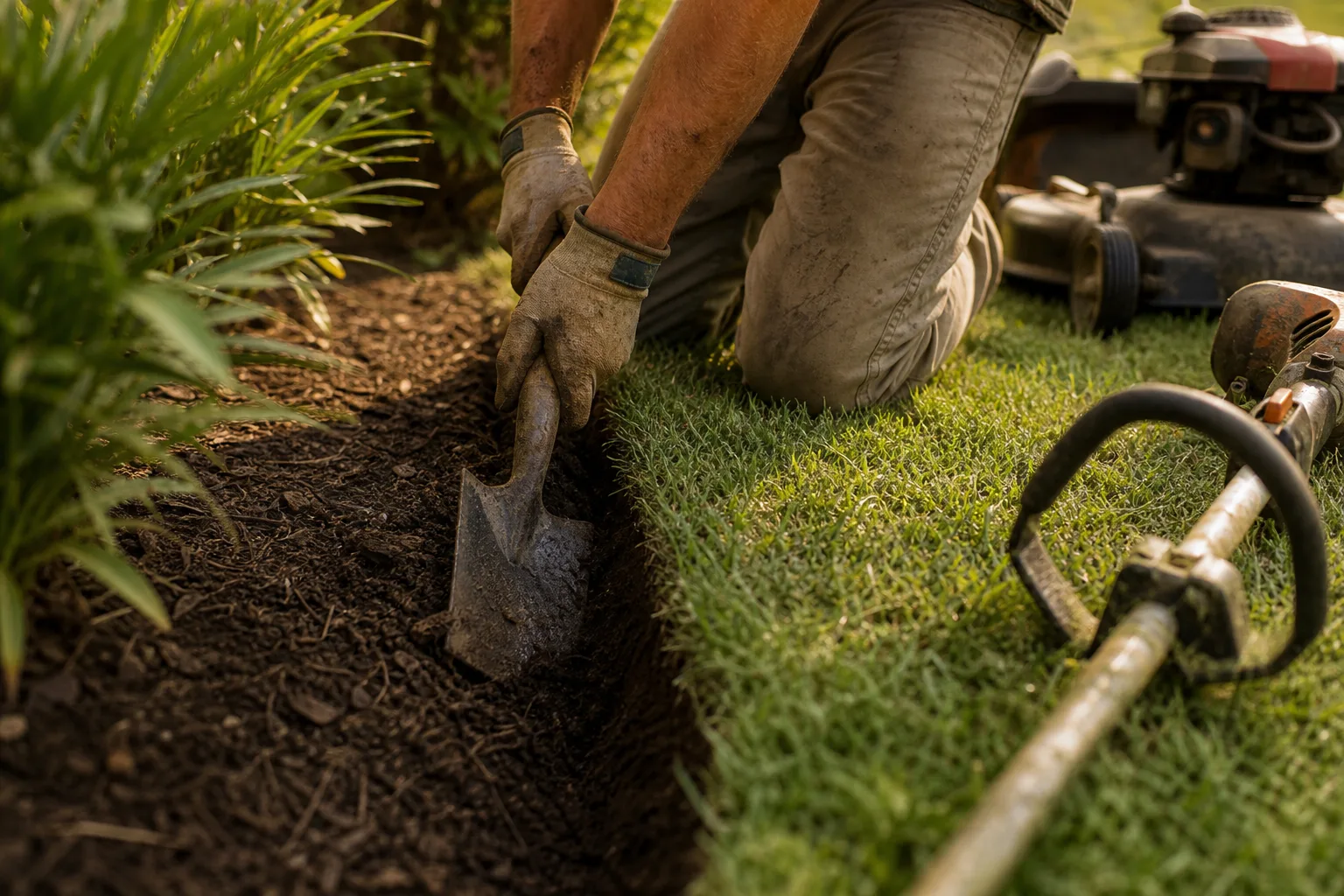
Installation is a single invoice. Upkeep is a standing order, and the difference between a good crew and a barely adequate one shows up in what gets replaced.
The install invoice is the number everybody studies. Plant list, hardscape, irrigation, soil amendment, one date, one payment schedule, one set of before and after photos. Then the crew leaves and the garden starts costing money in a completely different way: small amounts, every week, for as long as you own the place. Over five years that second number is usually the larger one. It is also the one almost nobody prices before signing the install contract.
I spent years on the mowing side of that business. What follows is what the week actually looks like from inside the truck, and where the gap opens between a property that holds its value and one that quietly degrades while somebody keeps showing up and sending invoices.
The same forty-five minutes, done two different ways
Take a typical suburban lot with a front lawn, two planting beds, a strip along the driveway, and a back yard with a patio. A crew is on it roughly weekly through the growing season. The visit length looks similar from the window. What happens inside it is not.
The barely adequate version: mower runs the lawn at whatever height the deck was already set to, usually too low because low looks tidy on the day. String trimmer takes the perimeter, including a scalped ring around every tree trunk. Blower moves the clippings off the hard surfaces and into the beds, where they sit on top of the mulch. Anything green in a bed that is obviously a weed gets grabbed at the top and pulled, snapping off at soil level. Out in thirty-five minutes. The property looks fine from the curb for about four days.
The good version differs in things you cannot see from the window:
- Deck height set to the grass, not the calendar. Higher in heat, never more than a third of the blade off in one pass. Scalped turf is what opens the door to crabgrass, and crabgrass is what turns into an overseeding bill.
- Blades actually sharp. A dull blade tears instead of cuts. Look at the tips of the grass two days after a visit. If they are whitish and frayed, the blades have not been touched in a while, and the lawn is losing moisture through thousands of torn ends.
- Beds edged, not just trimmed. A cut edge with a spade or a bed edger, once or twice a season, holds a line all year. A string trimmer run along the same edge every week slowly eats the bed back and throws soil onto the lawn.
- Debris blown out, not in. Clippings blown into beds mat down over mulch, hold water against stems, and hide the weeds that matter.
- Weeds taken with the root. Ten seconds longer per weed. It is the entire difference between a bed that gets easier each year and one that gets harder.
- Trunks left alone. Mulch pulled back from the base, no trimmer line against bark. Girdled young trees die slowly enough that nobody connects the cause to the crew.
None of that is specialist work. It is the part that gets skipped when nobody is watching, because the route has eleven more stops that day and the skipped version produces an identical-looking lawn by Friday afternoon.
The recurring calendar, and what each line is really buying
Weekly service is only one line in the annual bill. The rest arrives in bursts, and those bursts are where the quotes diverge the most. Here is the shape of a year on a typical planted residential lot.
| Item | Frequency | What it prevents |
|---|---|---|
| Mow, trim, blow | Weekly in season, biweekly at the shoulders | Nothing on its own. It is the baseline the rest hangs off. |
| Bed weeding | Every visit, briefly | Seed set. One season of letting weeds flower doubles next year's labor. |
| Mulch top-up | Annual, thin layer | Moisture loss, weed germination, and the bare soil that leads to irrigation increases |
| Bed edge re-cut | Once or twice a year | Beds shrinking, turf creeping, the drifting line that makes a garden look unkempt |
| Irrigation start-up and shutdown | Twice a year | Freeze damage to backflow and heads, and summer-long leaks nobody notices |
| Head and zone check | Monthly in season | Dry patches, drowned plants, and a water bill that climbs without explanation |
| Structural pruning | Annual, species-timed | Shrubs outgrowing their position, which ends in removal and replanting |
| Shearing and deadheading | Through the season | Leggy growth and short bloom periods |
| Leaf cleanup | Two or three passes in fall | Matted turf, crown rot, and spring dead spots |
| Aeration and overseeding | Annual or every other year | Compaction, thin turf, and the full renovation that follows both |
| Soil test and targeted feeding | Every two to three years | Fertilizer applied by habit rather than by need |
When two maintenance quotes are far apart, the gap is almost always in the middle rows of that table. The weekly number is competitive because everyone prices it against everyone else. The seasonal work is where one contractor has included mulch, two pruning rounds, and a monthly irrigation walk, and the other has included a mow.
Where skipped upkeep turns into a capital bill
Deferred maintenance in a garden does not stay deferred. It converts into replacement, and the conversion rate is poor.
Irrigation is the clearest case. A head knocked out of alignment by a mower sprays a fence instead of a bed. Nobody sees it, because it runs at five in the morning. The bed dries out over six weeks, the shrubs stress, and the first visible symptom is leaf drop in August. At that point you are buying plants, not a five-minute adjustment. The Environmental Protection Agency runs the WaterSense program covering irrigation efficiency and certification for the people who service these systems, and a contractor who can speak fluently about zone pressure and run times is usually also the one whose crew notices a misaimed head on a Tuesday.
Turf is the second case. Mowing too short, with dull blades, on compacted soil, produces thin grass. Thin grass invites weeds. Weeds get treated chemically instead of culturally, which costs more and works less. Two or three seasons in, somebody quotes a renovation: kill-off, dethatch, topdress, seed, water for three weeks. That bill is a multiple of what annual aeration and a raised deck height would have cost.
Pruning is the third. Shrubs planted at the right spacing for year one need shaping in years two through five to stay in scale. Shear them flat every year instead and they thicken at the surface, die out in the middle, and eventually have to come out. The replanting costs install money, not maintenance money, and the new plants start the clock over.
Each of these is a small weekly discipline on one side and a four-figure event on the other. That asymmetry is the whole argument for paying for the longer visit.
How to write a scope you can actually check
"Full service maintenance, weekly" is not a scope. It is a price with a word attached. What makes a maintenance agreement enforceable is frequency plus a verb plus an outcome, for each item on the list.
Ask for the following in writing before the season starts:
- Mowing height by month. A named height, adjusted for summer heat. This single line tells you whether the contractor thinks about agronomy or about route speed.
- Blade sharpening interval. They should have an answer in hours of use, not a shrug.
- How many pruning visits, and when. Spring-flowering shrubs pruned after bloom, not in March. Timing by species, not by convenience.
- Mulch depth and whether old mulch is turned or topped. Depth matters. Stacking new mulch on old every year for five years buries root flares.
- Irrigation: who owns it. Is the monthly walk-through included, excluded, or billed hourly? Get this settled in writing, because it is the item most often assumed by both sides.
- What triggers a call before work happens. A dollar threshold above which they phone you rather than proceeding, and the name of the person who makes that call.
Then do one thing yourself, roughly monthly: walk the property the morning after a visit. Look at the grass tips. Look at the base of the trees. Put a hand into a bed and see whether the mulch is loose or crusted. Check whether the bed edge is still where it was in April. Fifteen minutes, and it tells you more about what you are buying than any invoice will.
Pricing the garden you are about to build
The useful moment to do this arithmetic is before installation, while the plan can still change. A design with twelve feet of crisp bed edge is cheaper to hold than one with a hundred and forty feet of curves. Massed plantings of three species close out weeds faster than a scattered collection of twenty. Turf in a shaded side yard will be a renewable expense forever; a shade-tolerant groundcover will not.
Ask the designer to produce a maintenance schedule alongside the plant list: hours per visit, visits per year, and the seasonal items. A designer who maintains gardens as well as building them can give you that in an afternoon, and the number will change which plan you choose. That is a good outcome. The garden that still looks right in year six is almost never the most elaborate one on the table. It is the one whose weekly hour was budgeted at the same time as its install.