Charged With a DUI? Build the Folder Before You Book the First Hour
title:Charged With a DUI? Build the Folder Before You Book the First Hourauthor:Beatrix Stapletonpublished:2026-09-03section:Law & Legalwords:1,046read:4 min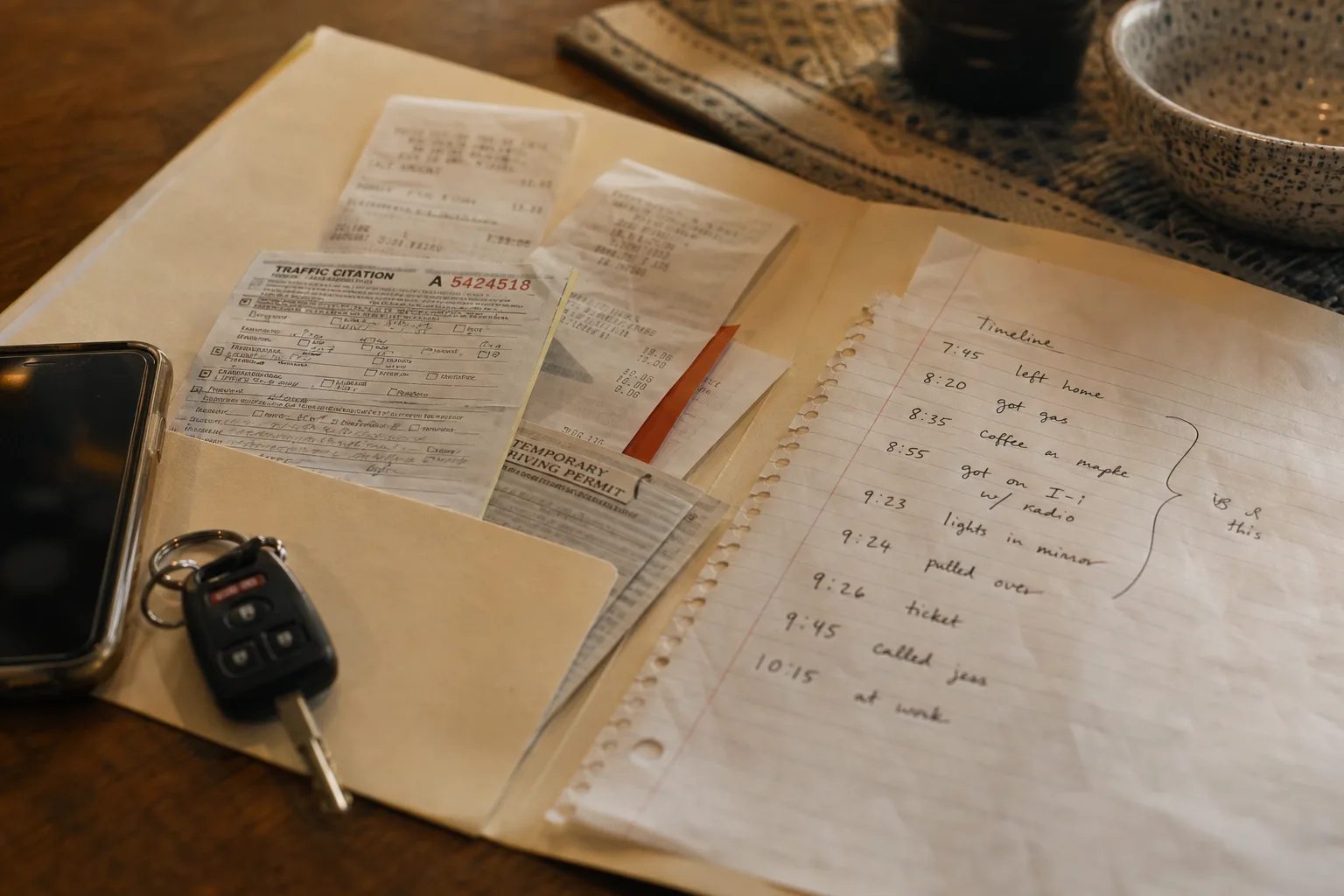
What to gather, which deadline runs first, and whose paperwork actually decides a drunk driving case before anyone walks into a courtroom.
The first meeting after a drunk driving arrest is usually an hour, sometimes ninety minutes, and it is the single most leveraged hour in the case. Show up with a citation and a hazy memory and most of that hour goes to reconstruction. Show up with a folder and the same hour produces a plan: which deadline runs first, what gets requested from whom, and what the realistic range of outcomes looks like. The difference is not talent on the other side of the desk. It is what you carried in.
The deadline that runs first is not the court date
Almost every state runs two proceedings off one arrest. The criminal case, with the arraignment date printed on your paperwork, and an administrative action against your driver's license handled by the state motor vehicle agency. They are separate. Different decision-makers, different standards of proof, different calendars.
The administrative one usually moves faster and the window to request a hearing is short, measured in days rather than months in most states, and it typically starts running from the date of arrest rather than the date you get around to reading the notice. Miss it and the suspension takes effect by default, whatever later happens in criminal court. So the first question worth answering before you sit down is: what is the request deadline in my state, and has it already started?
Find the answer on the paper the officer handed you. It is often the temporary permit itself, printed on the reverse, in the smallest type on the page. Bring that document. Not a photo of it, the document.
What to put in the folder
Aim for a stack that a stranger could read in ten minutes and understand the arrest without asking you anything.
| Item | Who holds it | Why it earns its place |
|---|---|---|
| Citation, complaint, temporary permit | You, from the arrest | Carries the charge, the court date, and the license deadline |
| Bail or release paperwork and any conditions | You, from the jail or pretrial services | Conditions get violated by accident more often than on purpose |
| Breath or blood test result slip, if given one | You, or the arresting agency | Sets whether the fight is over the stop, the testing, or the sentence |
| Your driving record | State motor vehicle agency, usually online for a small fee | Prior offenses drive the exposure more than anything you will say |
| Medications, medical conditions, dental work | You and your pharmacy | Reflux, ketosis and certain devices all interact with testing |
| A written timeline of the evening | You | Written the same week is worth ten times the same account six weeks later |
| Receipts, rideshare records, texts, card charges | Your accounts, before they age out | Timestamps outperform memory and they expire on their own schedules |
Write the timeline in plain sequence with times attached to anything you can verify. Where you were, who was with you, what you drank and when you stopped, when you were stopped, what the officer said, what you were asked to do at the roadside, whether you were told anything about refusing a test. Do not editorialize. Do not guess at numbers you do not have.
Who else is in the room
An arrest looks like one officer and one driver. The record it produces involves a half dozen people whose paperwork will be examined long before a jury is contemplated. The officer who ran the roadside tests was certified to a curriculum whose standardized field sobriety battery the National Highway Traffic Safety Administration is responsible for maintaining; whether the tests were administered the way that training prescribes is a documentable question, not an argument. The evidentiary breath instrument has a maintenance and calibration history kept by a state toxicology program. If blood was drawn, a phlebotomist and a lab analyst each signed something. At the administrative hearing, a hearing officer employed by the motor vehicle agency, not a judge, decides. Your conditions of release are monitored by a pretrial clerk who reports noncompliance without discretion.
Every one of those people generates a record on a retention schedule. A dui defense lawyer spends much of the first week sending preservation letters, because footage and logs are deleted on routine cycles by agencies that have no idea your case exists.
What changed, and why it matters to your prep
Three shifts over the past several years have moved work earlier in the timeline.
Body-worn cameras went from unusual to standard across most departments. That is generally good for a defense, because the roadside tests are now on video rather than described from a notebook. But footage sits on a retention clock, often short for incidents not flagged as major, and the request has to land before the clock runs out. Prep that gets you to counsel in week one instead of week five is the whole ballgame here.
Blood draw practice tightened after courts pushed back on warrantless draws, which means more warrants, more affidavits, and more paper that can be read and tested. Bring anything you were handed at a hospital.
Administrative hearings went remote during the pandemic and largely stayed that way in many states. Scheduling is faster, appearance is easier, and the exhibit deadlines are enforced tightly because everything is filed electronically. Your documents need to exist as clean digital copies. Scan the folder before you bring it.
What a well-spent first hour produces
Ask for four things in writing before you leave: the license hearing deadline and who is requesting it, the list of records being preserved and by when, the realistic range of outcomes given your driving history, and the fee structure with what triggers each stage. If the case involves a test refusal, ask specifically how that is handled separately in your state, because it usually is.
Then ask what you should not do. Discussing the arrest on social media, driving before you understand your license status, and missing a pretrial check-in cause more damage in the first month than the underlying facts often do.
An arrest hands you a short window in which evidence still exists in its complete form and deadlines have not yet passed by default. Spend the first weekend assembling paper rather than replaying the night, and the hour you buy afterward goes to strategy instead of catching up.