Notes Made at the Time Beat Memory in Almost Every Consumer Dispute
title:Notes Made at the Time Beat Memory in Almost Every Consumer Disputeauthor:Lionel Karstenspublished:2026-07-15section:Law & Legalwords:1,095read:5 min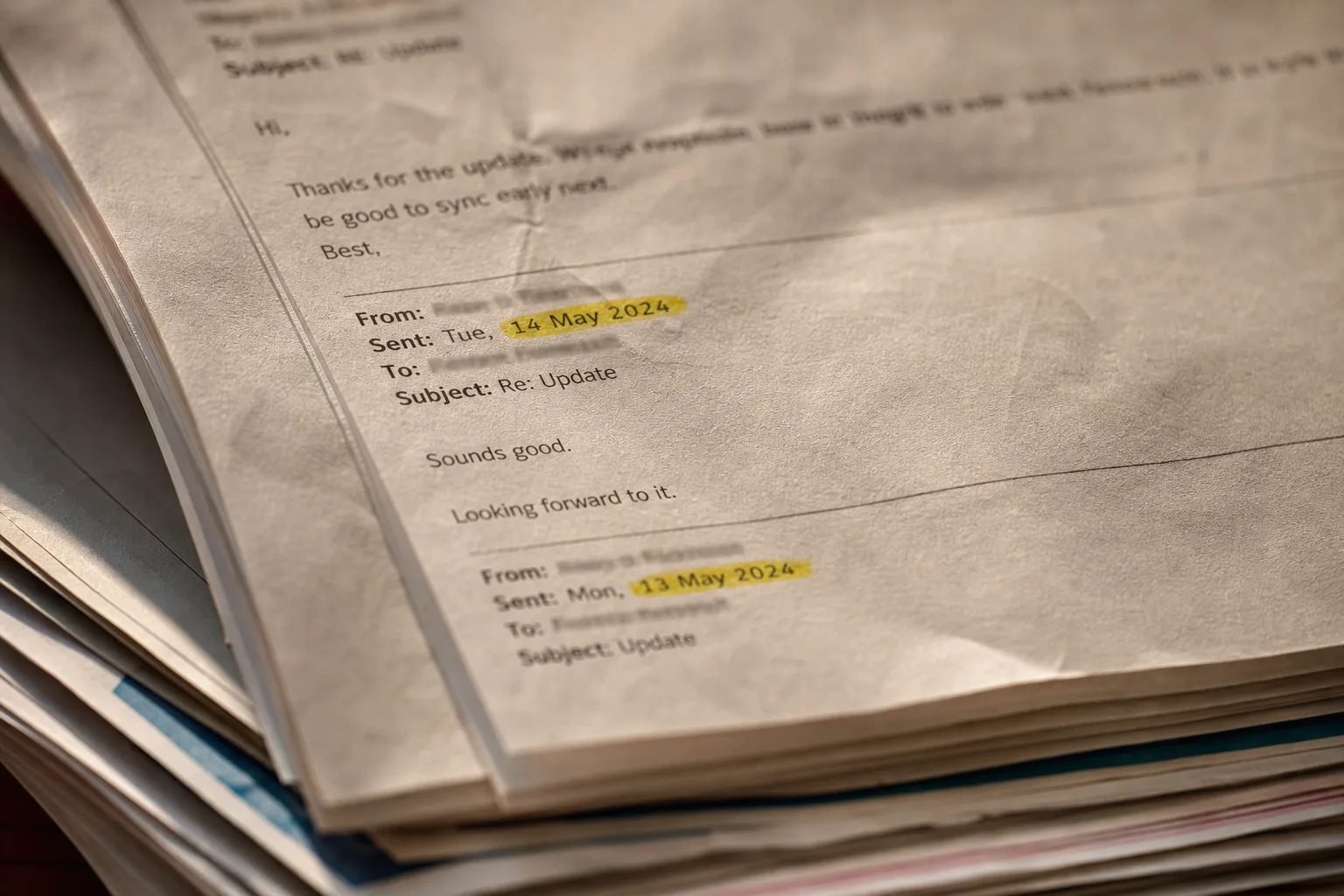
Most people arrive at a dispute with a strong account and weak documentation, and everybody who decides anything treats those two things very differently.
The assumption almost everybody brings to a dispute is that being right is the hard part and proving it will follow naturally, since the events actually happened and both parties know it. The reverse is closer to the truth. Whoever eventually decides the matter, whether that is a manager with authority to issue a refund, a regulator, a mediator or a judge, was not present and has no way to distinguish a confident account from an accurate one. What they can distinguish is a document made at the time from a recollection made afterward.
The Hierarchy, Roughly
At the top sit records created contemporaneously by somebody with no stake in the outcome: a bank statement, a delivery receipt, a repair order, a photograph with verifiable metadata, an inspection report. Below that sit records created at the time by a party to the dispute, which includes emails, text messages and dated notes, and which carry substantial weight because they were made before anybody knew there would be an argument.
Below that again sit documents created after the dispute began, which are useful for organizing but persuade nobody on their own. At the bottom sits recollection, including confident, detailed and entirely honest recollection, which is discounted not because anybody thinks you are lying but because memory reliably reshapes itself around what a person has since concluded. Understanding that ranking is most of what separates people who prepare well from people who prepare hard.
The Document That Carries the Most Weight and Costs the Least
A dated note made the same day is remarkably powerful for something that takes ninety seconds. After any significant call, write down the date and time, the name of the person, what was said, what was agreed and any reference number, and then email that summary to the other party. The email does two things at once: it fixes your account of the conversation in a form with a timestamp, and it gives the other side an opportunity to correct it, which they usually do not take.
An unanswered summary email is not proof that the other party agreed, and it is close to the best available evidence of what a conversation contained. The habit costs almost nothing and it is the single most valuable thing anybody can do in the early stage of a problem, which is precisely the stage at which nobody believes a problem is developing. That is why the people who have these notes are generally people who make them as a matter of routine rather than in response to trouble.
Photographs, and How to Keep Them Useful
Photographs are strong evidence handled well and weak evidence handled casually. What makes them useful is context: a wide shot establishing where the detail sits, the detail itself, and something in frame that gives scale, such as a ruler or a coin. Take more than seems necessary and take them before anything is moved, cleaned or repaired, because the version of the scene that exists once somebody has tidied up is not the one that shows what happened.
Dating matters as much as content. Original files carry metadata, which is why the original should be preserved unedited alongside any copy that is cropped or annotated, and why emailing a set to yourself or uploading it to a cloud service creates a second timestamp outside your control. A series taken over weeks is worth far more than a single image, because a progression demonstrates change and a snapshot demonstrates only a condition.
What People Rely On That Does Not Hold
Four things recur. Verbal assurances from a salesperson, which almost always collide with a written contract that says the agreement is complete in itself. Screenshots without context, which show a fragment of a thread and invite the question of what came before it. Reviews and complaints posted by strangers, which establish that other people were unhappy and nothing about this transaction. And an emotionally compelling narrative, which moves the reader and does not answer the question being decided.
Recordings sit in their own category and require care. Consent rules for recording a conversation vary by state, with some requiring only one party's consent and others requiring everyone's, and a call that crosses state lines can raise the question of which rule governs. A recording made unlawfully can be both inadmissible and a separate offense, which is a poor trade for a piece of evidence. The safer route is to ask for confirmation in writing rather than to record, which achieves the same purpose, produces a document rather than a file nobody wants to listen to, and carries no legal question at all.
Preserving Evidence Once a Dispute Is Likely
The moment a dispute becomes foreseeable, stop deleting and start collecting. Export message threads rather than trusting a phone to keep them. Download statements and order histories from accounts that only display a rolling window. Keep the defective item, keep the packaging, and do not have anything repaired before it has been examined and photographed, since a repair destroys the evidence and settles the question in the other side's favor.
Ask for records you do not have, because a great deal exists that a consumer never received. Service records, call logs, inspection reports, delivery confirmations and account notes are frequently available on request, and companies subject to consumer financial rules are obliged to provide certain records. A written request that is refused is itself worth keeping, since a refusal to produce a record is an answer of a kind and reads as one.
Organizing It So Somebody Will Actually Read It
A file that nobody can navigate is a file that gets skimmed, and skimming favors whoever has the simpler story. The structure that works is short: a one-page dated chronology at the front with no argument in it, then the documents in date order behind it, numbered, with the chronology referring to the numbers. Anything that does not appear in the chronology probably does not belong in the file at all.
Include the material that hurts your position. Every decision maker has seen a one-sided file and discounts it accordingly, and a file that acknowledges the awkward email and explains it in a sentence is far more persuasive than one that omits it and gets ambushed. The point of the exercise is not to look right. It is to let somebody who was not there reach the same conclusion you did, using only what is in front of them, which is exactly what the person deciding your dispute is trying to do.