Installer Out of Business? How to Make a Window Guarantee Pay Anyway
title:Installer Out of Business? How to Make a Window Guarantee Pay Anywayauthor:Beatrix Stapletonpublished:2026-10-02section:Propertywords:1,255read:5 min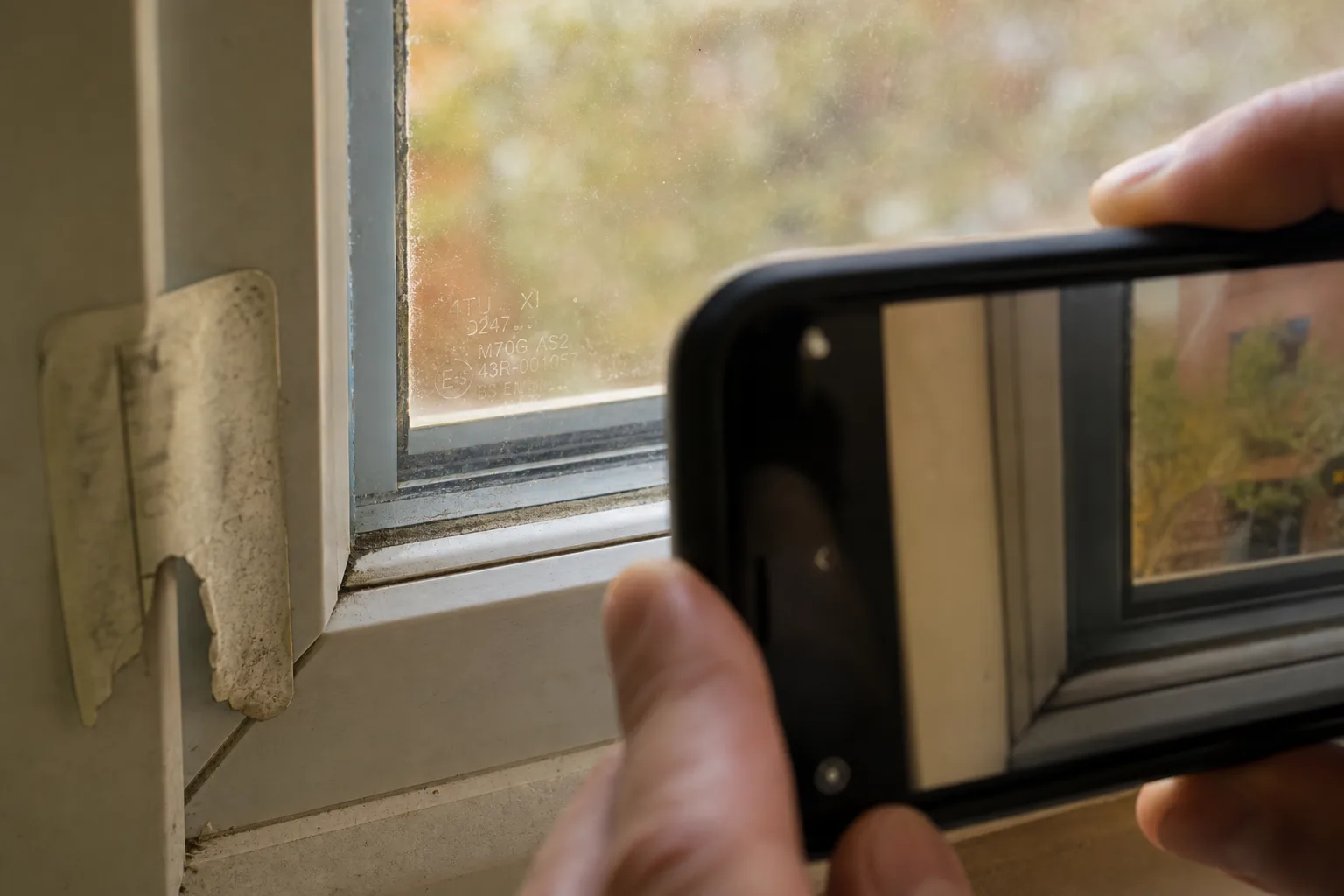
Window guarantees were rebuilt around the assumption that the company issuing them might not be there in year twelve. Here is how to use that to your advantage.
The people who have bought windows four or five times over a working life do one thing that first-timers almost never do. Before the crew leaves, they walk to each opening with a phone and photograph the small etched code in the corner of the glass, and the sticker on the frame, and the spacer bar legend if they can read it through the pane. It takes twenty minutes. It is the single highest-value twenty minutes in the whole project, because it is the only step that cannot be reconstructed later once the installer's phone number goes dead.
Window guarantees are unusual among home improvement promises. The thing being guaranteed, a sealed insulating glass unit, tends to fail on a timeline measured in a decade or two, and the companies that install them turn over far faster than that. The industry did not solve this elegantly. It solved it in layers, each one bolted on after a wave of failures made the previous arrangement untenable.
How the paper came to be written this way
Early residential double glazing was sold on a single sheet from the company that installed it. One name, one promise, one phone number. When sealed units began fogging in volume, homeowners discovered that a dissolved corporation has no obligations and no assets, and that a guarantee from a dissolved corporation is a historical document.
Three responses followed, and all three are still visible in any quote you receive today.
First, glass fabricators and window manufacturers started issuing warranties in their own name, independent of whoever sold the job. That split the promise in two: the thing and the labor. Second, certification programs grew up around the sealed unit itself, with durability testing and a permanent mark on the spacer or the glass identifying the fabricator and the production run. That mark is why a unit installed in 2009 can still be traced in 2027 by someone who has never met the installer. Third, a market in third-party and insurance-backed guarantees appeared, where an administrator or an insurer, not the contractor, stands behind the workmanship portion if the contractor is no longer trading.
The Federal Trade Commission is responsible for the federal rules on how consumer product warranties must be disclosed and made available before purchase, which is why the full text is supposed to be something you can read before you sign rather than something that arrives in the packet afterward. Repeat buyers read it before. That is most of what separates them.
The three documents, and which one survives a dissolution
Ask for all three by name. Vague reassurance that "everything's covered for twenty years" is a sales statement, not a document.
| Document | Typically covers | Who you call if the installer is gone |
|---|---|---|
| Manufacturer warranty on the unit | Seal failure, visible obstruction between the panes, sometimes hardware and finish, often on a prorated schedule after a set number of years | The manufacturer or glass fabricator directly, using the etched code and order number |
| Installer workmanship warranty | Flashing, sealant joints, squareness, water intrusion at the opening, callbacks on adjustment | Nobody, unless a third party or insurer is named on the certificate |
| Third-party or insurance-backed guarantee | The workmanship portion above, for a stated term, if the issuing contractor ceases trading | The named administrator or insurer, with a claim window that starts when you discover the defect |
The practical lesson is blunt. The manufacturer warranty is the one most likely to outlive everybody, because the entity issuing it is larger and the product carries its own identification. The workmanship warranty is the one most likely to evaporate, and it is also the one that covers the failures that actually wet a wall.
The filing routine of somebody who has done this five times
There is nothing clever in it. It is a folder, and it is assembled on the last day of the job rather than at the first sign of trouble.
- Photographs of every etched code and frame label, one opening at a time, with a note of which room each pane is in. Labels get scraped off in the first season of cleaning.
- The signed contract and the final invoice, showing the date of substantial completion. Warranty clocks usually run from installation or from the manufacturer's ship date, and you want to know which.
- The warranty text itself, in full, not the one-page summary. Repeat buyers look for three clauses: transferability on sale of the home, the prorated schedule, and whether labor is included at all after the first year or two.
- The name of the third party, if there is one, plus the policy or registration number and the address claims go to. If the salesperson cannot produce this in writing, the guarantee is only as good as the company.
- Proof of registration, where registration is required. Some manufacturer coverage lapses to a shorter default term if nobody registered the units within the stated period.
- The permit record and inspection sign-off, if your jurisdiction required one. A building official's final inspection is independent evidence that the opening was done to code on a particular date, held by an office that will still exist in fifteen years.
That last point is the kind of thing only people who have been through a dispute think to mention. The inspector, the plan reviewer and the permit clerk are the quiet third parties in a window job, and their records are the ones that survive when a contractor's files do not.
How to work a claim when the installer has already gone
Start with the glass, not the company. Photograph the fogging or the obstruction from inside and outside, in daylight, with the room number noted. Pull the etched code from your folder or find it in the corner of the pane. Contact the manufacturer's warranty department directly and give them the code, the approximate install date and the address. Fabricators can often identify the production run and the original order from that alone, which means the file does not depend on the installer having been a good record-keeper.
Expect the claim to resolve as glass supplied, not glass fitted. The usual outcome is a replacement sealed unit at no charge or at a prorated share, with installation labor your cost. Get two quotes from glaziers for the swap before accepting, because the labor figure is now the whole negotiation.
If the failure is water at the opening rather than fog between the panes, the question is whether a third party was ever named. Check the certificate for an administrator, then check your homeowners policy for sudden-and-accidental water damage, then check whether your state operates a contractor recovery fund, which several do through the licensing board. Those funds exist precisely for the homeowner whose contractor is no longer there.
What to ask for before you sign the next one
Ask the salesperson who holds the workmanship guarantee if the company closes, and ask for the answer in the contract. Ask whether the coverage transfers to a buyer, once or without limit. Ask for the full warranty text as a PDF with the quote. Ask whether the unit carries a certification mark and who the fabricator is, rather than the brand on the brochure.
Four questions, all answerable in a single email. The companies that answer them clearly tend to be the ones whose paperwork still means something in year twelve, and the folder you build on the last day of the job is what lets you prove it.