Under-Insured by a Fifth: How a Coinsurance Clause Cuts a Partial Claim Too
title:Under-Insured by a Fifth: How a Coinsurance Clause Cuts a Partial Claim Tooauthor:Beatrix Stapletonpublished:2026-01-02section:Personal Financewords:1,472read:6 min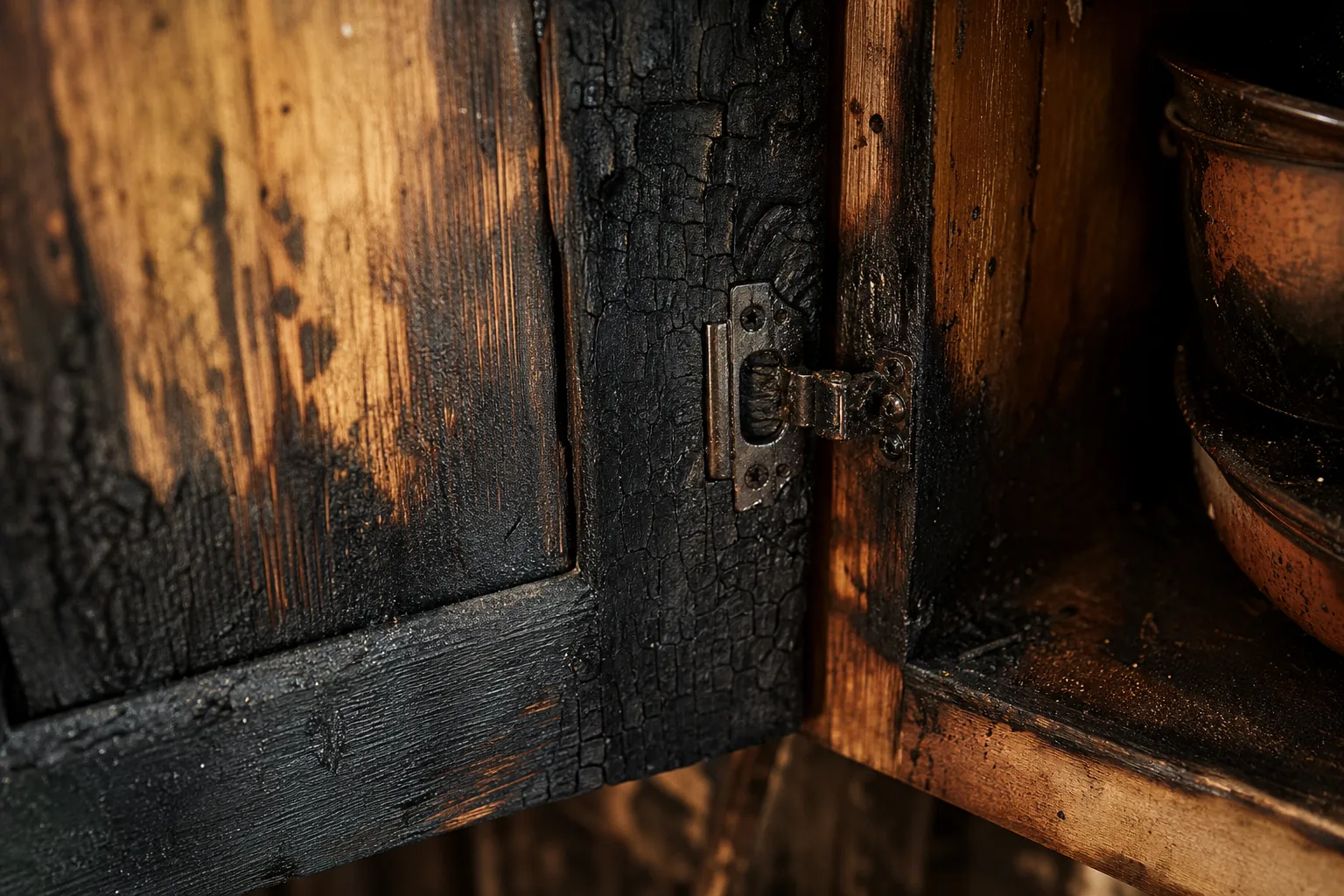
A policy limit set years ago and never revisited does not simply run out on a total loss. On the right policy it also reduces payment on a partial one.
A kitchen fire that stops at the cabinet line is the kind of loss most policies are written for. The structure stands, the damage is real but bounded, and the repair estimate comes back at a figure that sits comfortably below the limit on the declarations page. The homeowner reads that limit, does the obvious arithmetic, and expects to be paid the estimate less the deductible. The check arrives for noticeably less than that, and the letter accompanying it refers to a condition nobody remembers reading, which reduced the payment because the building was insured for less than the policy required.
First, the Two Ways a Policy Can Pay
Before the condition makes sense, the valuation method has to. Actual cash value pays what the damaged property was worth at the moment it was damaged, which means the cost to replace it less depreciation for age and wear. Replacement cost pays what it takes to put back what was there, without that deduction, usually in two stages: an initial payment at actual cash value, and the balance once the work is actually done and invoiced. The difference between the two on a twenty-year-old roof is not a detail. It is most of the money.
Which one applies is stated on the declarations page, sometimes for the building and separately for the contents, and it is worth checking rather than assuming. Replacement cost is what most homeowners believe they have and a meaningful number do not, particularly on older properties, on contents, and on policies that were shopped hard on price at some point in the past. A policy can also carry replacement cost on the dwelling and actual cash value on the roof, which is a distinction that only becomes visible after a storm.
The Condition Almost Nobody Reads
Coinsurance is a clause that requires the building to be insured for at least a stated percentage of its replacement cost, commonly eighty percent, in exchange for the policy paying partial losses in full. It is not a penalty for making a claim. It is the mechanism that keeps a pooled premium honest, because a building insured for half its value would otherwise pay half the premium while still collecting the full amount on the small and medium losses that make up most claims. The clause exists to make sure the premium matches the exposure.
The arithmetic is a ratio. Divide the limit actually carried by the limit that should have been carried, and that fraction is applied to the loss before the deductible. Insure a building for eighty percent of its replacement cost when the clause required eighty percent, and the ratio is one, and the loss is paid in full. Insure it for sixty-four percent when eighty was required, and the ratio is four fifths, and every partial loss is paid at four fifths of its value for as long as the shortfall persists.
The Same Loss, Three Ways
Take that kitchen fire and run it against three versions of the same policy. In the first, the building is insured at or above the required percentage, and the settlement is the repair estimate less the deductible, exactly as expected. In the second, the building is insured at four fifths of what the clause required, and the same estimate is reduced by a fifth before the deductible comes off, which turns a manageable out-of-pocket amount into one that changes what the household can afford to have done.
In the third version, the limit is adequate but the valuation is actual cash value rather than replacement cost, and the reduction comes from depreciation on cabinetry, flooring and appliances rather than from a ratio. The two mechanisms are entirely separate, they can both apply to the same claim, and they compound. A household that is under-insured on an actual cash value policy has two reductions running at once, neither of which is visible until the loss happens, and both of which were disclosed on the declarations page.
How the Limit Drifts Out of Date
Nobody sets a limit too low on purpose. The limit was accurate on the day the policy was written, and then three things moved it. Construction costs rose, sometimes sharply and unevenly, so the cost to rebuild the same house went up without anything about the house changing. The house itself changed, because a finished basement, an addition, a new kitchen or a converted garage all raise the rebuild cost and almost none of them get reported to an insurer. And the annual inflation adjustment most policies apply is a general index rather than a measurement of this building.
The result is a slow, entirely predictable drift that nobody is responsible for noticing. A limit that was right eight years ago and has been indexed at a general rate since is very likely short today, particularly if any work was done in the meantime. This is the reason renewal notices are worth reading, since the limit appears on them every year, and it is the one number on the document that a homeowner is better placed than the insurer to check.
There is a further effect that only shows up in the losses that matter most. After a widespread event, hail across a county or a wind storm across a region, the local price of roofing labor, lumber and skilled trades rises because every contractor within driving distance is booked for months. The rebuild cost on the day of the loss is therefore higher than the rebuild cost on an ordinary Tuesday, and the coinsurance calculation is run against that higher figure. A limit that was adequate in a normal market can be short in a post-event one.
Contents, Sub-Limits, and the Limits of Federal Help
Expectations about federal help tend to be miscalibrated in the same direction. Individual assistance from FEMA after a declared disaster is designed to address urgent needs rather than to restore a property to its prior condition, and it is not a substitute for carrying an adequate limit. Households that discover the difference tend to discover it at the worst possible moment, which is an argument for treating the insurance limit as the primary plan and everything else as a supplement to it.
Personal property is usually insured as a percentage of the dwelling limit rather than as an independently chosen number, which means an under-insured building quietly drags the contents limit down with it. Layered on top are the internal sub-limits that apply to particular categories: jewelry, firearms, cash, business property, collectibles and electronics all commonly carry a cap well below the overall contents limit, and those caps apply per category regardless of how much room is left elsewhere in the policy.
The practical consequence is that a household can be adequately insured in aggregate and badly under-insured on the specific things it would most want back. Closing that gap is done with a scheduled endorsement, which lists the individual item, its appraised value and a premium attached to it, and which usually also removes the deductible for that item. It is one of the cheaper corrections available on a homeowners policy and one of the least often made.
What Closes the Gap
Four things, in roughly the order they should be done. Get a replacement cost estimate rather than guessing, either from the insurer's own estimating tool or from a contractor who builds locally, and note that the market value of the property is not the relevant number, since land is not at risk and cannot burn. Report improvements when they are finished rather than at renewal. Ask directly whether the policy carries an extended or guaranteed replacement cost endorsement, which pays above the stated limit when a rebuild runs over. And read the coinsurance percentage rather than assuming it.
The cost of doing all four is smaller than most people expect, because premium does not rise in proportion to limit. Raising a dwelling limit by a fifth typically raises the premium by considerably less than a fifth, since the fixed components of the rate do not move. That asymmetry is the entire argument for erring high, and it is the reason the correction almost always looks cheap in hindsight and expensive in the moment somebody is comparing renewal quotes on price alone.
The kitchen fire that started this was never really about the fire. It was about a number on a declarations page that was correct once, that nobody had a reason to revisit, and that had been quietly falling behind the cost of the building it described for the better part of a decade. Fifteen minutes with the renewal notice and a realistic rebuild estimate is the whole remedy, and it is available every single year, on a document that arrives in the mail without anybody having to ask for it.