The Blockage Was Forty Feet From the House and Nobody Wanted to Own the Pipe
title:The Blockage Was Forty Feet From the House and Nobody Wanted to Own the Pipeauthor:Lionel Karstenspublished:2026-05-12section:Propertywords:1,026read:4 min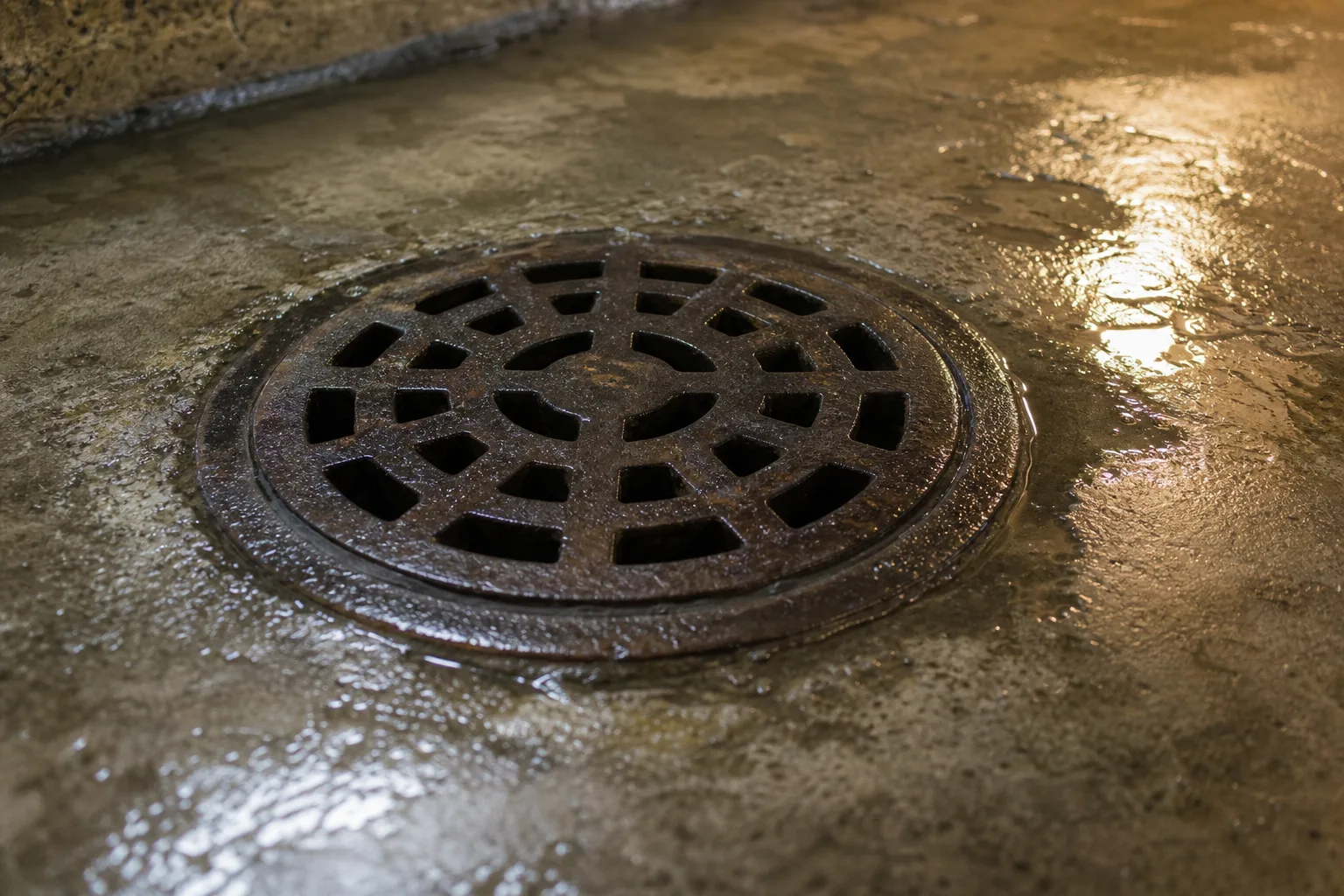
A sewer backup produced three parties each with a reason the pipe was not theirs, and a homeowner who had to establish where the boundary actually ran.
Water is standing four inches deep around a basement floor drain on a Sunday evening, it is not clean water, and the first plumber to arrive says the blockage is not in the house. That single sentence starts a dispute that has nothing to do with plumbing. The pipe running from the building to the public main is a piece of infrastructure that most homeowners have never thought about, whose ownership boundary is set by local ordinance rather than by common sense, and whose failure produces the least pleasant and most contested category of household water damage.
Three Parties, Three Positions
The municipality's position was that the sewer lateral is private property up to the point of connection with the main, which is the standard arrangement in most of the country, and that the blockage was therefore the homeowner's to clear. The homeowner's position was that the obstruction was forty feet out, under the public right of way beyond the property line, and that anything under the street belonged to whoever maintained the street. Both statements were accurate descriptions of different rules, which is precisely why the argument was possible.
The third party was the homeowners insurer, whose position was that the standard policy excludes water that backs up through sewers or drains unless a specific endorsement was purchased, and that no such endorsement appeared on this policy. That was correct and it was also the least negotiable of the three positions, because it turned on a document rather than on an ordinance. Three parties, three reasonable positions, and a basement that needed attention that evening regardless of any of them.
What Actually Settled It
The ordinance did, once somebody read it. Municipalities divide lateral responsibility in several different ways: some set the boundary at the property line, some at the curb, some at the connection to the main regardless of distance, and a growing number split it, making the homeowner responsible for the portion on private property and the utility responsible for the portion in the right of way. This town used the split arrangement, which meant the blockage forty feet out was the utility's to clear, and it had been the utility's for six years since the ordinance changed.
Finding that out took one phone call to the public works department and about twenty minutes of a Monday morning, which is a useful measure of how much of this dispute existed only because nobody had looked. The utility sent a crew, cleared a root intrusion at a joint, and ran a camera to confirm. The homeowner paid for the plumber who had come out on Sunday, which was the right outcome, since that plumber had done the diagnostic work that established where the problem was.
Why the Interior Damage Is the Harder Claim
Clearing the blockage was the cheap half. The basement contained a finished room, and sewage water is classified as the most contaminated of the three water categories, which changes the remediation rules entirely. Porous materials that have been in contact with it are removed rather than dried: carpet and pad, drywall to a line above the water, insulation, and anything absorbent that was stored on the floor. Non-porous surfaces are cleaned and disinfected, and the space is dried and verified afterward.
That work is not optional and it is not a matter of preference, which surprises households who would rather clean it themselves and keep the carpet. It is also the reason a sewer backup of modest depth produces a bill out of proportion to the volume of water involved. The contamination rather than the quantity drives the scope, and a few inches across a finished basement can mean a full gut of the lower two feet of every wall in it.
The Insurance Gap, and What Closes It
Sewer and drain backup coverage is sold as an endorsement, it is one of the least expensive additions available on a homeowners policy, and it is missing from a very large share of the policies covering houses with finished basements. It typically comes with its own sub-limit rather than sharing the dwelling limit, which means the amount matters as much as the presence, and the sub-limits sold as standard are frequently lower than the cost of remediating a finished lower level.
A separate service line endorsement covers the lateral itself, meaning the excavation and repair of the buried pipe rather than the damage inside the house, and the two are commonly confused. A household with a finished basement, mature trees near the line, or a house old enough to have clay or cast iron pipe should be carrying both, and the annual cost of the pair is small enough that the calculation is not close. Municipal water and sewer utilities, whose discharge permits and overflow reporting fall under the Environmental Protection Agency's remit, will often say plainly which materials are in the ground on a given street if asked.
What to Do in the First Hour
Stop using water in the house, which is the step people skip and the one that determines how much arrives. Every flush, every load of laundry and every sink adds to a system that has nowhere to discharge. Keep everybody, particularly children and pets, out of the affected area, and do not run a shop vacuum through standing sewage without appropriate protection. Photograph everything before anything is moved, then call a plumber for diagnosis and the utility to report it, in that order, because the plumber's finding is what the utility will want.
Then start the record, because this is a category of loss where several parties will later disagree and the household is the only one present for all of it. The plumber's written finding, the camera footage if there is any, the time the utility was called and when they arrived, photographs of the water line on the wall, and a list of what was in contact with the water. That file is what converted a three-way standoff in this case into a settled question inside forty-eight hours, and it is the only part of the evening that a homeowner has any control over.