Two Winters of a Small Leak: How a Roof Repair Became a Habitability Case
title:Two Winters of a Small Leak: How a Roof Repair Became a Habitability Caseauthor:Lionel Karstenspublished:2026-01-22section:Propertywords:1,196read:5 min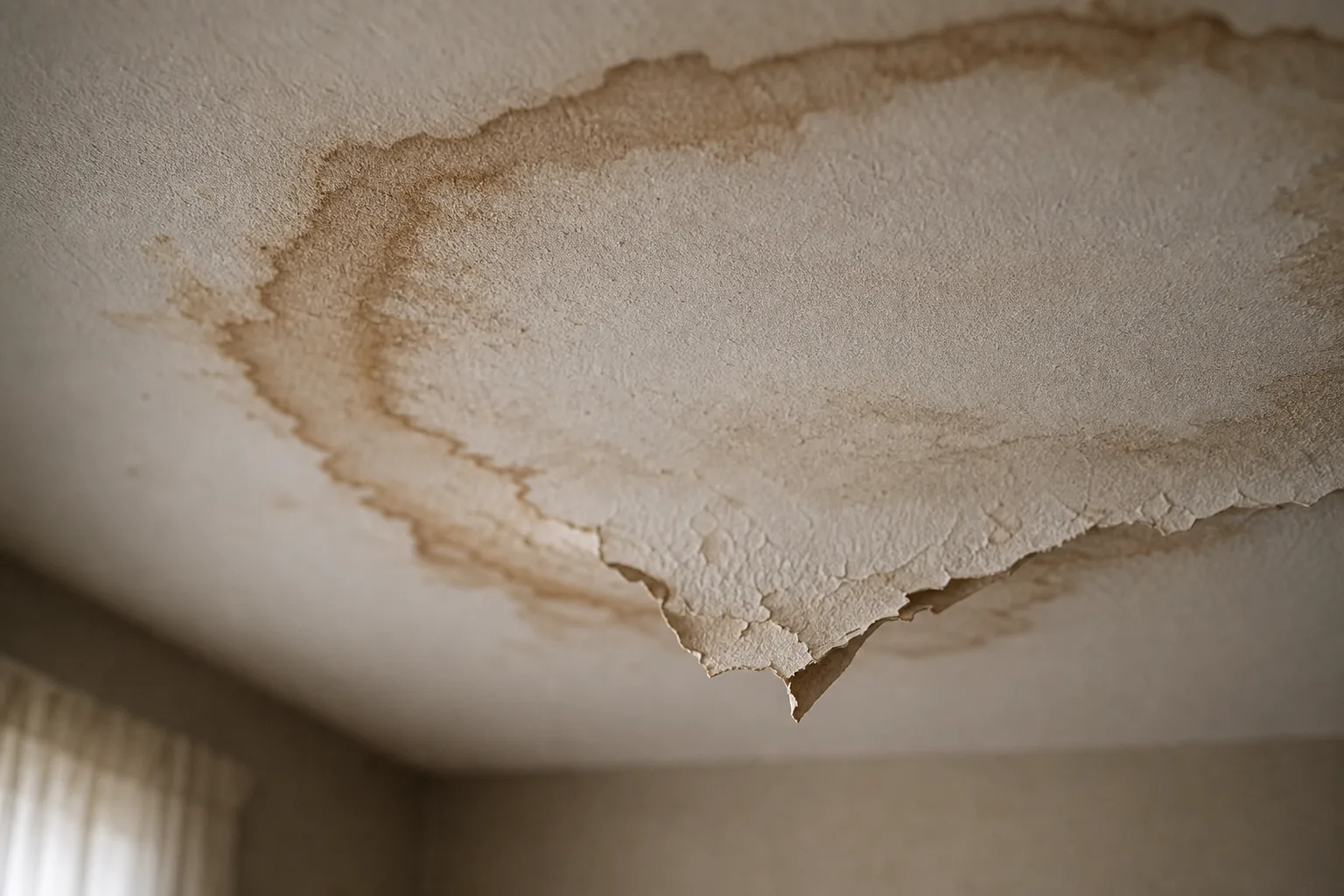
A modest roof repair deferred across two winters turned into framing work, a rent dispute and a code enforcement file, in that order and for ordinary reasons.
A single-family rental with a fifteen-year-old roof develops a stain on a back bedroom ceiling in November, roughly the size of a dinner plate, noticed by the tenant during a wet week and reported by text message the same evening. The owner, who lives two states away and manages the property himself, asks for a photograph, receives one, and concludes reasonably enough that a small stain in November is a spring job. Nothing about that decision is unusual, and the sequence it started ran for two years and ended somewhere nobody involved would have predicted from a photograph of a stain.
Two Winters, in Order
The first winter produced a stain that grew slowly and then stopped, because the leak was seasonal and depended on wind direction. By March it looked stable, the tenant stopped mentioning it, and the spring repair did not happen, which is the ordinary way these things go when nothing is actively getting worse. Over the following summer the roof was not looked at, and the flashing detail that was actually failing, a poorly sealed junction where a lower roof met a wall, continued to admit water at a rate of a cup or so per significant rain.
The second winter was wetter and the wind came from the wrong quarter more often. The stain resumed and spread, the paint began to lift at the edges, and in February a section of ceiling drywall sagged visibly. At that point the tenant sent a written notice rather than a text, which changed the legal character of the situation entirely, and a contractor was finally sent to look. What he found in the attic was not a roof problem any more. Two rafters and a section of ceiling joist had been wet through two winters and had begun to soften and discolor.
What Each Version of the Repair Would Have Cost
Done in the first November, this was a flashing repair. A roofer with a ladder, an afternoon, some step flashing and sealant, and a bill in the low hundreds. Done the following spring, the same repair plus a section of drywall and a repaint, still comfortably under a thousand dollars and still a one-day job with no displacement of anybody.
Done in the second February, it was a different job with a different trade. The flashing repair remained the same, but it now sat underneath the removal and replacement of two rafters and a joist section, new insulation, new drywall across most of a ceiling, and a repaint. It also now required a permit, because structural framing was being altered, and a permit brought an inspection and a schedule. The cost had moved by a factor most owners would find hard to explain to themselves, and none of the increase bought anything the household could see.
Where It Stopped Being a Maintenance Question
The written notice is the hinge. Nearly every state recognizes an implied warranty of habitability in residential tenancies, which requires a rental to be maintained in a condition fit to live in, and a roof that leaks into a bedroom is squarely within it. What the written notice does is start a clock: once a landlord has been notified in writing of a condition affecting habitability, the obligation to repair within a reasonable time becomes concrete, and the remedies available to a tenant if it is not repaired become available.
Those remedies vary by state and typically include some combination of rent withholding, repair and deduct, and in serious cases termination of the lease without penalty. None of them were used here, but their existence changed the conversation, because the tenant had received advice and the owner had not. The text messages from the first winter mattered too, since they established that the condition had been reported long before the formal notice, which is precisely the sort of detail that decides how a dispute like this is eventually characterized.
What the Delay Cost That Was Not a Repair
The repair took eleven days including the permit inspection, and the bedroom was unusable for all of it. The parties agreed a rent reduction for the period, which is the ordinary resolution and considerably cheaper than the alternatives, but the reduction was calculated against the whole unit rather than the one room because the work involved dust, noise and access. On top of that sat the cost of the tenant's diminished use across the second winter, which was not billed but was raised, and which formed part of why the negotiation went the way it did.
The relationship cost is harder to price and was probably the largest item. A tenant who had been in place for four years and had never been late gave notice at the end of the lease. Turning over a single-family rental costs a month of vacancy, cleaning, painting, a listing, and the risk attached to an unknown replacement, and it is a cost that lands entirely on the owner without appearing on any invoice connected to the roof.
What the Insurance Did and Did Not Do
The claim was declined, and the decline was correct. Landlord policies, like homeowners policies, cover sudden and accidental damage, and they exclude damage resulting from long-term seepage or from the insured's failure to maintain the property. A roof that leaked for two winters after being reported is the textbook version of what that exclusion is for, and the photographs from the first November, supplied in good faith, were the clearest possible evidence of duration.
Had the same flashing failed in a wind event and been reported and repaired immediately, the interior damage would very likely have been covered, with the roof repair itself excluded as maintenance. That distinction, between a covered consequence and an excluded cause, is the one that decides most water claims, and the variable that moves a claim from one side of it to the other is almost always how long the condition was allowed to run rather than how it started.
How It Resolved, and What Changed
The owner paid for the full repair, agreed the rent reduction, and closed a code enforcement file that the tenant had opened during the second winter by supplying the permit and the passed inspection. Nothing was litigated and nothing was reported beyond the local file, which is the usual outcome when a landlord eventually does the work properly. The property is now managed by a local company on a percentage fee, which the owner had previously judged too expensive against the cost of managing it himself.
That last change is the one worth sitting with, because the management fee he had been avoiding for four years was smaller than what the second winter cost him in a single instance. The pattern underneath is not really about roofs. It is about the difference between a problem that is visible and a problem that is being watched, and a stain on a ceiling in a house nobody visits is a problem that only one person can see and only that person has any reason to report. Everything that followed came from treating a report as information rather than as a schedule.