Reading a Fulfillment Quote Line by Line, and Finding the Charges That Live Below the Pick Rate
title:Reading a Fulfillment Quote Line by Line, and Finding the Charges That Live Below the Pick Rateauthor:Beatrix Stapletonpublished:2026-08-25section:Commercewords:1,269read:5 min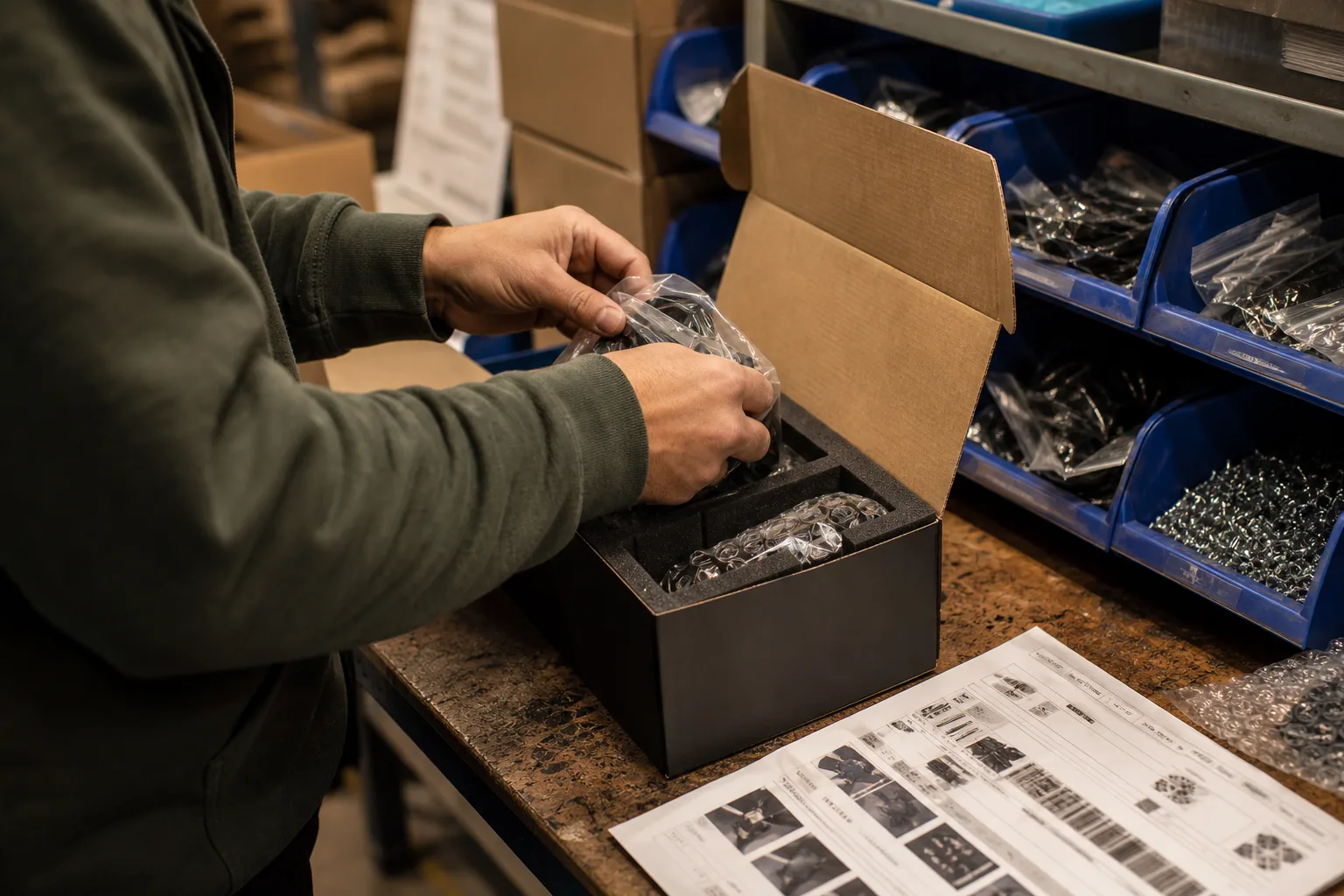
A fulfillment quote is a short list of headline rates sitting on top of a much longer rate card. Here is where the extras hide, and how local rules move the number.
The quote that arrives from a third-party logistics provider is usually one page. Receiving, storage, pick, pack, ship. Four or five numbers, each of them defensible, none of them the number you will pay. The document that governs your invoice is the rate card behind it, and the rate card is rarely one page. Ten years ago that gap was a nuisance. Now it is the whole negotiation, because most of what has been added to fulfillment pricing since then sits in the schedule of accessorials rather than in the headline pick rate.
Someone at the warehouse decides which of those accessorials applies to your account. That person is not the salesperson who sent the quote. It is an operations manager or a billing clerk reading a work order, and their reading is what shows up on the invoice thirty days later.
What the base rate genuinely covers
In most quotes, four things are priced as core service. Receiving, usually per pallet or per hour of dock labor. Storage, usually per pallet position or per cubic foot per month. Pick, usually a first-item rate with a lower rate for each additional item on the same order. Pack, sometimes folded into the pick rate and sometimes not.
What is almost never in the base rate: the carton, the void fill, the tape, the label stock, the pallet you get charged for when your inbound arrives on a slip sheet. Materials are typically billed at cost plus a markup, and the markup is a real line worth asking about. Nor does the base rate usually cover returns processing, inventory counts beyond an annual cycle, or any work that requires touching the product itself rather than the box it came in.
That last category is where the money increasingly is.
The same decision, ten years apart
A decade ago, a small brand comparing two providers was mostly comparing pick rates and storage. Parcel was a pass-through you did not think hard about, peak season meant a busy November, and if your order needed a promotional insert, someone put one in and nobody billed for it separately.
The structure has changed on both sides of the ledger. Carriers moved to dimensional weight pricing across more service levels, so box selection became a cost decision rather than a packing preference. Peak surcharges became an annual, published, multi-tier event with its own calendar. Storage moved from flat per-pallet toward tiered pricing that punishes slow-moving inventory, sometimes with a long-term storage penalty at six and twelve months. Returns, which used to be an afterthought, now get their own rate table with separate charges for inspection, refurbishment, repackaging and disposal.
| Line item | Typical treatment ten years ago | Typical treatment now |
|---|---|---|
| Storage | Flat per pallet per month | Tiered by velocity, with long-term penalties |
| Peak season | Informal, absorbed | Published surcharge schedule, multiple tiers |
| Parcel | Pass-through by weight | Dimensional weight, zone, residential and fuel surcharges |
| Returns | Bundled or ignored | Separate rate table by disposition |
| Assembly work | Ad hoc, often unbilled | Quoted per kit or per labor hour, with minimums |
| Account management | Included | Sometimes a monthly platform or integration fee |
None of this is hidden in a dishonest sense. It is published. It is simply published somewhere other than the quote, and the person who assembled the quote had no reason to lead with it.
Where assembly work gets priced, and why it looks different
If your product ships as a set, a bundle, a subscription box, a retail display or a multi-part SKU, you are buying assembly labor, not just picking. Providers describe this under kitting fulfillment services, and it is quoted on a different basis from everything else on the page.
Three pricing structures are common. Per kit, which is clean and easy to budget but assumes a stable bill of materials. Per labor hour, which suits irregular or complex work and requires you to trust the time study. Per component touch, which sits between the two and rewards you for simplifying the kit. Ask which one you are getting, and ask what happens to the rate if the component count changes by one.
The questions that decide the real cost of assembly work:
- Is the kit built to stock in advance, or built at the moment an order drops? Build-to-stock costs less per unit and more in storage and obsolescence risk.
- Who owns a failed kit? If a component arrives damaged and the kit cannot be completed, who eats the labor already spent?
- Is there a setup or changeover charge per production run, and what is the minimum run?
- Does the kit get its own SKU and barcode, and who generates it?
- How is component shrinkage reconciled, and at what tolerance?
A provider who answers all five without checking has done this work before. That is worth more than a lower headline rate.
Why the same pallet costs different money in different states
Geography does more to fulfillment pricing than most quotes admit, and not only through shipping zones.
Labor cost is the obvious one. Warehouse wages in an inland distribution corridor and in a coastal metro are not close, and pick rates follow. Less obvious is that several states have enacted warehouse quota disclosure laws requiring employers to give workers written production standards, which changes how a facility staffs and paces a shift. Air quality rules in parts of Southern California impose obligations on large warehouses tied to truck trips. Port-adjacent facilities carry drayage and chassis costs that inland ones do not. In cold climates, a heated dock and a freeze-protection protocol are a line item from November through March.
Then there is what your product is. Aerosols, flammables, lithium batteries and alcohol each trigger a local fire code review, a permit, and often a segregated storage area billed at a premium. States regulate distribution of alcohol and certain consumer products through their own licensing bodies, and a warehouse that is not licensed cannot touch your inventory regardless of what the quote says. Food and supplement clients face facility registration requirements and lot traceability expectations that add labor to every receipt. The Occupational Safety and Health Administration oversees the workplace safety standards that govern how this material is stored and handled, and a facility that has built its layout around those standards will tell you so in the site tour rather than in the pricing.
Sales tax nexus is the quiet one. Placing inventory in a state generally creates a physical presence there. That is a decision with a tax consequence, and it belongs in the conversation with your accountant before it belongs in the conversation with the warehouse.
How to run the comparison so the numbers mean something
Send both providers the same thing: ninety days of real order history, with line counts per order, SKU dimensions and weights, actual inbound cadence, and your returns rate. Ask each to price that history, not a hypothetical average order. Then ask for a redacted sample invoice from a client of similar size and shape, so you can see which accessorials actually fire in practice.
Read the contract for three specific things: the notice period for rate changes, the definition of peak season and how surcharges are calculated, and the exit terms including who pays to move your inventory out. The Federal Trade Commission is responsible for the rules governing shipment timing on mail and internet orders, and your provider's performance guarantee should be written in terms that let you meet them.
Then walk the building. The dock supervisor and the inventory control clerk will show you in ten minutes what the quote takes three months to reveal.