New Clinic, First Visit. Five Things the Front Desk Tells You Before the Exam
title:New Clinic, First Visit. Five Things the Front Desk Tells You Before the Examauthor:Lionel Karstenspublished:2025-09-16section:Healthwords:1,088read:5 min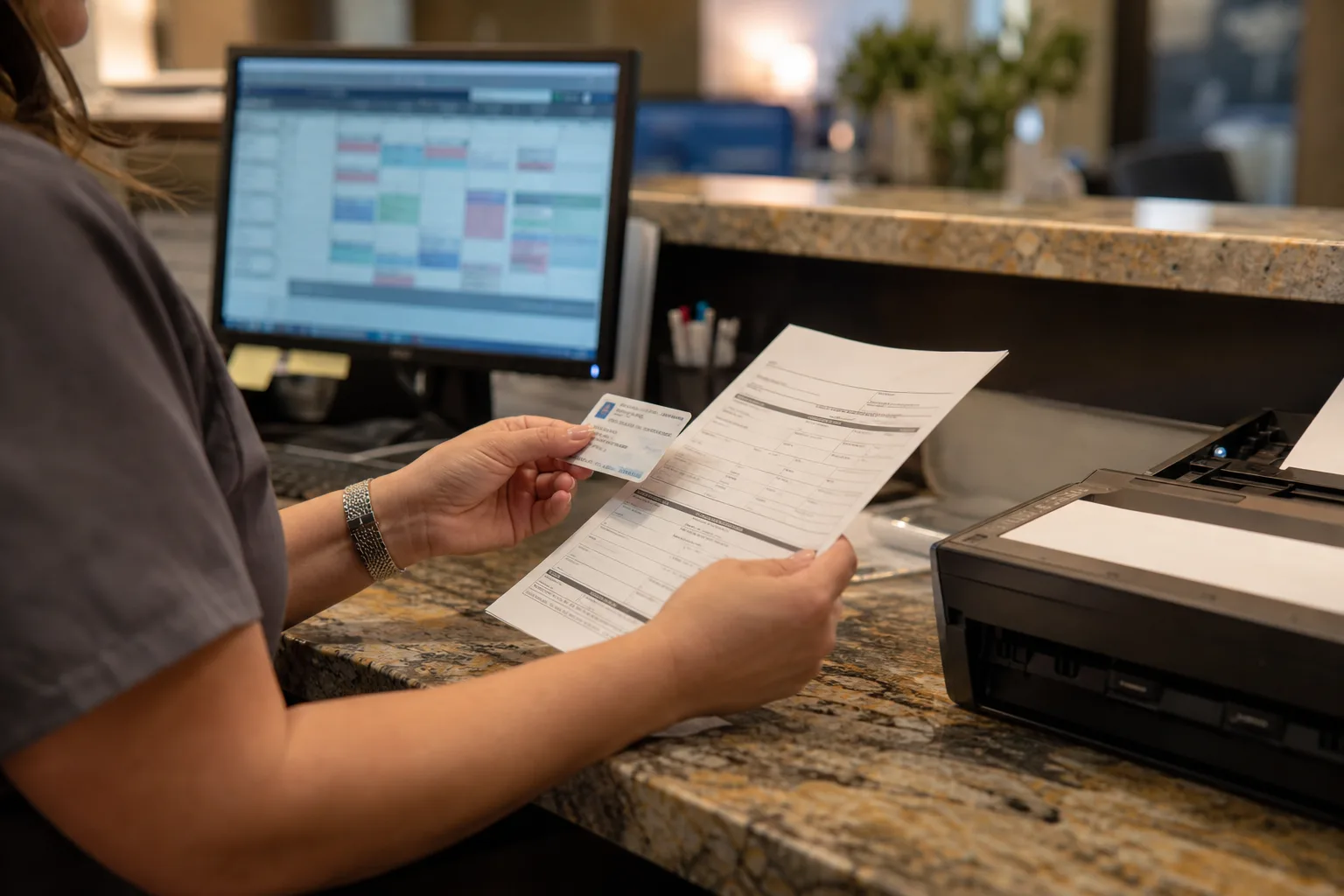
The practitioner gets chosen on reputation. The administrative side decides what the visit costs, how fast records move, and whether the next appointment happens on time.
I spent years on the tool side of the building trades, and the thing that transfers cleanly to a medical office is this: the person doing the skilled work is rarely the person who determines whether the job goes smoothly. On a job site it was the supplier, the scheduler, the guy who ordered the wrong length of pipe. In a private practice it is the front desk, the billing service, the outside lab, and whoever holds the referral list. Those parties never appear in the reviews. They decide most of what you will actually experience.
People choose a practitioner on credentials and manner, then spend the next eighteen months dealing with consequences that trace back to the office, not the clinician. A claim submitted with the wrong code. Imaging sent to a facility outside your network. A records request that sits in a fax queue for three weeks while a specialist waits. None of that is malpractice. It is all administration, and it is all visible on the first visit if you know where to look.
The party nobody negotiates with
A private practice is usually two businesses stapled together. One provides care. The other collects money for it, and increasingly that second business is not in the building. Small and mid-sized practices commonly outsource claims to a revenue cycle vendor, lab work to a regional processor, and after-hours calls to an answering service. Each of those relationships is a contract you never see and cannot influence, but each one produces mail with your name on it.
The Centers for Medicare & Medicaid Services oversees the federal rules that govern how covered services are billed and how patients must be told about costs in advance. That framework exists precisely because the money side of a clinical visit is handled by parties the patient never meets. Knowing that the rules are there is useful. Knowing whether a specific office has built its workflow around them is more useful, and that you learn by asking.
Five things to check before you book
1. Who submits the claims, and where the statement comes from
Ask one question on the phone: does the billing happen in-house or through an outside company? Both answers can work. What you want to know is who you call when a statement is wrong, and whether that person can see your chart. In-house billing usually means one phone number and someone who can walk down the hall. An outsourced vendor usually means longer hold times but tighter follow-up on denials. The failure case is a practice that has outsourced billing but never tells patients, so a statement arrives on unfamiliar letterhead and gets mistaken for a scam.
2. Whether they verify your benefits before you arrive
Verification takes an administrator a few minutes per patient and it is the single most commonly skipped step in a busy office, because nobody notices it was skipped until a claim comes back. Offices that verify will tell you your expected responsibility before the visit, unprompted. Offices that do not will collect a copay, guess, and sort it out later, which means you sort it out later.
3. Where the specimens and images go
The practitioner is in your network. The lab that processes the blood draw may not be, and the imaging center on the referral pad may be the one closest to the office rather than the one contracted with your plan. Ask which lab they use and whether they can send to an alternative. A practice that has an answer ready has been asked before and has thought about it.
4. How records get in and out
Ask how they receive outside records and how they release yours. The answers range from a patient portal with document upload to a single fax machine behind the copier. This is not an abstract preference. It sets the pace of every referral you will ever need from that office, and it is the reason a two-week specialist wait sometimes becomes a two-month one.
5. Who controls the schedule
Find out whether the person answering the phone can book, move, and cancel, or whether they take a message for someone who can. Practices where scheduling authority sits with one overloaded coordinator produce the same pattern every time: long callback delays, double bookings, and appointments quietly pushed because the template was overfilled.
What the first visit actually tells you
You are watching the administrative side run a live job. The signals are mundane and they are reliable.
| What you see at the first visit | What it usually predicts |
|---|---|
| Intake forms already partly filled from your insurance card and prior records | Verification and records requests are done in advance as routine |
| Staff can state your expected out-of-pocket cost before you go back | Fewer corrected statements later; billing and clinical notes are connected |
| You are handed a referral with a specific facility and a phone number | Someone tracks network status on the referral list |
| The portal invitation arrives the same day with results visible | Records move electronically, so specialist handoffs move faster |
| The next appointment is booked before you leave the room | Scheduling authority sits with the person in front of you |
Two more things worth noticing. First, whether the person at the desk knows the practitioner's actual availability rather than reading it off a screen. That familiarity is a sign of low staff turnover, and low turnover in a small office is worth more to you than almost any amenity in the waiting room. Second, whether anyone tells you what happens if your visit turns into something bigger. A practice that explains the cost path for a procedure you have not yet agreed to has a habit of telling patients things before the bill does.
Making the check worth the time
All of this takes one phone call before booking and about ten minutes of attention during the first visit. Keep a note of who you spoke to on the billing side and what they told you about your expected cost. If a statement later disagrees with that, you have a name, a date, and a specific figure, which is most of what it takes to get a correction issued without a fight.
Practitioners get chosen for their clinical judgment, and that is the right basis. The administrative side simply determines how much of that judgment reaches you on time and at the price you were quoted. It is the cheapest part of the decision to investigate and the part that pays back longest.