Water Where It Never Used to Sit: A Regrading Dispute Settled Without a Lawsuit
title:Water Where It Never Used to Sit: A Regrading Dispute Settled Without a Lawsuitauthor:Lionel Karstenspublished:2025-11-18section:Law & Legalwords:1,055read:4 min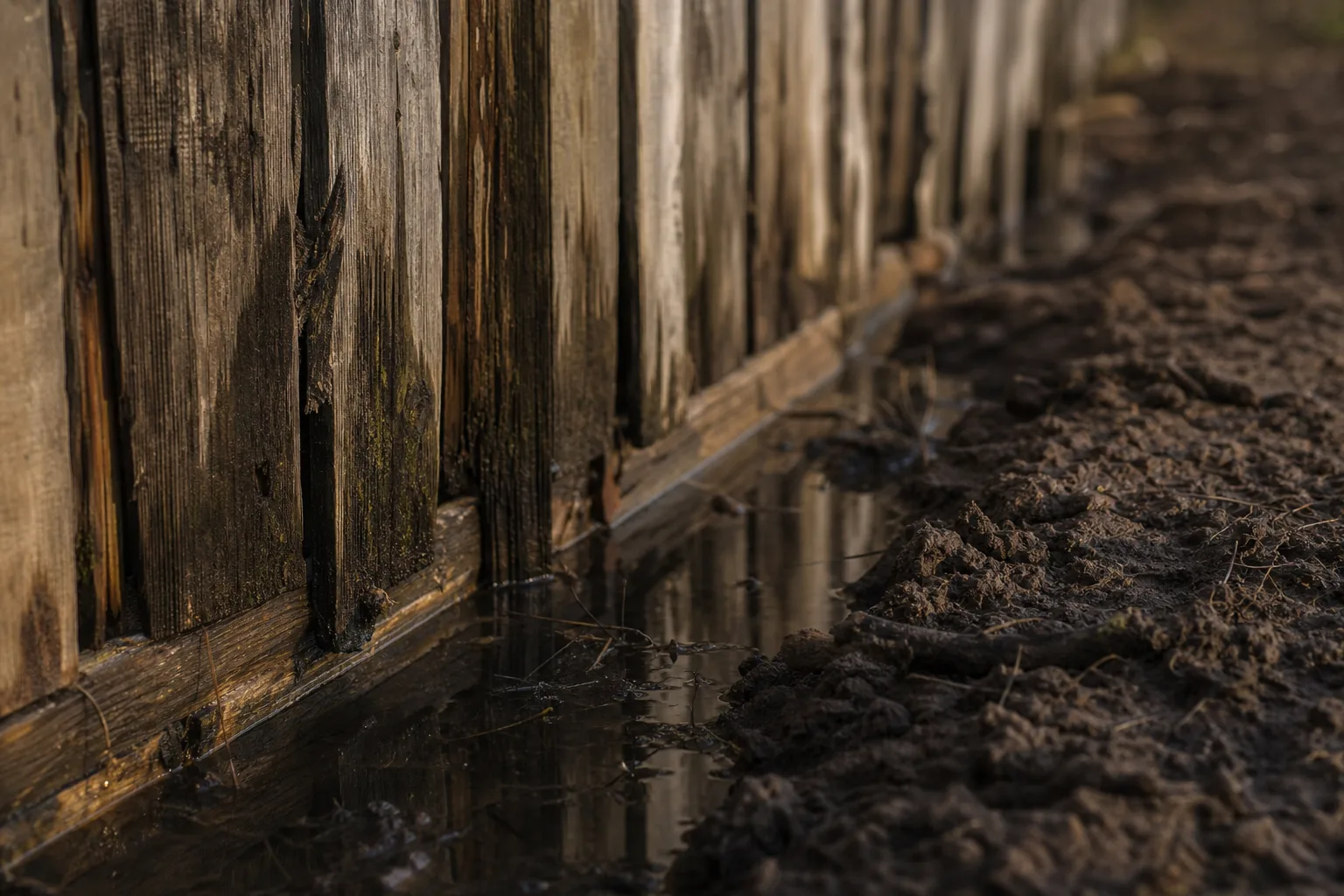
Water arriving where it never used to arrive is an ordinary neighbor dispute with one unusual feature: it is frequently settled by two hours of an attorney's time.
Picture a back fence line that has been dry for nineteen years and is now holding a shallow pond every time it rains hard. Nothing on this side of the fence changed. On the other side, a landscaping crew spent two weeks in the fall building a raised patio and regrading the slope behind it, and the water that used to soak away across that slope now runs sideways and stops at the property line. It is one of the most common disputes between neighbors and one of the least well understood, largely because everybody involved starts by arguing about fairness when the question is actually about drainage.
What the Homeowner Tried First
The first approach was the obvious one, which was to walk next door and mention it. That produced a friendly conversation, a genuine offer to take a look, and nothing further for six weeks, which is a fairly typical outcome and not usually a sign of bad faith. People who have just spent real money on a patio are not eager to conclude that the patio caused a problem, and a neighbor describing standing water is easy to hear as a complaint about aesthetics rather than as a report of water sitting against a foundation.
The second approach was a letter, written personally and sent by regular mail, describing the change and asking for a fix. That produced a reply disputing the cause, which is where most of these disputes park permanently. Both households were now committed to a position, neither had anything but their own recollection to support it, and the water kept arriving. Six months of this is what turns an inconvenience into a wet crawl space, and the crawl space is where the cost stops being theoretical.
Where an Attorney Changes the Arithmetic
The instinct at that point is to think about suing, and the instinct is wrong in a useful way. What changed the situation was not litigation but two things an attorney arranged in the space of a fortnight. The first was a boundary and topographic survey, which put actual elevations on paper and established that the ground behind the patio now fell toward the fence rather than away from it. The second was a letter on letterhead that described the survey findings, named the legal standard the state applies to altered surface water flow, and proposed a specific remedy with a date attached.
That combination works because it converts a disagreement between two recollections into a document that a third party could read. An insurer, a contractor, a judge or the neighbor's own attorney all respond differently to a measured elevation than to a description of a puddle. The letter was not a threat so much as a demonstration that the file was now capable of surviving a move to somewhere more formal, and that demonstration is most of what a demand letter is for.
What the Bill Was Actually Made Of
The legal cost was two hours of an attorney's time at an hourly rate, one hour to review the survey and the correspondence and one to draft and send. The survey cost more than the legal work did, which surprises people, and it was the item that actually settled the matter. Together the two came to a figure in the high hundreds, against a lawsuit that would have started in the low thousands before anybody set foot in a courtroom and would have taken the better part of a year.
It helped that the homeowner arrived at the consultation with a file rather than a story. Dated photographs from before the patio went in, taken for an unrelated reason, established the prior condition. A rain gauge reading and a photograph on the same afternoon linked cause to effect. The original conversation and the personal letter established that a reasonable attempt had been made to resolve it privately, which matters both to the tone of the demand and to how a court would eventually view the sequence.
How It Ended
The neighbor's response arrived in eleven days and was practical rather than combative. Their landscaper returned, cut a shallow swale along the base of the patio and ran it to a dry well in a corner of the yard, and the neighbor paid for it. Nobody admitted anything, no agreement was signed beyond a short exchange of emails confirming the work and the date, and the two households still speak. That outcome is common when the demand is specific and modest, and it becomes rarer the longer the dispute runs and the more each side has invested in being right.
When This Route Does Not Work
It fails in three recognizable situations. Where the change is old enough that the prior condition cannot be established, the survey proves the current slope but not the cause, and the argument reverts to recollection. Where the party responsible is a builder or a developer rather than a household, the remedy is often larger than anybody will volunteer for and the matter goes where such matters go. And where the water was always arriving and the neighbor merely made it slightly worse, most states apply a standard that tolerates a good deal of natural flow, which means the legal ground is much softer than it feels standing in the yard.
There is also a public route worth knowing about before paying for anything private. Many municipalities regulate grading and drainage through the building department, and work of this size frequently requires a permit that carries drainage conditions. A call to the county or city asking whether a permit was issued for the patio, and what it required, sometimes resolves the whole question at no cost, because a condition already exists and simply needs to be enforced.
The pond behind the fence was never really about the pond. It was about a change to how a slope behaved, made by somebody with no reason to think about it, and discovered by somebody with no way to prove it. Two hours of professional time and a surveyor's afternoon converted that into a measurable fact, and a measurable fact is what almost every neighbor dispute is short of. The lawsuit that everybody imagines at the start is rarely the tool that fixes it, and it is almost never the cheapest one available.