Photograph the Closets Long Before Anything Happens to What Is Inside Them
title:Photograph the Closets Long Before Anything Happens to What Is Inside Themauthor:Marguerite Vasquezpublished:2026-03-05section:Personal Financewords:999read:4 min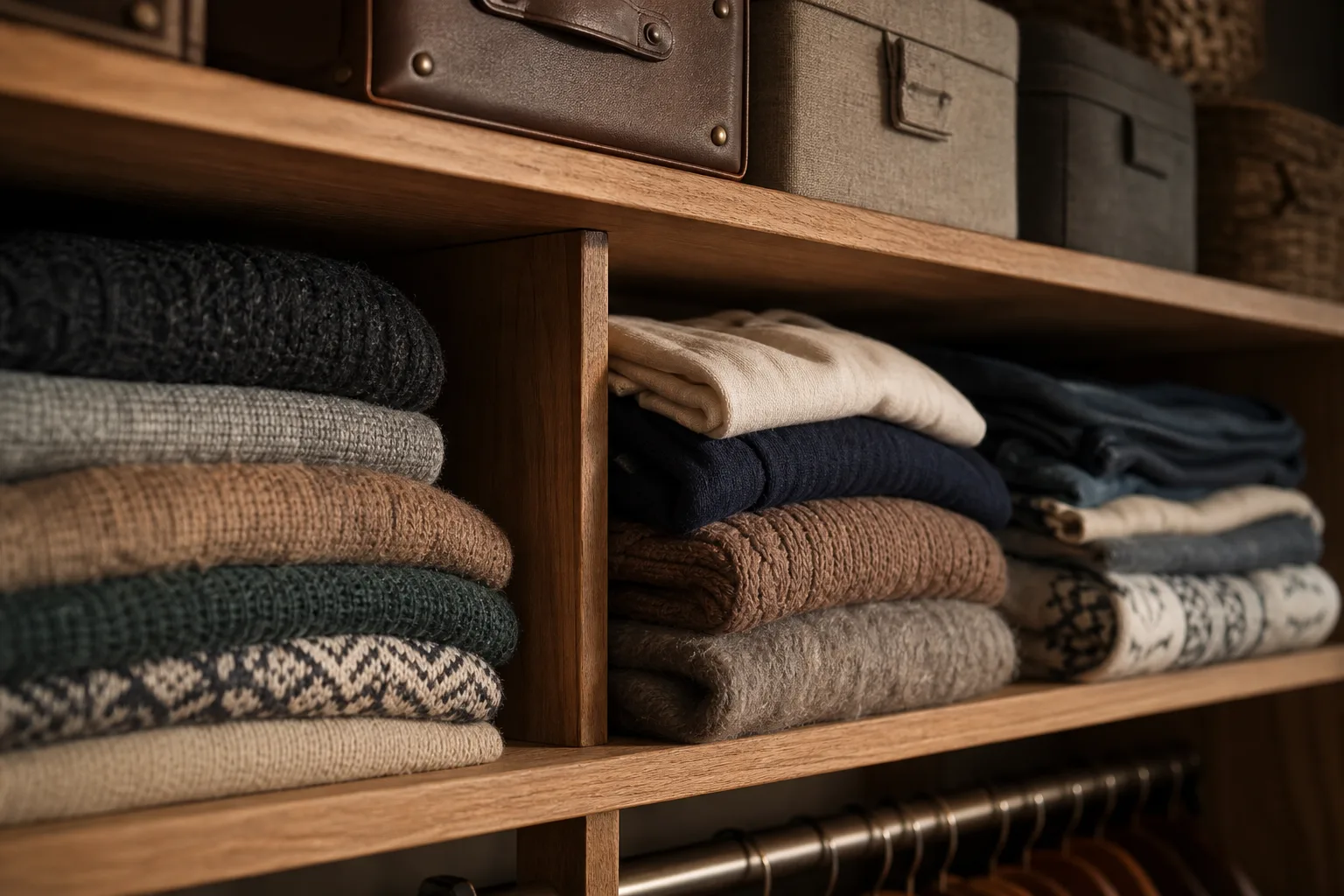
A contents claim is settled on what a household can describe and prove, and the describing is enormously easier before anything has happened to the contents.
Open a closet door and look at what is in it, then try to write down what is there from memory with the door closed. Most people get the large items and the ones they bought recently, miss roughly half of everything else, and produce nothing resembling an age or a value. That gap between what a household owns and what it can describe is the entire subject of a contents claim, and it is the reason the settlement on personal property so often disappoints people who were adequately insured. The policy paid what was documented, which was less than what was lost.
Start With the Method That Gets Finished
The best inventory is the one that exists, which argues strongly for the fastest method rather than the most thorough. Walk each room with a phone recording video, narrating as you go, opening every closet, cabinet and drawer and holding on anything of consequence for a few seconds. A whole house takes under an hour. That single file is worth more than a spreadsheet somebody started and abandoned in the third room, and it captures the ordinary contents that nobody ever lists and that make up most of the value in a total loss.
Then go back and add still photographs of the things that will need individual attention: electronics, tools, jewelry, musical instruments, appliances, anything that would be replaced individually rather than by the boxful. Photograph model and serial numbers where they are visible, since a model number converts an argument about value into a lookup. The layered approach works because it separates the fast pass that captures everything from the slow pass that captures detail, and it means the fast pass is finished before enthusiasm runs out.
Where the Detail Actually Matters
Not everywhere, and knowing where saves hours. Clothing, kitchenware, linens and books settle in categories rather than item by item, so a video and a rough count per room is sufficient. Detail earns its keep on the categories carrying internal policy sub-limits, which typically include jewelry, watches, furs, firearms, cash, collectibles, and business property kept at home. Those categories are capped well below the overall contents limit regardless of what else the policy holds, and the cap applies whether or not the household knew it existed.
Detail also matters on anything where age drives the settlement. A policy paying actual cash value depreciates by age and condition, so the difference between a television bought two years ago and one bought nine years ago is most of the payment, and neither the household nor the adjuster will remember which is which. Noting the approximate year of purchase alongside the photograph is a few seconds per item and it is the single most useful piece of metadata an inventory can carry.
Proof of Purchase, and What Substitutes for It
Almost nobody has receipts for the things that matter, and the claim process does not actually require them. What it requires is a credible basis for the value, and several things serve. Credit card and bank statements going back years can be pulled from an institution and show what was bought and when. Email order confirmations sit permanently in a mailbox and are searchable by merchant. Photographs of the item in use in the house establish possession and condition. Owner's manuals, warranty registrations and repair records all place a date on an item.
For the higher value categories, an appraisal is the stronger document and it does more than support a claim. Scheduling an item on the policy, which requires an appraisal or a recent receipt, removes it from the sub-limit, usually removes the deductible for that item, and frequently broadens the perils it is covered against. That conversation is worth having at the same time the inventory is built, since the inventory has just produced the list of things that would need it.
Keeping It Current Without It Becoming a Chore
An inventory decays quietly, and the fix is to attach the update to something that already happens. A five-minute video pass twice a year, tied to the clock change or to a birthday, captures almost everything. Beyond that, the only additions worth making in the moment are the large ones: photograph the receipt and the item the day something significant arrives, which takes fifteen seconds and is far easier than reconstructing it later.
Storage is the part people get wrong. An inventory that lives only on a phone in the house is an inventory that burns with the house, and one that lives only in a fireproof box is one nobody can reach from a hotel room. Two copies in different places, at least one of them not in the building, is the requirement, and the practical version is a cloud account plus a copy given to a relative or kept at work. Note the account and password somewhere a spouse can find them.
The Local Details That Change What to Record
Regional risk shifts what deserves extra attention. In a flood-prone area, the basement contents are the ones most likely to be lost and most likely to be excluded, so recording what is stored below grade matters more than usual. In wildfire country, the whole-house video is the priority because total losses are the realistic scenario and nobody itemizes a foundation. In earthquake regions, the breakable and the shelved deserve their own pass.
None of this is a large project, which is the part worth insisting on. It is under an hour for the first pass, ten minutes a year to keep current, and a conversation with an agent about two or three categories that need scheduling. Set against that is the alternative, which is a household sitting in a hotel room three days after a fire, trying to write down what was in a closet whose door they will never open again. The inventory is not really a document about property. It is a document about memory, made while the memory is still available.