First Time Buying a Grave Marker? Five Checks, and Which Rules Actually Cover You
title:First Time Buying a Grave Marker? Five Checks, and Which Rules Actually Cover Youauthor:Marguerite Vasquezpublished:2026-04-13section:Familywords:1,198read:5 min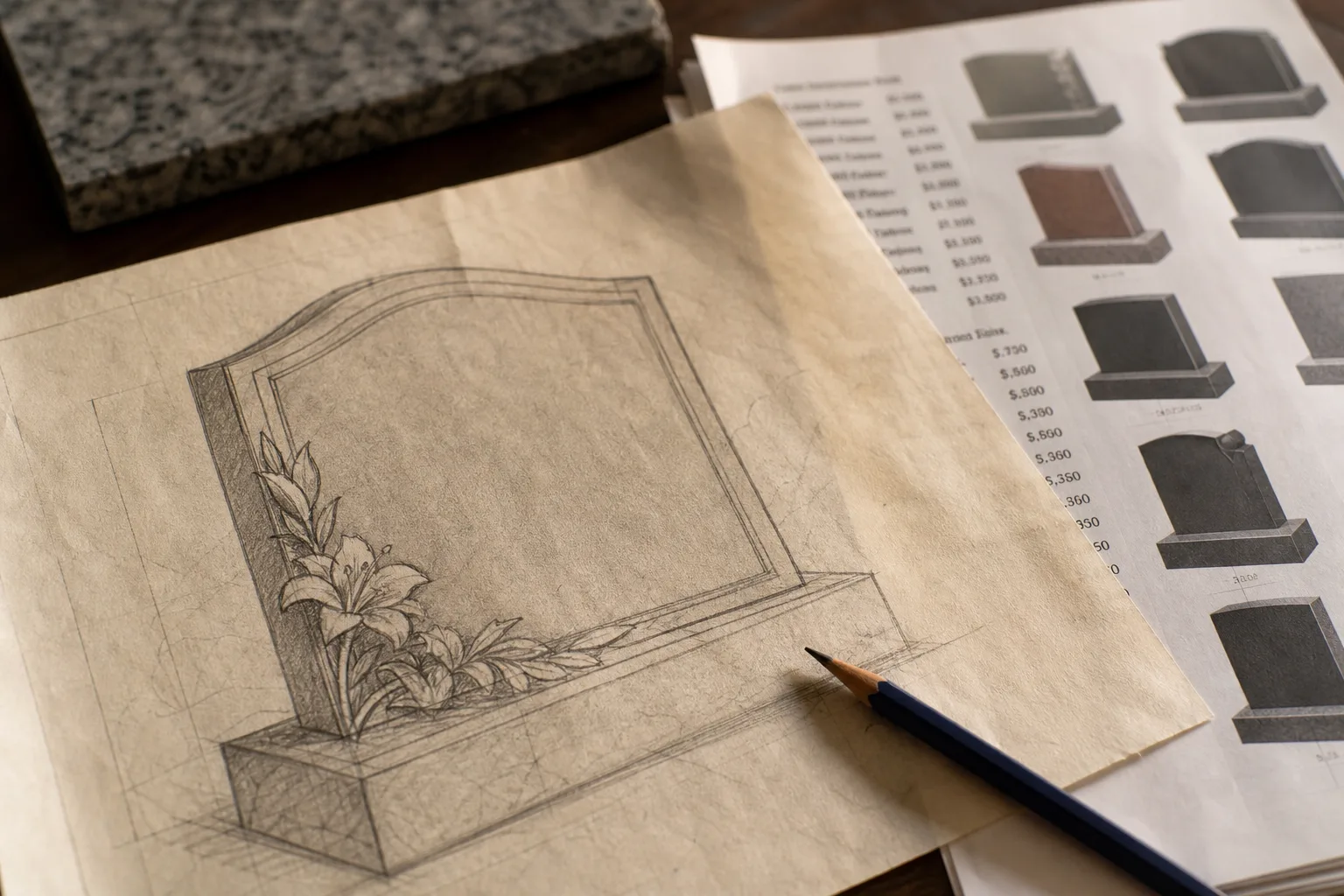
Consumer protections in the funeral trade stop at some counters and not others. Here is what to verify before a memorial order is cut in stone.
A memorial is one of the few consumer purchases where the product is manufactured once, installed permanently, and inspected by family for decades. Most people buy one exactly once, under time pressure, from a trade they have never dealt with. The paperwork moves fast. The stone does not move at all.
The protections that apply to this purchase are real but uneven. They depend heavily on who is selling and what they are selling. A first-time buyer who understands that split will read a quote very differently.
1. Identify which counter you are standing at, because the rules change
There are usually three possible sellers of a memorial, and they are not governed the same way.
The Federal Trade Commission is responsible for the federal rule that governs how funeral providers disclose prices for funeral goods and services. That rule is the reason a funeral home hands you an itemized price list and cannot require you to buy a package to get one item. It is also the reason you can buy a casket or an urn elsewhere and the funeral home has to accept it without a handling fee.
That framework was written around funeral providers. Independent monument dealers and cemeteries operate under a different mix: state cemetery and funeral boards, state consumer protection statutes, prepaid or preneed sales laws where the memorial is bought in advance, and the cemetery's own recorded rules. Some states license monument retailers and require written contracts with delivery terms. Others do not.
| Seller | What usually applies | What to ask for in writing |
|---|---|---|
| Funeral home | Federal price disclosure rules for funeral goods and services; state funeral board | Itemized price list; whether the memorial is theirs or brokered |
| Monument dealer | State contract and consumer protection law; state licensing in some states | Full written order with material, size, finish, delivery window |
| Cemetery | State cemetery statutes; the cemetery's own recorded rules and regulations | The current rules document and the setting fee schedule |
If the funeral home is selling you a stone, ask whether they manufacture it or place the order with a monument company. Brokered work is normal and often fine. But you want to know who to call about a chipped edge in eighteen months, and you want that name on the contract.
2. Get the cemetery's written rules before you look at a single catalog
Cemeteries set the outer limits on what can be installed: upright versus flush markers, maximum height and footprint, permitted materials, permitted colors in some sections, whether vases are allowed, whether photo-ceramic inserts are allowed, and who is authorized to pour the foundation. Some sections permit only flat bronze plaques. Some restrict granite to a short approved list.
Ask for the document, not a verbal summary. A verbal summary from a groundskeeper is not what the office will enforce when the truck arrives. Then confirm two specific items:
- Third-party memorials. A cemetery generally may not refuse a memorial simply because you bought it elsewhere, but it can enforce genuine specification and installation standards. Get the standards in writing so an outside dealer can build to them.
- The setting fee and foundation charge. These are separate from the stone and are frequently omitted from a dealer's quote. They can be a meaningful share of the total. Ask whether the cemetery pours the foundation itself and at what price.
A dealer's quote that says nothing about the foundation is not a complete number. It is a number for the stone.
3. Read the quote for what it assumes rather than what it lists
Memorial quotes tend to be short, which makes the assumptions invisible. Five that routinely cost money later:
- Letter count. Many quotes include a set number of characters and then charge per letter beyond that. Full names, two sets of dates, a verse and a surname panel add up quickly. Ask for the included count and the overage rate.
- Faces finished. A stone can be polished on two faces, three, or all sides. "Polished front" often means the back is rough. That is a legitimate product, but confirm it matches what you saw in the display yard.
- Second inscription. If the marker is for a couple and only one name is being cut now, the later inscription is a separate job at future prices, usually done at the grave rather than in the shop. Ask what that work costs today and whether the price is guaranteed.
- Delivery window. Granite is quarried, shipped, cut and lettered. Several months is common. If the family expects a stone in place for an anniversary, that date belongs in the contract.
- Sales tax and permits. Some jurisdictions tax the memorial, the installation, or both differently. A quote that shows one subtotal may not be the check you write.
4. Treat the proof as the last reversible moment
The layout proof, sometimes called a drawing or a rubbing, is the document where the purchase stops being negotiable. It shows the exact spelling, the dates, the font, the emblem placement and the line breaks. Once you sign it, the shop cuts to it, and a cut error caused by an approved proof is your error, not theirs.
Practical handling for a first-time buyer:
- Take the proof home. Do not approve it across the desk on the day you are also choosing a casket.
- Check dates against the death certificate, not against memory. Middle names, maiden names, junior and senior, nicknames in quotation marks: verify each against a document.
- Have a second family member read it independently, out loud.
- Ask what happens if the shop's cut does not match the approved proof. A dealer who will recut at their cost in that situation should be willing to say so in writing.
Buyers who slow down at this one step avoid most of the disputes the trade sees.
5. Know who has legal authority to order, and what the warranty actually covers
The person who owns the interment right, not necessarily the person paying, generally has to authorize a memorial's placement. Where siblings share a plot or the deed sits in a parent's estate, the cemetery will want that authorization documented. Sorting it before the order is placed prevents a finished stone sitting in a warehouse while a family argues.
On warranties, read the scope closely. Granite warranties commonly cover the material against cracking and the lettering against loss of legibility from normal weathering. They commonly exclude vandalism, ground settlement, mower and equipment damage, staining from adjacent plantings, and bronze patina change. Settlement is worth a direct question: if the foundation shifts and the stone leans, ask in writing whether resetting is covered, by whom, and for how long.
Bronze plaques carry their own considerations. Finish maintenance is usually the owner's responsibility, and the cemetery may specify who is permitted to perform it.
The order of operations is what protects a first-time buyer: cemetery rules, then a written itemized quote that includes the foundation and setting, then a proof reviewed away from the sales desk, then authorization from whoever holds the interment right. Every one of those steps is available for free, and each one closes off a category of expensive surprise before the stone is ever cut.