A Cashed Deposit and No Return Calls: The Route That Worked Was Not Small Claims
title:A Cashed Deposit and No Return Calls: The Route That Worked Was Not Small Claimsauthor:Marguerite Vasquezpublished:2026-04-22section:Law & Legalwords:970read:4 min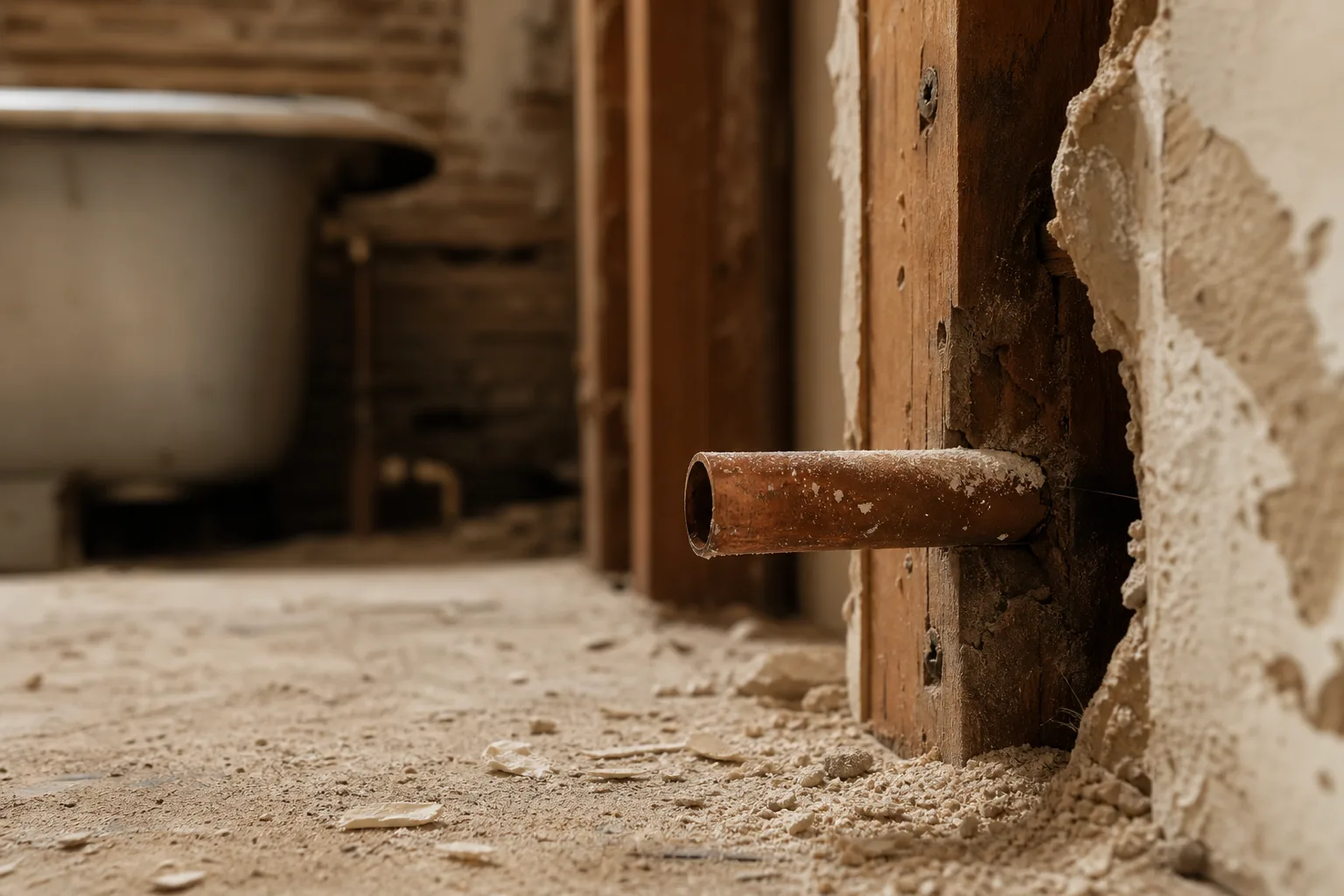
A half-demolished bathroom, a deposit spent and a contractor who stopped answering, resolved through the state licensing board rather than through a court.
A bathroom is stripped to the studs, the copper is stubbed out of an open wall, there is dust on the subfloor and a deposit representing roughly a third of the contract has been cashed. Three weeks of unanswered calls have followed, then a text saying the crew is finishing another job and will be back Monday, then nothing. The homeowner's assumption at this point is that the choice is between hiring an attorney and filing in small claims court, and that both will take months. Neither turned out to be the route that produced a result.
Why the License Is the Leverage
A contractor working under a state license holds something considerably more valuable than the deposit in dispute, which is the ability to keep working. Licensing boards exist to regulate that privilege, and in most states they have authority to investigate complaints, order corrective action, impose conditions, suspend and revoke. A court awards a judgment that then has to be collected, which is its own project, while a board can put the contractor's ability to earn at issue, and that difference explains why board complaints resolve faster than people expect.
The other structural advantage is cost. Filing a complaint with a licensing board is free or close to it in every state, requires no attorney, and does not oblige the homeowner to appear anywhere on a schedule set by somebody else. It also runs in parallel with any other remedy rather than replacing it, so nothing is given up by starting there. Check first that the contractor is actually licensed, since an unlicensed operator is a different problem with worse options.
What the Complaint Required
The board's form asked for the licensee's name and number, the contract, the payment record, a chronology of communications and a statement of what was sought. That is a small amount of work for a homeowner who has been keeping documents and a substantial amount for one who has not, which is the practical argument for keeping a job file from the day a contract is signed rather than from the day something goes wrong.
What actually carried the complaint was the contract itself, which specified a start date, a rough completion window and a payment schedule tied to stages of work. A contract that says a deposit buys a start within a stated period converts abandonment from an impression into a documented breach. Alongside it went dated photographs of the site taken weekly, a printed text message thread, and a one-page timeline. The whole submission took an evening to assemble and named a specific outcome, which was completion of the work or return of the unearned portion of the deposit.
The Local Piece, Which Decided the Timing
Two local facts shaped how quickly this moved. The first is that the state in question requires contractors above a certain contract size to be bonded, and a bond claim is a separate route that runs alongside a board complaint and often produces money faster, since the surety has its own interest in resolving the matter rather than paying out. Bond requirements, amounts and claim procedures vary enormously between states, and a homeowner who does not know whether one applies is leaving a route unused.
The second is that the permit for the job had been pulled by the contractor and was still open, with no inspection recorded. An open permit on an abandoned job is a problem for the licensee as well as for the property, since the jurisdiction eventually asks about it and an unresolved permit history is visible to the board. A call to the building department both established that fact and put the job into a second official record, which cost nothing and took a quarter of an hour.
How It Resolved
The board acknowledged the complaint within a fortnight and notified the contractor, who called two days later. The negotiation was brisk, unpleasant in tone and entirely practical in substance: the contractor proposed finishing the work, the homeowner declined on the ground that trust had gone, and they settled on the return of most of the deposit against a written release. The board closed the file, and a second contractor started three weeks later.
That outcome is typical rather than lucky. Most complaints of this kind never reach a hearing, because the notification itself changes the arithmetic for a licensee who has an ongoing business to protect, and because a contractor who has abandoned one job is frequently juggling several and is looking for the cheapest way to clear each. The complaints that do proceed tend to be the ones where the contractor has already stopped caring about the license, which is also a useful thing for a homeowner to learn early.
What to Do Differently Next Time
The homeowner changed three things on the replacement contract, none of them exotic. The deposit was reduced to what would cover materials actually being ordered, with the rest tied to completion of defined stages rather than to dates. A written schedule named a start date and a substantial completion date, with a clause covering what happens if work stops for more than a stated number of consecutive days. And the license and bond were verified through the state's online lookup before anything was signed, which takes about two minutes and which almost nobody does.
None of that would have prevented a contractor from walking off a job, since nothing prevents that. What it does is decide how much money is exposed when it happens and how quickly a remedy can start, which are the only two variables a homeowner controls. The bathroom was finished eleven weeks late by somebody else, and the expensive part was never the deposit. It was the weeks spent believing the only way out ran through a courtroom.