Got a Breach Letter? What This Decision Looked Like Ten Years Ago, and What to Do Now
title:Got a Breach Letter? What This Decision Looked Like Ten Years Ago, and What to Do Nowauthor:Beatrix Stapletonpublished:2026-06-11section:Innovationwords:1,363read:6 min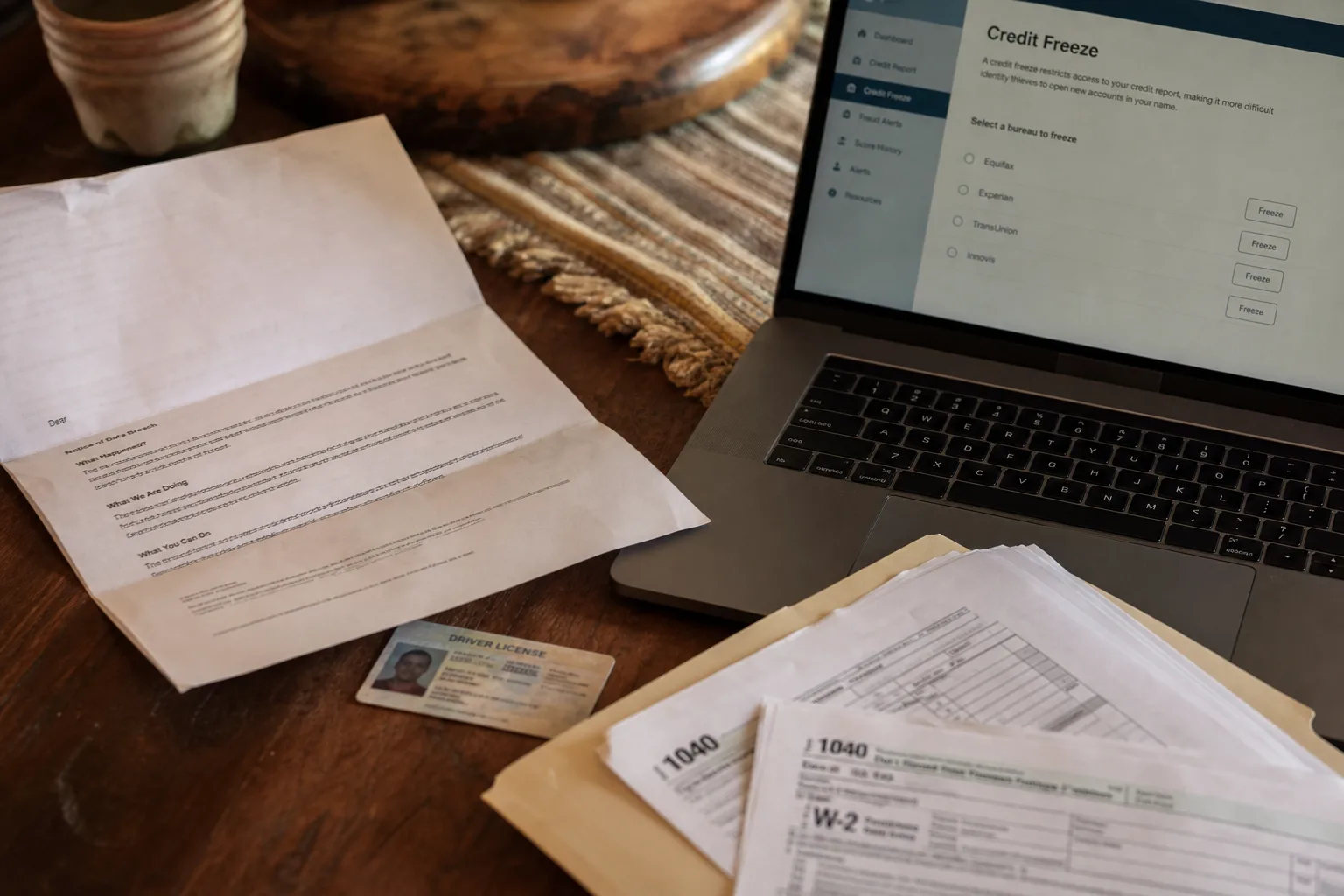
The same envelope arrived a decade ago, but the options inside it cost money and moved slowly. Here is what changed, and the order to work through it now.
The envelope looks the same as it did in 2014. Cream stock, a return address you half recognize, a paragraph about how much the company values your trust, and somewhere on the second page the words "may have included." What has changed is not the letter. It is what you can do after you read it, how fast, and how much of it costs you nothing.
That matters because the decision in front of you is genuinely a decision, with costs on both sides. Locking down your credit files has friction. Ignoring the letter has risk. Ten years ago the friction was priced in dollars and days, which pushed a lot of people toward doing nothing. Now most of that price is gone. The order you work through it in is what determines whether you spend twenty minutes or three weekends on this.
Who actually wrote the letter, and why it reads that way
Nobody in the company's marketing department drafted the notice you are holding. By the time a breach letter goes out, it has passed through an outside law firm, a forensics vendor hired to determine what was accessed, and a notification mailer that handles the print run. In many cases a copy has already gone to the attorney general's office in your state, sometimes to several states at once, where a small unit of staff attorneys and analysts logs it and posts it to a public list.
That explains the language. The letter is written to satisfy the strictest state statute that applies to any recipient, not to explain your situation to you. "May have included" usually means the forensics firm could establish access to a system holding that data but could not establish exfiltration of your specific record. It is a legal statement about evidence, not a reassurance.
It also explains the timing. A decade ago you frequently learned about a breach from the letter itself, weeks or months after the incident. Now, if the company is publicly traded, a securities filing about a material cybersecurity incident may hit the wires within days of the company determining materiality, which means the news story often lands before your mail does. Health providers and their vendors report to a federal portal that is public. So the letter is increasingly a confirmation of something you already read about, arriving with your name attached.
The same decision, then and now
Here is the practical comparison. The line items are the ones a person actually confronts in the first hour after opening the envelope.
| Step | Roughly ten years ago | Now |
|---|---|---|
| Freezing your credit files | Available, but carried a fee in most states, per bureau, and often another fee to lift it | Free at every nationwide bureau, for placing, lifting and removing, under federal law since 2018 |
| How long a freeze took | Mail or phone, days to take effect, PIN mailed separately | Online or by phone, placed within about a business day, lifted for electronic requests in roughly an hour |
| Credit monitoring | The headline remedy in the letter, typically one year, activated with an enrollment code | Still offered, still time-limited, now the secondary move rather than the main one |
| Blocking fraudulent tax filings | An IRS identity protection PIN was available mainly to confirmed victims | Open to any taxpayer who can verify identity, requested proactively |
| Where to report actual misuse | Police report plus letters to each bureau and creditor | A federal identity theft reporting process that generates a recovery plan and an affidavit you can send |
| Notification deadlines on the company | Patchwork, many states with no fixed clock | All states covered, many with a hard outer limit measured in days |
The single change that reorders everything is the free freeze. When a freeze cost money at each of three bureaus and had to be paid for again every time you applied for a car loan, the rational move for many households was to take the free monitoring and hope. Once the fee went away, the calculus flipped. A freeze prevents new accounts from being opened. Monitoring tells you after the fact. One is a lock, the other is a doorbell.
The order to run it in
- Read the data categories, not the apology. Find the sentence listing what was involved. Name and email address is a phishing problem. Social Security number, date of birth, or driver's license number is a credit and identity problem. Financial account numbers are a card-replacement problem. Health information is a different track again. The category drives every step below.
- Freeze all three nationwide credit files if an SSN was involved. Do it online with each bureau separately. There is no single request that covers all three. Save the PINs or logins somewhere you will find them in two years, because you will need them the next time you finance anything.
- Then take the offered monitoring anyway. It is paid for, the enrollment code usually expires, and it costs you an email address. Put the deadline in your calendar the day you open the letter. Read whether accepting it waives anything; it generally does not, but the enrollment terms are worth two minutes.
- Request an IRS identity protection PIN before filing season. This is the step most people skip and the one that prevents the ugliest outcome, which is a fraudulent return filed in your name that delays your refund by months. Verifying identity for it takes longer than the credit freezes, so start it while you are already in the mood.
- Change the password on the breached service and anywhere you reused it. If the company disclosed that credentials were involved, treat every account sharing that password as compromised. Turn on two-step verification on email first, because email is the reset path for everything else.
- File the letter. Scan it or photograph it. Note the date received.
Who you can actually reach, and what each person can do
Knowing which desk answers which question saves the most time.
- The credit bureau representative can place, lift or remove a freeze, reset a lost PIN, and read back what is on your file. They cannot tell you anything about the breach itself and will not know the company's name.
- The breached company's dedicated call center is usually the notification vendor, staffed with scripts. They can reissue an enrollment code and confirm whether your record was in the affected set, which is worth asking directly. They cannot tell you what the forensics firm found.
- Your state attorney general's consumer protection line takes complaints and maintains the public breach list, which is where you can check whether the notice matches what the company filed and whether the filing date beat the statutory deadline.
- The Federal Trade Commission is the agency responsible for identity theft reporting and recovery guidance at the federal level, and its reporting process produces the affidavit that creditors and bureaus accept when you dispute fraudulent accounts.
- Your bank's fraud department can reissue cards and flag the account. Ask whether they will add a verbal password to the account, which many will do on request and few advertise.
Why the letter is worth keeping
Two reasons, both concrete. First, if fraud shows up eighteen months from now, the letter is dated evidence that your data was exposed by a specific party on a specific date. That shortens arguments with creditors and with your own bank about who bears the loss. Second, breach litigation resolves slowly, and settlement notices tend to require proof of receipt or documented out-of-pocket costs. People who kept the envelope and a note of the hours they spent get paid. People who threw it away usually get the residual amount, if anything.
Keep it with your tax records rather than loose in a drawer. A single folder holding the letter, the enrollment confirmation, your freeze PINs and any IRS correspondence is the whole apparatus, and it fits in a quarter inch of paper.
The reason this is now a twenty-minute task rather than a project is that the expensive parts were made free and the slow parts were made fast, mostly by statute rather than by goodwill. That is worth knowing the next time an envelope arrives, because it will.