Asked for a Receipt From Six Years Ago? Who Sets the Clock on Every Record You Keep
title:Asked for a Receipt From Six Years Ago? Who Sets the Clock on Every Record You Keepauthor:Beatrix Stapletonpublished:2025-12-17section:Healthwords:1,227read:5 min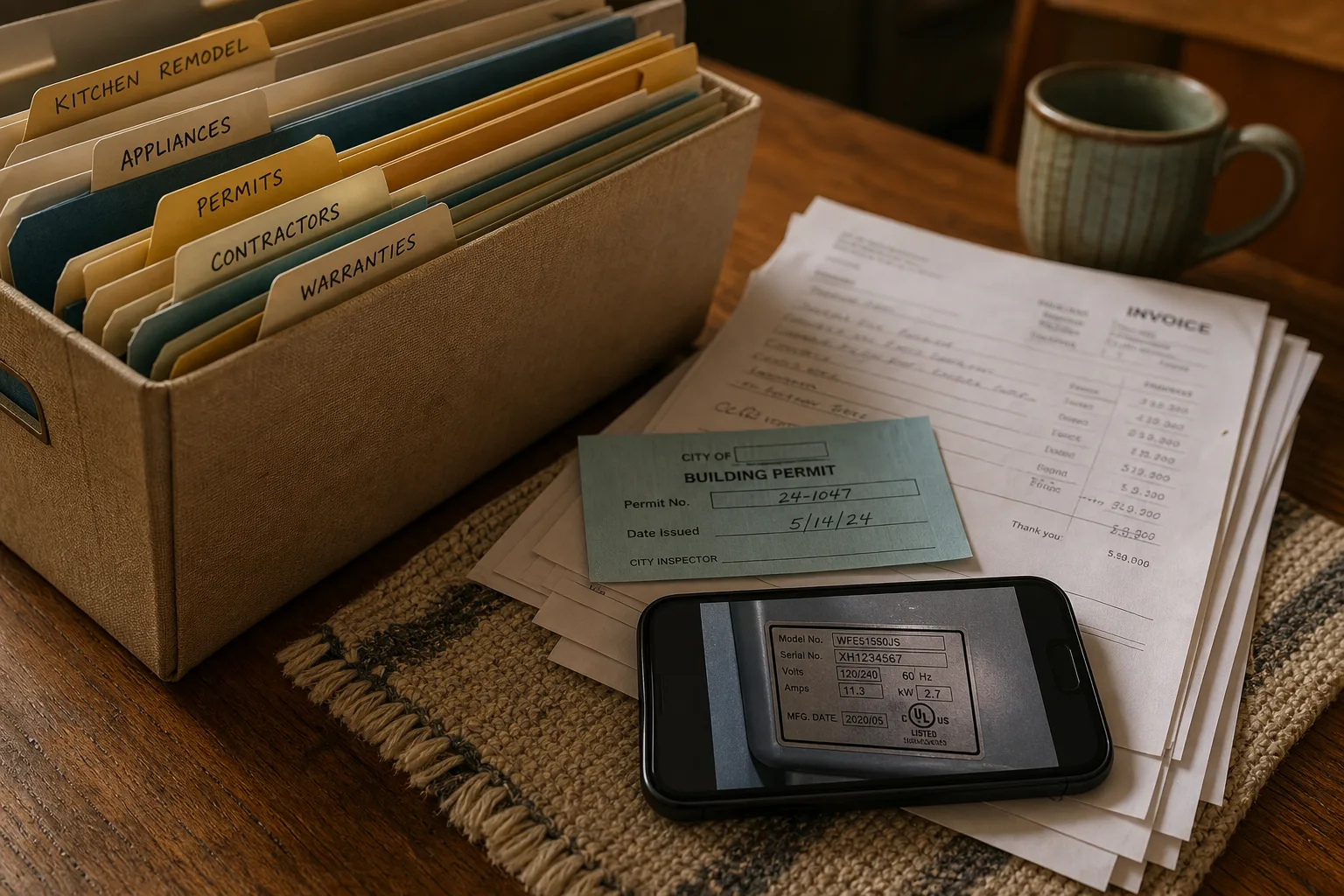
Retention periods were written by auditors, adjusters and county clerks for their own purposes. Here is how to keep records that satisfy the person who actually asks.
The request almost never arrives when you are ready for it. An adjuster wants proof that the water heater was five years old and not fifteen. A county clerk wants the permit number for work a previous owner had done. A tax examiner wants the closing statement from a house you sold three filing seasons ago. In each case someone with a checklist is waiting, and the checklist was not written with your filing habits in mind.
That is the useful thing to understand about record retention. The clocks were set by other people, for their own reasons, and most of those reasons predate the scanner on your desk. Once you know whose clock governs which document, the question of how long to keep something stops being a guess.
Every retention period traces back to somebody else's deadline
There is no single authority that told households to keep tax records for three years and closing documents forever. What exists instead is a stack of separate windows, each set by a different party for a different purpose, which over time got flattened into folk advice.
The tax window came from assessment periods. The Internal Revenue Service oversees the examination of individual returns, and the length of time it can look back at one is what turned into the familiar advice about keeping returns and supporting documents for a set number of years. The window is not uniform. It stretches in certain circumstances and it never closes at all in others, which is why the safe answer for a return itself has drifted toward keeping it indefinitely while the receipts behind it get thinned out sooner.
The property window came from something else entirely: the cost basis calculation. When you sell a house, the gain is measured against what you put into it, and that includes the new roof from eleven years ago. Nobody set out to make homeowners archivists. It fell out of how the gain is computed.
The insurance window came from adjusters, and it is the least formal of the three. There is no statute telling you to keep the invoice for a furnace. But replacement cost coverage frequently turns on the age and condition of the thing that failed, and the person deciding that has to rely on something. Absent a document, they rely on an estimate, and estimates rarely land in the policyholder's favor.
The permit window came from county recorders and building departments, which have been keeping their own copies of this material for decades. The reason you are asked for your copy is not that theirs is missing. It is that pulling theirs takes time and yours is faster.
Who actually asks, and what they will take
Retention advice tends to be written as though records are stored for an abstract future audit. In practice they are produced for named people with defined jobs, and those people differ sharply in what satisfies them.
| Who asks | What they want | What they will accept |
|---|---|---|
| Insurance adjuster | Age, condition and cost of the damaged item | Dated invoice, photos, model and serial number; a credit card statement line alone is weak |
| Appraiser or assessor | Evidence of improvements and their cost | Contractor invoices, permits, before and after photos |
| Tax examiner | Substantiation for a specific line on a specific return | Receipts, canceled checks, statements, mileage logs; legible copies are fine |
| Title company or closing attorney | Chain of ownership, liens released, permits closed | Recorded documents, lien releases, final inspection cards |
| Contractor's office manager | Proof the work is under warranty | Signed contract, final invoice, date of substantial completion |
| Building department clerk | Permit number and status | The permit card or the address and approximate date |
The pattern worth noticing is that the strictest reader is usually the adjuster, and the most forgiving is usually the tax examiner. That is the reverse of what most people assume. A tax examiner is looking at a number you reported and asking what supports it. An adjuster is deciding a payout and has a professional interest in the specifics of the item that failed.
How long each thing stays useful
Useful is a better test than required. Almost nothing in a household file is legally mandated to exist. What matters is the point at which a document stops being able to answer a question anyone will ask.
- Tax returns. Keep the return itself permanently. It is two or three pages and it answers questions about basis, carryforwards and prior filing positions that nothing else will.
- Supporting receipts for a return. Useful until the assessment window closes on that year, longer for anything touching a property basis or a retirement account.
- Closing documents on a home you own. Useful until you sell, plus the length of the tax window after the sale year. Then they become historical.
- Home improvement invoices. Same clock as the closing documents. A separate copy of the big-ticket ones belongs with your insurance file, because they serve a second purpose there.
- Appliance and system invoices. Useful for the life of the equipment plus one claim cycle. When the unit goes to the curb, so does the paperwork.
- Warranty and contract documents. Useful through the warranty term plus the state's window for a construction defect claim, which is longer than most warranties and is the reason to hold the contract rather than just the invoice.
- Utility and phone bills. Useful for about a year, mainly for comparison and dispute. Longer only if a line on them appeared on a return.
- Insurance policies. Keep the declarations page for each year you held the policy. Claims sometimes turn on which version of the coverage was in force on the date of loss.
- Medical billing records. Useful through the appeal and balance-billing period, which can run well past the date the statement stops arriving.
Keeping it so it can actually be produced
A record you cannot find in ten minutes fails the only test that matters. The failure mode is almost never that the document was discarded. It is that it exists somewhere in a box, in a photo roll, or in an email account nobody searches.
Three habits handle most of it. Name files with the date first, in year-month-day order, then the vendor, then what it is. Sorting then does the organizing for you. Second, put a scan of anything with a serial number in the same folder as a photo of the data plate, because the adjuster will want both and the plate becomes unreadable after a flood. Third, keep one paper folder for recorded instruments: deed, survey, lien releases, permit cards. Those are the documents where an original or a certified copy occasionally still matters, and they are few enough to fit in one place.
Digital copies are generally acceptable to everyone in the table above. The exceptions cluster around recorded real property documents and certain vital records, where the office receiving them may want the certified version. Knowing which handful of pages fall into that category is most of the work.
The practical result of setting the clocks by who asks is that the file gets smaller, not larger. Once a water heater is replaced, its invoice has no audience. Once a house is sold and the tax window on the sale year has closed, an entire drawer becomes optional. Retention done properly is mostly a schedule for letting things go.