A Plan on the Furnace or a Number on the Refrigerator: Which Arrangement Pays
title:A Plan on the Furnace or a Number on the Refrigerator: Which Arrangement Paysauthor:Lionel Karstenspublished:2026-01-21section:Propertywords:837read:4 min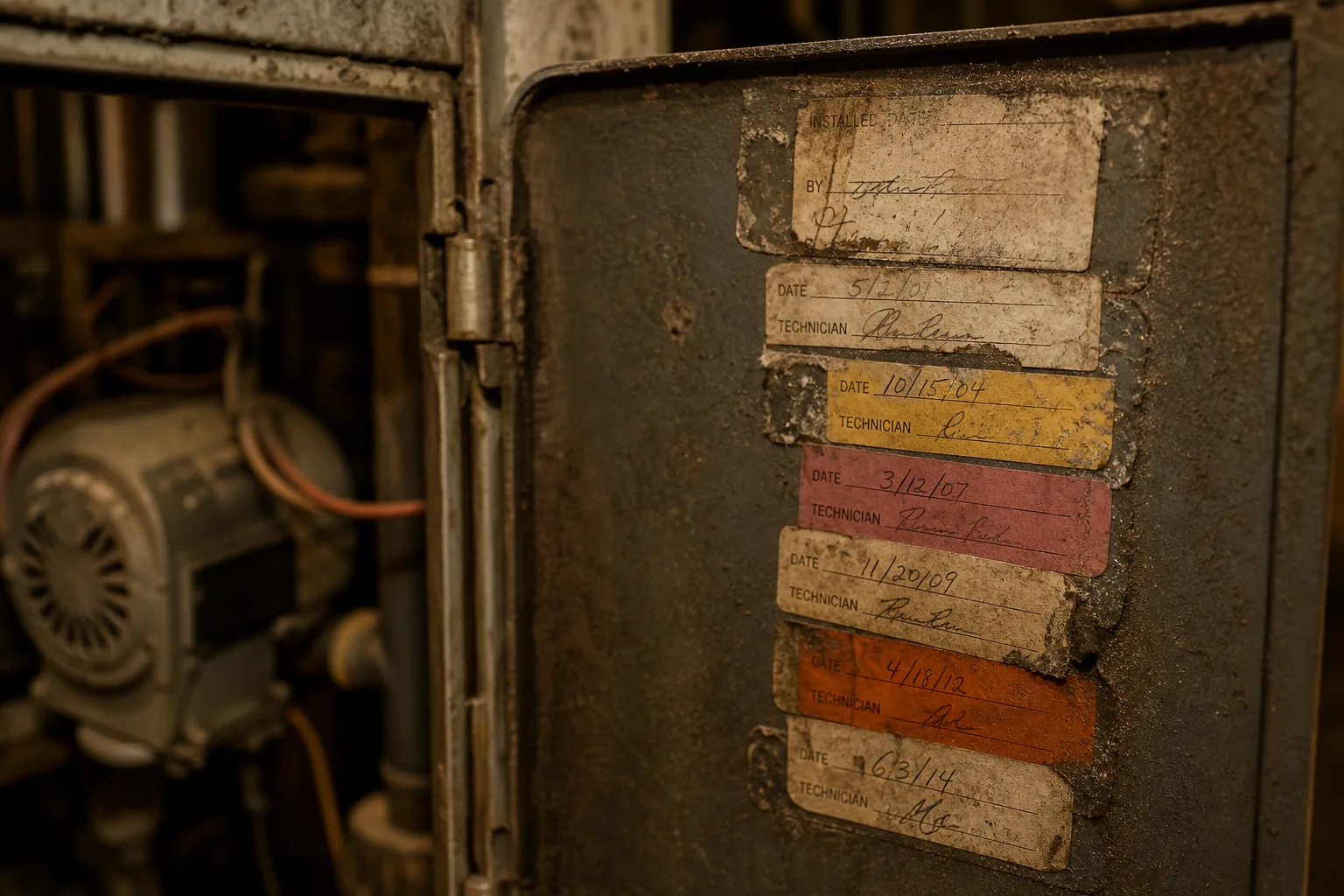
A maintenance agreement is a contract before it is a service, and three clauses inside it decide whether the annual fee is money well spent.
The common view of an annual service agreement is that it is a way of prepaying for work you were going to have done anyway, at a slight discount, in exchange for the convenience of not having to think about it. That description is roughly half right and it misses the part that matters. The annual fee buys a visit, but the agreement around it buys a position in a queue, a rate schedule, and a set of terms that only become visible on the coldest night of the year, which is also the night everybody else is calling.
Paying by the Call, and What It Quietly Risks
Paying per call is simple and it has one genuine advantage, which is that money only leaves the household when work is actually needed. Against that sits the cost of being an unknown caller during a cold snap, when a company works through its agreement holders first and quotes overtime rates to everybody else. A household that goes four years without an issue has clearly won on price. A household whose heat fails on a Sunday in January has discovered that the price was never the only variable.
What the Annual Fee Buys Instead
The agreement inverts that. A fixed annual fee covers one or two scheduled visits, usually with a discount on parts and labor and some form of priority scheduling attached. The visits happen whether anything is wrong or not, which is the point, since the whole argument for maintenance is that it catches the failures before they become emergencies. What the fee does not do is convert into a repair fund. It buys attention and access, and the repairs are still billed, at a stated discount, when they arrive.
Three Clauses Worth Finding Before Signing
The first is what priority actually means in writing. Some agreements promise a response window in hours and state it plainly. Others say only that agreement holders are served before non-holders, which is a real benefit but an unmeasurable one, and a few say nothing at all beyond the word priority in the marketing. Ask for the number, and if there is no number, treat the priority claim as goodwill rather than as a term you have bought.
The second is the discount and what it applies to. A percentage off parts and labor is worth considerably more than a percentage off labor alone, since parts are frequently the larger half of a repair bill, and a discount that excludes overtime rates is worth much less than one that does not. The third is the renewal and cancellation language, because the agreements that generate complaints are almost always the ones that renew automatically, charge annually in advance, and require written notice inside a narrow window that nobody has calendared.
When the Arithmetic Favors the Agreement
Three situations tip it clearly. Older equipment, where the probability of a call is genuinely high and the value of catching a failure early is highest. A household that will not otherwise book maintenance, which is most households, since the agreement functions as a commitment device more than as a discount. And any property where a failure is expensive beyond the repair itself, a rental with a tenant and a habitability obligation, or a house with pipes that will freeze if the heat is out for a day.
It tips the other way on newer equipment still inside its manufacturer warranty, on a household that reliably books its own service, and in mild climates where a failure is uncomfortable rather than urgent. One caveat sits underneath all of that: many manufacturers condition warranty coverage on documented annual maintenance, which means the household that skips service to save money can find itself paying for a compressor that would otherwise have been covered. The agreement is often the cheapest way to generate that documentation.
What Happens When the Company Changes Hands
Small service companies get bought, and the trade has seen a great deal of consolidation, which means an agreement signed with a two-truck operation may be honored by somebody considerably larger a year later. The agreement itself usually survives, since it is an asset the buyer paid for, but the things that made it worth having can change: the technician who knows the system, the response times, the definition of priority, and the willingness to bend on a borderline repair. None of that is written down anywhere.
The practical response is to treat the agreement as an annual decision rather than a standing arrangement. Read the renewal notice, check whether the visits actually happened and what they found, and ask whether the discount was applied to any repairs during the year. An agreement that produced two visits, a written report and a discounted repair has earned its fee. One that produced a fifteen-minute filter change and an invoice has told you something useful about the coming year, and the useful thing about an annual term is that it gives you a scheduled moment to act on it.