Been Through a Multi-Visit Treatment Plan Before? Where the Number Actually Moves
title:Been Through a Multi-Visit Treatment Plan Before? Where the Number Actually Movesauthor:Beatrix Stapletonpublished:2026-07-12section:Healthwords:1,553read:7 min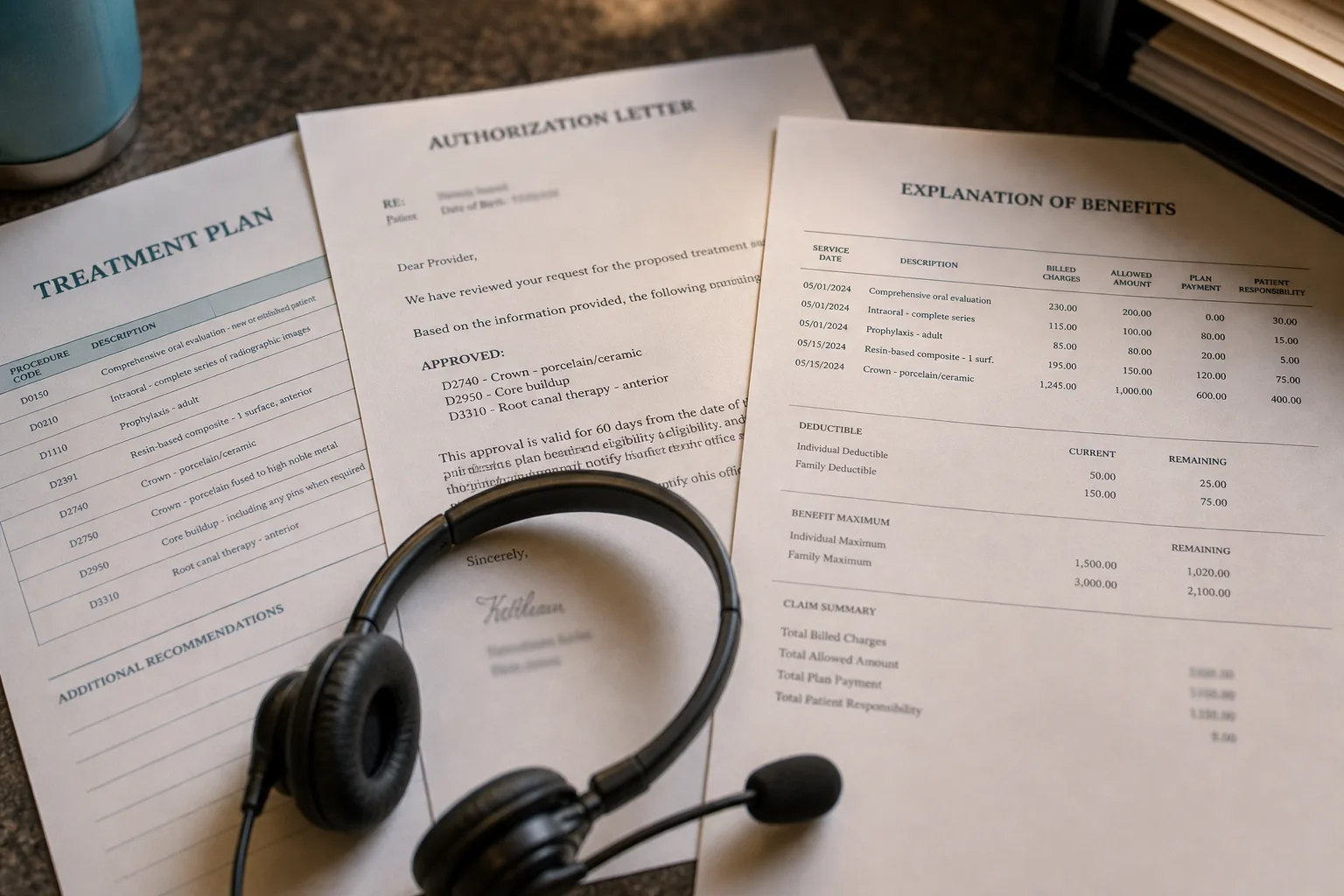
A course of treatment carries three different prices and at least four people who can change them. Here is how the routes compare and where the number moves mid-course.
The first time somebody is handed a treatment plan with twelve visits on it, they read the total at the bottom. The tenth time, they read the visit count, the codes, the authorization dates, and the name of the clinician who will actually be in the room. Those are the four things that move the total. The number at the bottom is a forecast built on all of them, and it is only as durable as the weakest one.
This is a comparison of the routes through a course of treatment: paying the clinic directly, running it through a plan that contracts with the clinic, and running it through a plan that does not. The routes produce different numbers for identical clinical work, and they fail in different places. Knowing which failure belongs to which route is most of the skill.
One visit, three prices, three different people setting them
Every visit in a course of treatment carries a list charge, an allowed amount, and a patient share. They are set by different parties and they are not versions of each other.
| Price | Who sets it | When it can change |
|---|---|---|
| List charge (the clinic's fee schedule) | The practice or its parent system | Usually annually, sometimes when a service line is re-coded |
| Allowed amount | The contract between the plan and the clinic | At contract renewal, and immediately if the clinician's network status lapses |
| Patient share | The plan's benefit design, applied to the allowed amount | Every time the deductible position changes, and on the plan year reset |
A practiced patient stops asking "what does this cost" and starts asking which of the three numbers the front desk just quoted. A quote of the list charge tells you almost nothing if you are insured. A quote of the patient share tells you almost nothing if you have not asked what the deductible has absorbed so far this year.
Consider a worked example, and note that these figures are assumptions chosen to show the mechanics rather than a survey of real prices. Suppose a clinic's list charge for a follow-up treatment visit is $210. Suppose the contracted allowed amount under a given plan is $128, the coinsurance is 20 percent, and the deductible has already been met. The patient share is roughly $26. Now suppose the deductible has $900 left on it. The same visit costs $128 until that $900 is gone, then $26 after. Nothing clinical changed. The same twelve-visit plan produces wildly different totals depending on the month it starts.
Comparing the three routes on the same twelve visits
Hold the clinical plan constant and change only how it is paid for.
| Self-pay direct | In-network | Out-of-network with reimbursement | |
|---|---|---|---|
| Basis of the price | Clinic's cash rate, often a discount off list | Contracted allowed amount | List charge, then whatever the plan decides is reasonable |
| What you get in writing up front | A good faith estimate covering the expected course | Benefit verification, plus prior authorization if required | A benefits quote, rarely a binding number |
| Main way it goes wrong | The plan changes mid-course and nobody reissues the estimate | Authorization runs out at visit eight | Reimbursement lands far below the amount billed |
| Cash flow | Predictable, paid as you go | Predictable once the deductible position is known | You float the whole course |
| Who you argue with | The clinic's billing office | The plan's utilization review, then the state insurance regulator | The plan's appeals unit |
Self-pay is not automatically the expensive route. For a course of treatment with a modest allowed amount and a high deductible, self-pay and in-network can produce nearly the same total, and self-pay produces it without an authorization gate. That trade is the whole decision: a cash rate buys you a number that holds still, and gives up the chance that the plan absorbs the back half of the course.
The protection attached to the self-pay route is the good faith estimate. Under federal surprise-billing rules, a patient who is uninsured or who chooses not to use their coverage is entitled to a written estimate of expected charges before scheduled care, and there is a dispute process available when the final bill exceeds that estimate by more than a set dollar threshold. The Centers for Medicare and Medicaid Services oversees this framework. The practical value is not the dispute process, which is slow. It is that the estimate forces the clinic to name a visit count and a code set in advance, which is exactly the document you need later when the plan is arguing about medical necessity.
Where the number moves after visit one
Nobody experienced treats the initial total as fixed. They watch six specific places.
- The authorization window. Plans commonly approve a block of visits, not a course. Visit nine is a new decision made by a reviewer who has read a progress note, not by the clinician who wrote the plan. Ask at the outset how many visits are approved and what documentation the clinic sends to extend.
- Units, not visits. In therapy-style care, a good deal of the charge is built from timed units. A visit that runs long, or that adds a second modality, is a bigger charge under the same appointment slot. Two visits described identically on a calendar can differ by a third on the bill.
- Who is in the room. If a visit is delivered by a clinician whose credentialing with that plan has not closed, the claim may process as out-of-network or not at all. This is a paperwork state, not a competence one, and it is fixable, but it is fixed by a credentialing coordinator on a timeline you do not control.
- Site of service. The same procedure performed in a hospital-affiliated outpatient department can carry a facility component that a freestanding office does not bill. Ask whether the clinic bills a facility fee before the first visit, not after the third statement.
- The plan year. A course that straddles January runs into a reset deductible. Front-loading visits into December, where clinically sensible, is a real lever.
- Code changes mid-course. A plan of care that shifts from evaluation to treatment, or adds a diagnostic step, changes the code set. The estimate written against the old code set stops describing what is happening.
The people whose decisions set your total
The clinician chooses the treatment. Almost nobody else in the chain is a clinician, and the ones who are not are the ones who move the money.
The front-desk verifier pulls eligibility and deductible status. If that check is stale, every quoted patient share downstream is wrong. It costs nothing to ask when the verification was run.
The coder or billing specialist converts the visit note into billable lines. A note that does not document time, laterality, or the specific modality gives the coder nothing to bill accurately, and the correction cycle happens weeks later on your statement.
The utilization reviewer at the plan decides whether visits nine through twelve are covered. Reviewers work from documented functional change. Clinics that are good at this write notes that answer the reviewer's question directly, and their extension requests clear faster. It is worth asking a clinic how often their extension requests are approved on first submission. Practices that track it will tell you.
The credentialing coordinator determines whether the clinician you see is in-network on the date you see them. A lapse here is invisible in the exam room and expensive on the claim.
The clearinghouse and the plan's claims edits reject on formatting problems that have nothing to do with your care. A rejected claim is not a denied claim, and the difference matters: rejections are resubmitted, denials are appealed. Ask which one you are looking at before you spend an afternoon writing a letter.
Behind all of them sits the state insurance department, which handles complaints about coverage decisions and timeliness for plans it regulates, and which is the escalation that tends to produce movement once the internal appeal has been exhausted.
What the tenth time looks like in practice
The experienced version of this is short and unglamorous. Before the first visit: get the code set and the expected visit count in writing, get the authorization number and the number of approved visits, confirm the clinician's network status on the specific dates, confirm whether a facility fee applies, and confirm today's deductible position rather than last month's. Then decide, with those numbers in hand, whether to run the course through the plan or pay the cash rate.
During the course: check the first statement against the first estimate line by line, because that is where a coding mismatch shows up cheapest. Note the visit at which authorization expires and ask two visits early what the clinic is sending to extend it. Keep the good faith estimate, the authorization letter, and the explanations of benefits in one place.
Clinics that handle this well are visible early. They quote the right one of the three prices without being pushed, they name the visit count the plan has actually approved rather than the one they hope for, and they tell you which of their people you call when a statement looks wrong. That is a reasonable thing to test on the first phone call, and it predicts the size of the final total more reliably than the rate card does.